
If you've ever wondered where the 646 area code is located, the answer is simple: it’s pure Manhattan, New York City. A 646 number belongs to the same patch of real estate as the legendary 212, making it a true NYC original.
Your Quick Guide to the 646 Area Code Location
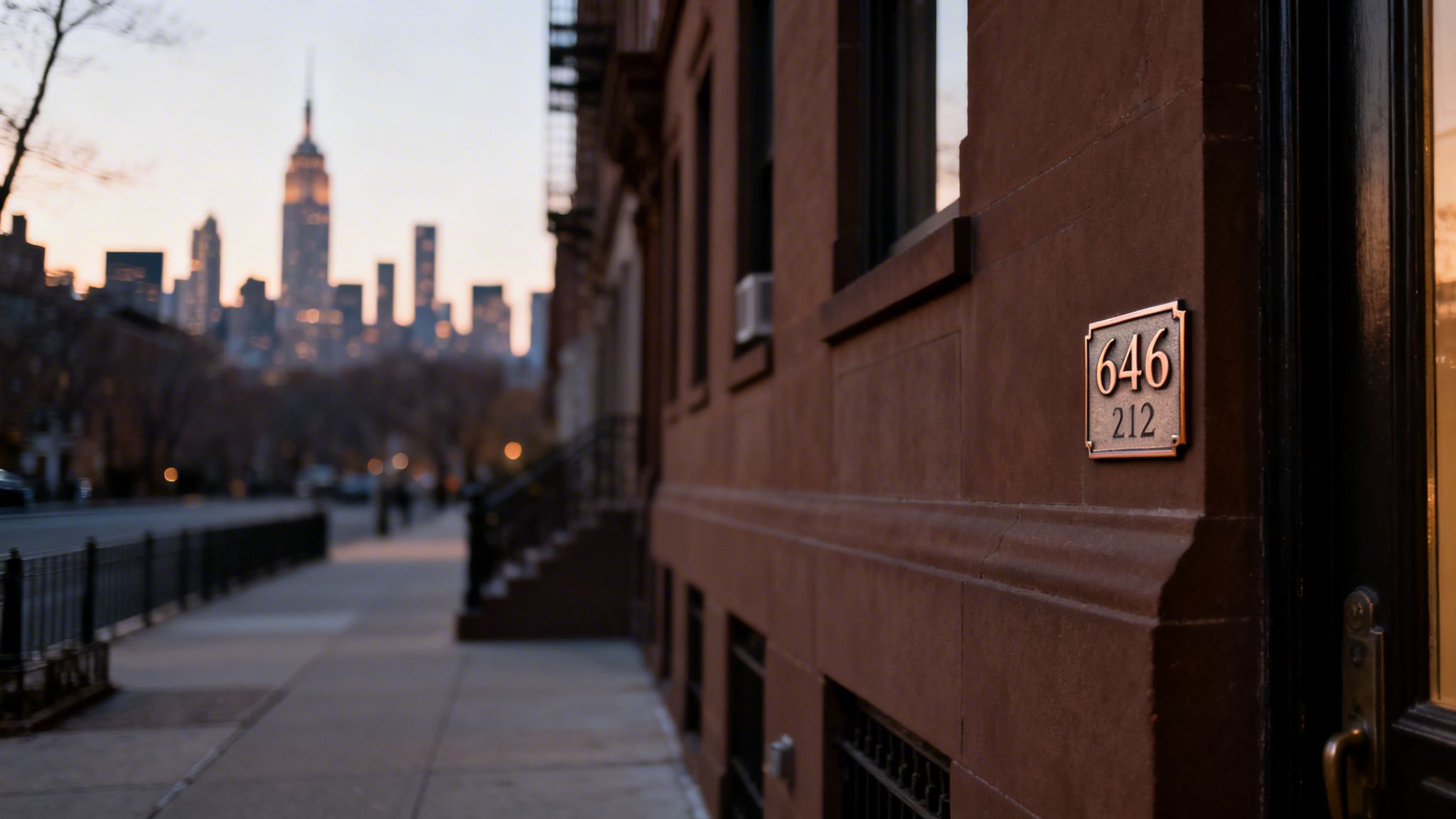
Think of Manhattan’s phone numbers like different subway lines running through the same station. The original 212 was the first track laid down. As the city grew and needed more numbers, new "overlay" area codes like 646 were added to serve the exact same geographic area.
Getting a 646 number today gives your phone a genuine Manhattan address, just like the iconic 212. It exists right alongside 212, 917, and the newer 332, all keeping the same bustling island connected.
Manhattan Area Codes at a Glance
To make sense of it all, it helps to see how each area code fits into the bigger picture. This table breaks down the main prefixes you'll find across the borough.
| Area Code | Year Introduced | Primary Use |
|---|---|---|
| 212 | 1947 | Original Manhattan landlines |
| 646 | 1999 | First overlay for landlines |
| 917 | 1992 | Primarily cell phones/pagers |
| 332 | 2017 | Second overlay for landlines |
As you can see, the demand for phone numbers in one of the world's busiest cities has led to a handful of area codes all sharing the same turf.
The Story Behind Area Code 646 in New York City
Picture Manhattan in the late 1990s. The dot-com boom was in full swing, and everyone needed a new phone line—for their home, their fax machine, or one of those new dial-up internet connections.
The city’s iconic 212 area code, a status symbol since 1947, was simply running out of numbers. To keep the city connected, the 646 overlay was introduced.
Instead of splitting the island geographically and forcing half of Manhattan to give up their coveted 212 numbers, the city chose an overlay. This was a huge deal. It meant all existing numbers could stay the same, while a fresh batch of 646 numbers became available for new residents and businesses.
The 646 area code officially went live on July 1, 1999. It was a direct answer to the soaring demand for numbers caused by the explosion of cell phones and internet services.
This single decision saved a lot of headaches and set the stage for the complex, layered communication network we have today. It's the same network that modern fiber services, like those from Premier Broadband, are built to handle. You can dive deeper into how 646 fits into the national picture of area codes.
How Manhattan’s Area Codes Work Together
If you live or work in Manhattan, you know that phone numbers aren't as simple as just one area code. The island is actually covered by four of them: 212, 646, 917, and 332. It's best to think of them as an "overlay," where all four codes cover the exact same geographic area.
The 646 code was the first to be laid on top of the original 212, and the most recent addition was 332 back in 2017. This was all done to keep up with the relentless demand for new phone numbers. A common myth is that one area code gives you better service, but that’s just not true. Your call quality comes down to your provider, not the first three digits of your number, since they all use the same physical infrastructure.
This all started because the city simply ran out of numbers for its original area code.
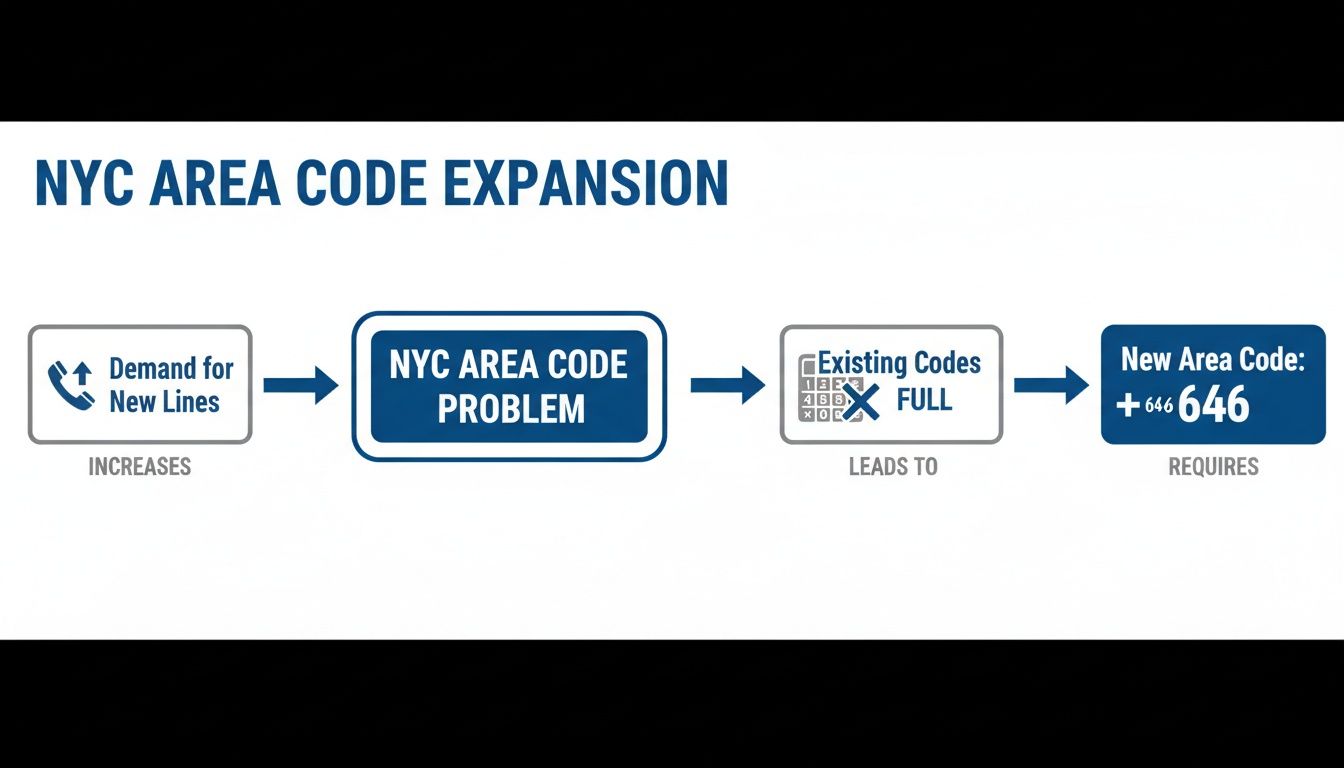
As you can see, when the pool of 212 numbers was exhausted, 646 was introduced to expand the supply available for the same location.
This overlay system ensures there’s a steady stream of new numbers available. For businesses, it's helpful to understand how modern phone systems manage calls in this environment. Technologies like VoIP phone numbers and Direct Inward Dialing (DID) numbers give you incredible flexibility, blurring the lines between these codes and making it easier than ever to manage communications.
How to Make Local Calls in the 646 Area
If you're a longtime New Yorker, you probably remember when dialing a local number was a simple seven-digit affair. But when the 646 area code arrived back in 1999, it changed the game for everyone in Manhattan.
From that point on, 10-digit dialing became mandatory for all local calls.
This means you have to dial the full number—area code and all—every single time. It doesn't matter if you're calling a neighbor across the hall or a restaurant down the street. If you have a 646 number and you're calling a friend with a classic 212 number, you still need to dial 212-XXX-XXXX.
The bottom line: In Manhattan, 7-digit dialing is a thing of the past. Every local call needs all ten digits.
Luckily, most modern phone systems handle this for you automatically. Services like VoIP, for example, are smart enough to manage these dialing rules behind the scenes. It's interesting to learn about how VoIP phone service works and see how they often bundle local and even national calls into one simple package.
Who Lives and Works in the 646 Area Code Location
The 646 area code covers one of the most packed places on the planet. Just try to picture it: millions of people living and working together in a space that's only 23 square miles.
From remote workers in towering high-rises to founders launching their next big idea, that incredible density puts a serious strain on communication networks. Every single video call, data backup, and online order adds to the demand.
Manhattan's area code complex supports a staggering 6.4 million people. This sheer concentration of users makes a rock-solid internet infrastructure an absolute must-have to keep the city moving.
This isn’t just about having a dial tone. It's about powering a digital backbone strong enough for millions of connections at once. When you see the numbers, it becomes crystal clear why a 100% fiber network isn't a luxury in Manhattan—it's essential.
You can dive deeper into the population data for this area code to see for yourself.
How to Get the Best Connection in the 646 Area
So, you’ve got a 646 number. That tells everyone you’re in Manhattan, but your area code has nothing to do with how good your connection is. For that, you have to look at your service provider.
In a place that moves as fast as Manhattan, this is a choice you have to get right. Modern tools like 100% fiber internet and VoIP phone services are built specifically for the intense demands of city life.
Your area code says where you are. Your internet and phone provider dictates how well you can communicate from there.
For remote workers, this means having symmetrical upload and download speeds so you never have to worry about a choppy video call. For a business, it's about a rock-solid Hosted VoIP system that keeps you connected to your clients, no matter what. And for a family, it's about everyone being able to stream, game, and browse without the dreaded buffering wheel.
The real secret to staying connected in this high-demand environment isn't the number on your phone—it's finding the right internet service provider near me.
Your Top Questions About the 646 Area Code
When it comes to Manhattan phone numbers, a lot of questions pop up. Let's tackle some of the most common ones we hear about the 646 area code.
Is 646 as Prestigious as 212?
Let's be honest, the 212 area code has that classic, old-school New York vibe and a certain prestige that comes from its history. For a long time, it was the Manhattan number.
But times have changed. Today, 646 is just as much a "real" Manhattan number as its older sibling. For newer businesses and pretty much anyone who's moved to the city in the last couple of decades, there's virtually no difference. Both area codes tell the world you’re based right in the heart of things.
Can I Choose Between a 646 and 212 Number?
Generally, the answer is no. When you get a new line, carriers assign you a number from the currently available pool, which is mostly 332 these days.
However, if you have your heart set on a specific area code, some VoIP providers or specialty number brokers might be able to track down a 646 or 212 number for you. Just be aware that this service usually comes with a premium price tag.
Key Takeaway: Your area code has zero impact on your service quality, coverage, or data speeds. Those factors are determined entirely by your service provider and their network.
If you’re ever worried that your number has been compromised, you can learn what to do if you suspect someone is using your phone number.