

At this point, deciding to switch your business to VoIP phones isn't a matter of if—it's a matter of when. The truth is, these systems just give you more flexibility, better features, and real cost savings that you can't get with old-school landlines. They’ve become the new standard for a reason.
Why Smart Businesses Are Switching to VoIP in 2026
The move away from traditional copper landlines is happening fast, and it’s easy to see why. Today’s businesses need to support remote teams, run as efficiently as possible, and present a professional image to every single caller. Old phone systems just weren't built for that world.
You can see this shift in the numbers. The global VoIP market is booming, projected to hit USD 161.79 billion in 2025—a huge jump from around USD 132.5 billion in 2023. That’s a growth rate of about 11% per year, showing just how many companies are ditching outdated phone networks for modern, internet-based systems.
Driving Business Growth and Efficiency
For a small business, the benefits are immediate. Think about a consulting firm with employees working from home, the office, and on the road. With VoIP, they're all connected to one system. A client dials your main number, and the call can ring a desk phone in the office, a laptop at home, or a mobile app—all at the same time. It's completely seamless.
This solves some big challenges right away:
- Lower Costs: We see businesses cut their phone bills by 40-80%. No more paying for expensive landline contracts and outrageous long-distance charges.
- A More Professional Image: Features like an auto-attendant ("Press 1 for Sales, Press 2 for Support") make even a one-person shop sound like a major enterprise.
- Scale Up Instantly: Need to add a new employee? You just add a new user in an online portal. No more waiting for a technician to come install another physical phone line.
- Better Team Collaboration: Tools like video conferencing and voicemail-to-email keep your team in sync, no matter where they’re working from.
The real power of VoIP is that it separates your business phone number from a physical location. That freedom is what gives you the mobility and resilience you need to compete today.
The Foundation of Quality Calls
Of course, all these great features rely on one thing: a solid internet connection. VoIP is a powerful technology, and you can learn more about how VoIP phones work in our guide. If you've ever experienced choppy audio or a dropped VoIP call, it’s almost always because of a slow or unstable network—not the phone system itself.
That’s why a reliable foundation, like a 100% fiber network, is non-negotiable. At Premier Broadband, our fiber connections provide symmetrical upload and download speeds, which means data travels just as fast in both directions. This ensures your conversations are always crystal-clear and never drop.
For any small company looking to grow, choosing the right VoIP solutions for small business is a smart investment that pays for itself in savings, flexibility, and a better customer experience.
Choosing the Right VoIP Phones for Your Team
So you've decided a cloud phone system is the right move. Smart choice. Now for the fun part: picking the actual phones. The world of VoIP phones for business can seem a little overwhelming, but you don’t need to be a tech wizard to get it right.
The secret is matching the phone's features to what each employee actually does all day. Don't just think "one phone for every desk." Your receptionist, who’s juggling a dozen calls at once, needs a completely different tool than your warehouse manager who’s always on the move. It’s all about equipping your team to be more efficient.
This decision guide is a great way to see how common business needs, like supporting remote staff or cutting costs, naturally point toward a modern VoIP solution.
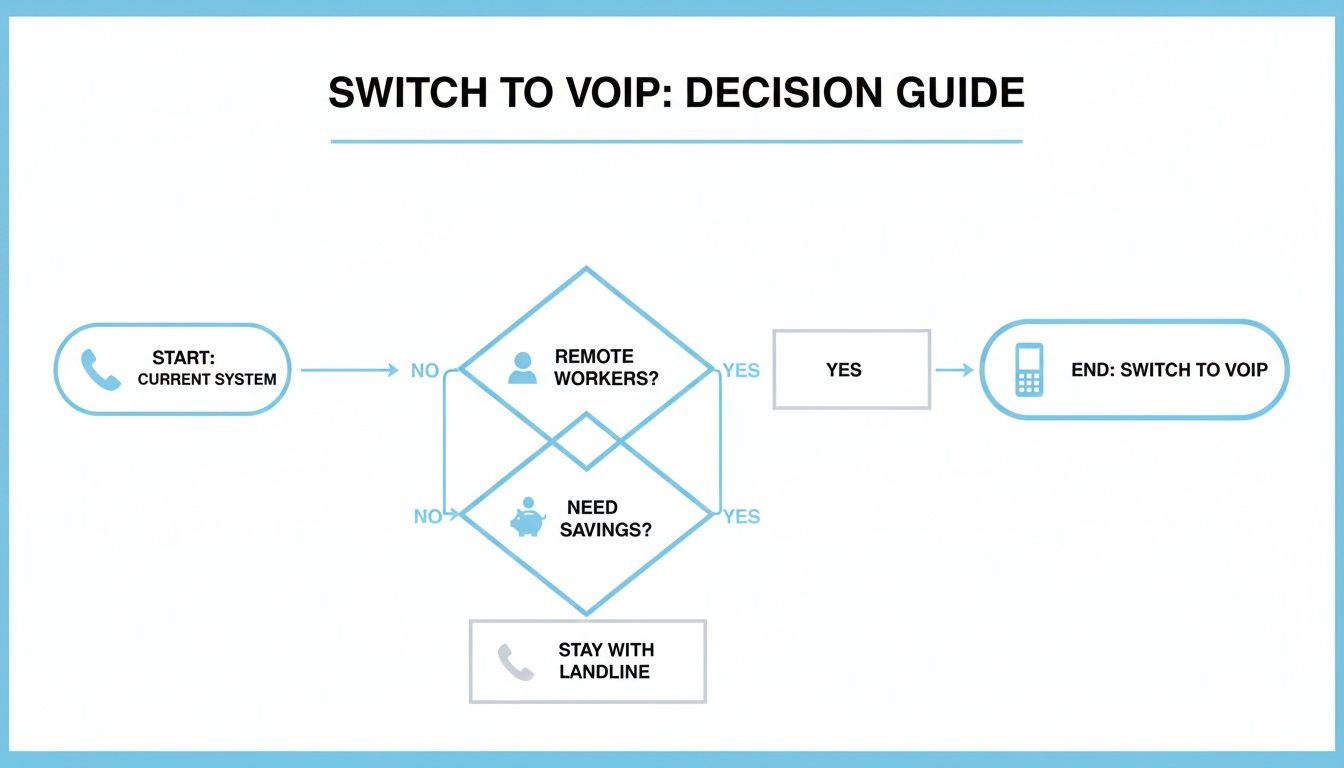
As you can see, whether you're focused on giving your team more flexibility or just want to trim your monthly bills, VoIP is the most practical answer for today’s business challenges.
Aligning Phone Types with Job Roles
Let's look at the most common types of VoIP phones and who they’re best for. We'll skip the super-technical jargon and focus on how they work in the real world.
To make it simple, we've broken down the main options and where they fit best. This should help you visualize the right hardware for each person on your team.
VoIP Phone Types and Ideal Use Cases
| Phone Type | Key Features | Best For (User/Environment) | Premier Broadband Integration |
|---|---|---|---|
| Standard Desk Phones | HD audio, programmable buttons, speakerphone, familiar interface. | The everyday workhorse for sales, support, and office staff. | Fully compatible; the backbone of most office setups. |
| Executive Video Phones | Large touchscreen, built-in camera for HD video calls, premium audio. | Managers, C-suite executives, and anyone needing frequent face-to-face meetings. | Seamless video and voice calling integrated into your system. |
| Receptionist / Console Phones | Multiple line keys, sidecar expansion modules for seeing call status. | Receptionists and front-desk staff managing high call traffic. | Provides a command center for efficient call handling. |
| Cordless DECT Phones | Portable handset, long-range wireless connectivity, HD voice quality. | Warehouse staff, retail associates, managers who walk the floor. | Extends your office phone system with reliable, mobile coverage. |
Choosing the right device for each role from the start makes a huge difference in productivity. A well-equipped team is a happy and efficient team.
The Power of Software and Mobility
Don't forget that hardware isn't your only choice. Many businesses now use a mix of physical phones and software-based phones, or softphones.
A softphone is simply an app you install on a computer or smartphone. It lets you make and take calls using your business number, no matter where you are, as long as you have internet.
This is a fantastic tool for remote employees, traveling staff, or even as a quick, low-cost way to get new hires connected on day one.
Using softphones can seriously lower your upfront hardware spending. If you're looking for budget-friendly options, our guide on finding a low-cost VoIP phone solution is a great place to start.
Ultimately, the best approach is often a hybrid one: physical desk phones for your core office staff, with the added flexibility of mobile and desktop apps for everyone else. This creates one connected, powerful communication system for your entire company.
Essential VoIP Features That Power Your Business
The physical phones on your desks are just one piece of the puzzle. The real magic of a modern business phone system lies in the software features working behind the scenes. These aren't just bells and whistles; they are powerful tools that make your entire operation run smoother, improve your customer experience, and boost your team's productivity.
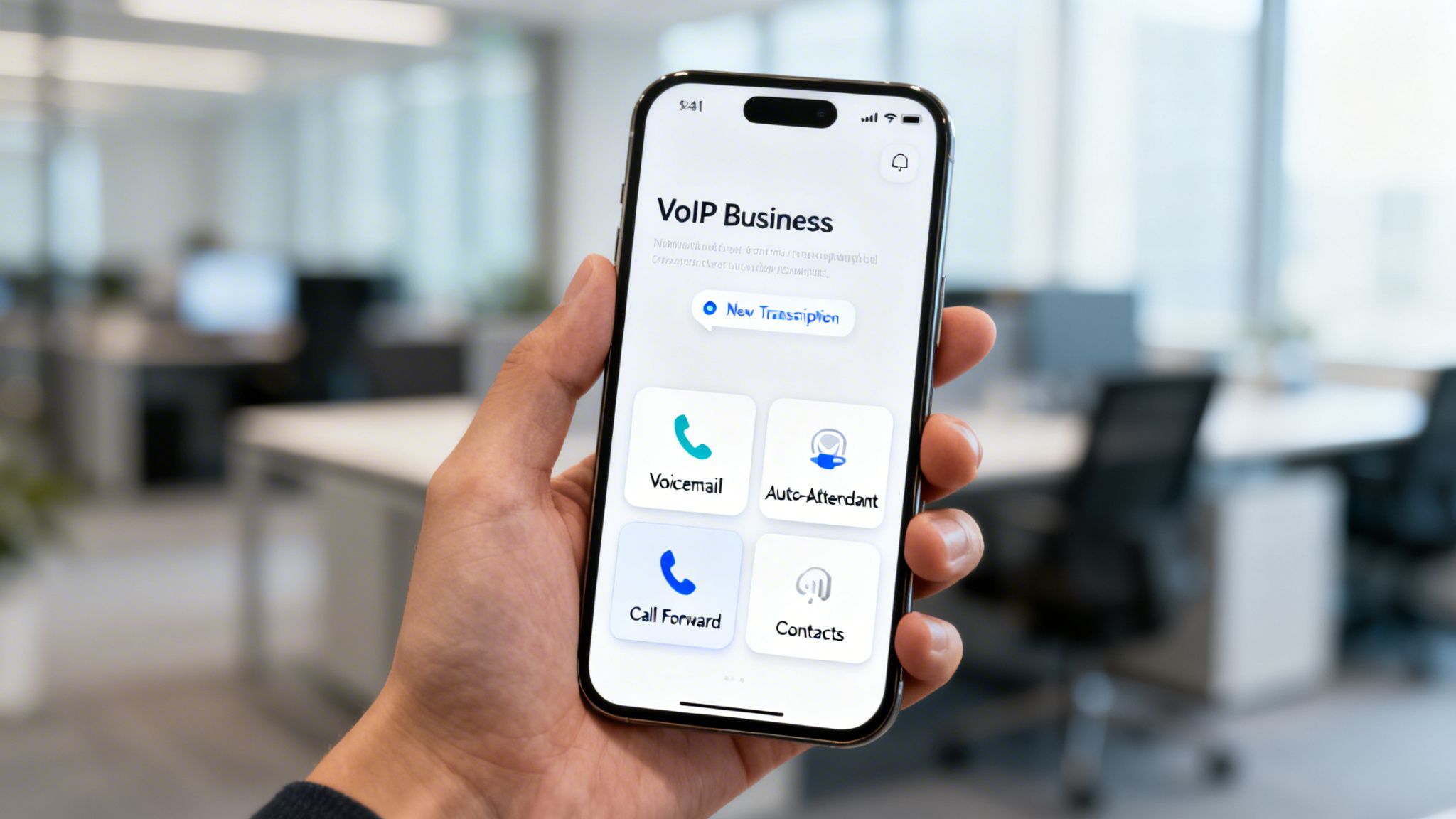
Think about that first impression. An auto-attendant (“Press 1 for Sales, Press 2 for Support”) immediately gives your business a polished, professional feel. More importantly, it gets callers to the right person on the first try, freeing up your team from constantly playing switchboard operator.
Smart Features for a Modern Workforce
Beyond that initial greeting, a good VoIP system is packed with features designed for how we work today. These aren't just minor conveniences—they solve real, everyday business problems and keep your team connected no matter where they are.
Here are a few key features you should absolutely look for:
- Advanced Call Routing: Don't just send calls to a desk. Set up smart rules that forward calls based on the time of day, who's calling, or your team's availability. For example, after-hours calls can go straight to a dedicated voicemail or an on-call tech's cell phone.
- Voicemail-to-Email Transcription: Stop dialing in to check messages. Voicemails can be automatically transcribed and sent right to your email. You can scan a message in seconds to see if it’s urgent, all without ever picking up the phone.
- Mobile and Desktop Apps: These apps effectively turn any smartphone or computer into a full-featured business phone. Your team can make and take calls using their business number, keeping their personal lines private and maintaining a professional image on the go.
A well-configured VoIP system means you never miss a customer call, whether your team is in the office, working from home, or on the road. It creates a single, unified presence for your entire company.
Elevating Your Professionalism and Efficiency
The massive shift to VoIP tells the whole story. Today, over 90% of companies worldwide rely on VoIP for their daily operations, and the market is on track to nearly double by 2032. This growth isn't random; it's driven by features that deliver a real competitive edge.
For instance, Premier Broadband offers branded caller ID, which displays your company name and logo when you call, dramatically increasing answer rates. Another game-changer is linking your phone system directly to your CRM. You can learn more about how CRM with VoIP integration automatically logs calls and pulls up customer records, saving precious time on every single call.
These features do more than just add convenience—they build a more efficient, professional, and connected business from the ground up.
Preparing Your Network for Flawless VoIP Calls
Your new VoIP phone system is only as good as the network it runs on. It’s a simple truth we’ve seen play out time and time again. You can have the best phones on the market, but without a solid network foundation, you're setting yourself up for choppy audio, frozen video, and dropped calls.
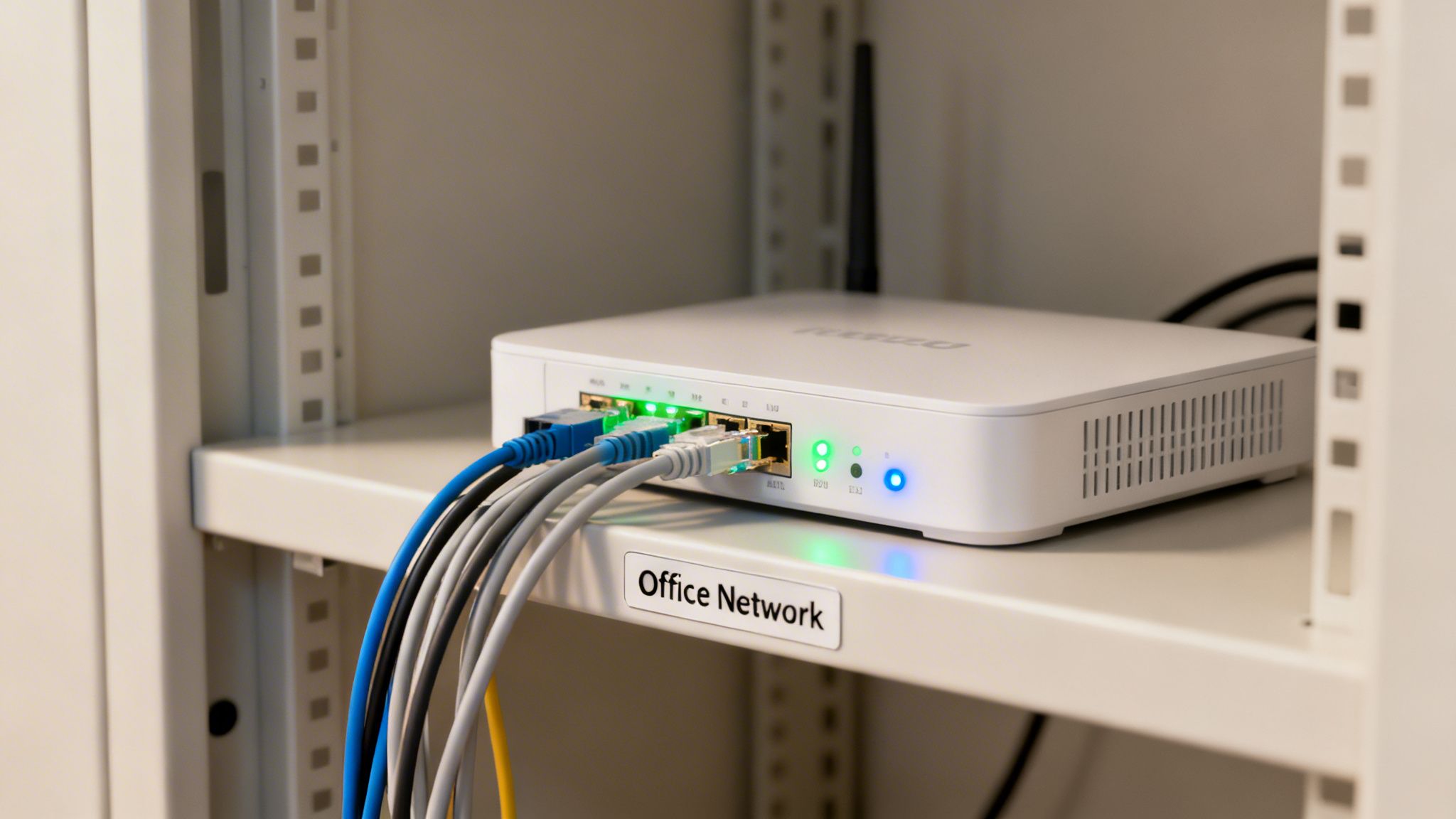
Before you plug in a single phone, you have to get your network ready. Don't worry, you don't need to be a network engineer. It's really about understanding a few key things that make or break call quality.
What Your Network Needs to Deliver
When it comes to VoIP, forget all the complex tech jargon. Nearly every call quality issue boils down to just three things. Get these right, and you're golden.
- Bandwidth: This is the size of your internet "pipe." A single voice call doesn't take much, maybe 100 Kbps per line. The catch is adding it all up—every simultaneous call, plus all the other stuff your team does online like sending emails and downloading files.
- Latency: Ever experience that awkward pause in a conversation where you end up talking over the other person? That's latency—the delay for data to travel back and forth. For crystal-clear calls, you need this delay to be virtually nonexistent.
- Quality of Service (QoS): This is the secret sauce. QoS is a setting on your router that basically creates a VIP lane for your voice traffic. It tells your network to handle phone calls before dealing with less urgent data, like a big software update. This prevents jitter and keeps calls stable.
These all work together. If you want to dig into the numbers for your own office, our guide on the right bandwidth for VoIP breaks it all down.
The single biggest mistake we see? Businesses forget about upload speed. Most internet plans brag about fast downloads, but give you painfully slow uploads. A phone call is a two-way conversation. If your upload speed is slow, the other person will hear a garbled, choppy mess, even if you can hear them perfectly.
Building a Rock-Solid Foundation
For this reason, a 100% fiber network like ours at Premier Broadband is the undisputed champion for VoIP. It’s built from the ground up to deliver the low latency and symmetrical upload/download speeds that voice and video demand.
As you plan your office space, think about the physical wiring, too. Clean, reliable power and data connections are non-negotiable. Tools like office cubicle power poles can make it much simpler to get every workstation set up correctly.
Want an even easier path? A Managed Network Edge service takes all the guesswork out of it. We can handle the configuration, security, and QoS settings for you, guaranteeing your network is perfectly tuned for flawless calls from day one. It’s the best way to ensure your investment in a modern phone system pays off.
Deploying and Managing Your VoIP System with Ease
So you've picked out your new voip phones for business. The next question is always about installation. If you're picturing a team of IT pros crawling under desks for a week, you can relax. With modern hosted VoIP, those days are long gone. The entire process is refreshingly simple and fast—something you can easily manage yourself.
Most of the setup actually happens before the phones even show up at your office.
With a cloud system, your provider handles the heavy lifting on their end. We pre-configure the phones with all your account info, user extensions, and custom settings. This is a process called provisioning. For you, it means a true plug-and-play experience. Just connect the phone to an internet port, and it's ready.
Setting Up Users in Minutes, Not Days
The real game-changer is the online management portal. This is your command center for the entire phone system. Let's say you hire a new salesperson. Instead of calling a technician and waiting days for a new line, you just log in and take care of it instantly.
Here’s what that looks like in the real world:
- Create a User Profile: Just pop in the new employee's name and email.
- Assign an Extension: Pick an open extension, like 105.
- Configure Call Rules: Set up their voicemail, decide if calls should also ring their mobile app, and create forwarding rules for when they're busy.
The whole thing takes less than five minutes. When the new employee starts, they plug their phone into any internet jack, it connects automatically, and they can start making calls. It’s a massive time and money saver.
Start Small Before You Go Big
Even though the tech is simple, a smart strategy makes for a flawless rollout. Trying to switch the entire company over at once can create chaos. A much better approach is to start with a small pilot group first.
“Always start with a pilot group of 3-5 users to work out any kinks before rolling it out to the whole company. This lets you test call quality, confirm features are working as expected, and get valuable feedback from a few key people without disrupting your entire operation.”
This trial run is your chance to catch any network hiccups or training gaps in a low-stakes environment. Once your pilot team gives the thumbs-up, you can roll out the system to everyone else, department by department, with complete confidence.
For businesses that prefer a completely hands-off experience, we offer Managed Network Edge services here at Premier Broadband. This option takes all the guesswork out of deployment and management. We handle the initial setup, ongoing monitoring, and security for you, ensuring your system runs perfectly from day one so you can focus on what you do best—running your business.
Your VoIP Questions, Answered
Making a change to your business phones is a big deal, and we get that. You’ve probably got a few questions rolling around. We hear them all the time, so let's get you some straight answers.
How Much Bandwidth Will VoIP Phones Use?
This is the number one question we get, and the answer is probably less than you’d expect. A single call on a VoIP phone only needs about 100 Kbps of upload and download speed.
But here’s the real secret: it’s not about raw speed. It’s about the quality of your connection. You need a stable line with low latency and symmetrical speeds (that means your upload is just as fast as your download). That’s what kills choppy audio and dropped calls. A 100% fiber optic connection is the only way to guarantee that kind of flawless performance.
Can I Keep My Business Phone Number?
Yes, of course! Your phone number is part of your brand. We’d never ask you to give that up.
The process is called number porting, and it's a standard, seamless part of switching to a VoIP provider like us. We handle transferring your existing number from your old phone company. The whole thing usually takes just a few business days, and your customers will never know anything changed.
Our Take: You absolutely can and should keep your number. A good provider handles the entire porting process for you. For your customers, it’s business as usual.
What Happens If My Internet Goes Down?
With a landline, if the line is cut, your phones are dead. End of story. This is where a cloud-based VoIP system really proves its worth. Since the system’s brain is in the cloud, not your office, an internet outage is just a small bump in the road.
Your calls can be set to automatically:
- Forward to your cell phone or another backup number.
- Go straight to voicemail, which can be sent to your email as a recording or text.
- Play a custom message for callers through an auto-attendant.
An internet outage doesn't have to mean lost business. With VoIP, you have a built-in backup plan so you never miss an important call.
Is VoIP Secure?
Modern VoIP is built for security from the ground up. Reputable systems use powerful encryption like Transport Layer Security (TLS) and Secure Real-Time Transport Protocol (SRTP) to shield your calls from anyone trying to listen in. It’s the same technology that protects your online banking.
And since the system is managed from the cloud, we can push security updates to all your phones instantly. This keeps you protected from new threats way more effectively than trying to manage a bunch of old hardware in a closet.
The cost savings, especially on international calls, are also a game-changer. By 2025, international VoIP calls are projected to grab a 56.7% market share, bringing costs down from dollars a minute to just pennies. These VoIP market insights show just how essential this technology has become for businesses that operate globally.
Ready to see what a modern phone system can do for your business communications? The team at Premier Broadband can design a reliable, feature-packed VoIP solution on our 100% fiber network. Get in touch with us today to learn more.