
You’re probably in one of two camps right now.
Either you still have a home phone and keep wondering why the bill feels stuck in another decade, or you’re thinking about adding one back because cell service inside the house is spotty, spam calls are out of control, or you want a reliable number for kids, grandparents, remote work, or emergencies.
That confusion makes sense. “Home phone” used to mean one thing: a copper-wire landline mounted to the wall or plugged into a kitchen jack. Today, it can also mean a VoIP service that uses your internet connection, works with many of the same phones you already own, and often includes features people used to pay extra for.
The big shift is this: the price and quality of your home phone now depend heavily on the network underneath it. A modern phone service riding on a weak connection can feel frustrating. The same service riding on a stable fiber connection can sound crisp, work smoothly, and cost a lot less than an old-style landline.
If you’ve been looking for affordable home phone service, the right question isn’t just “What’s the cheapest plan?” It’s “What kind of connection is this phone service built on, and what am I really getting for the money?”
Why Your Home Phone Bill Is Still So High
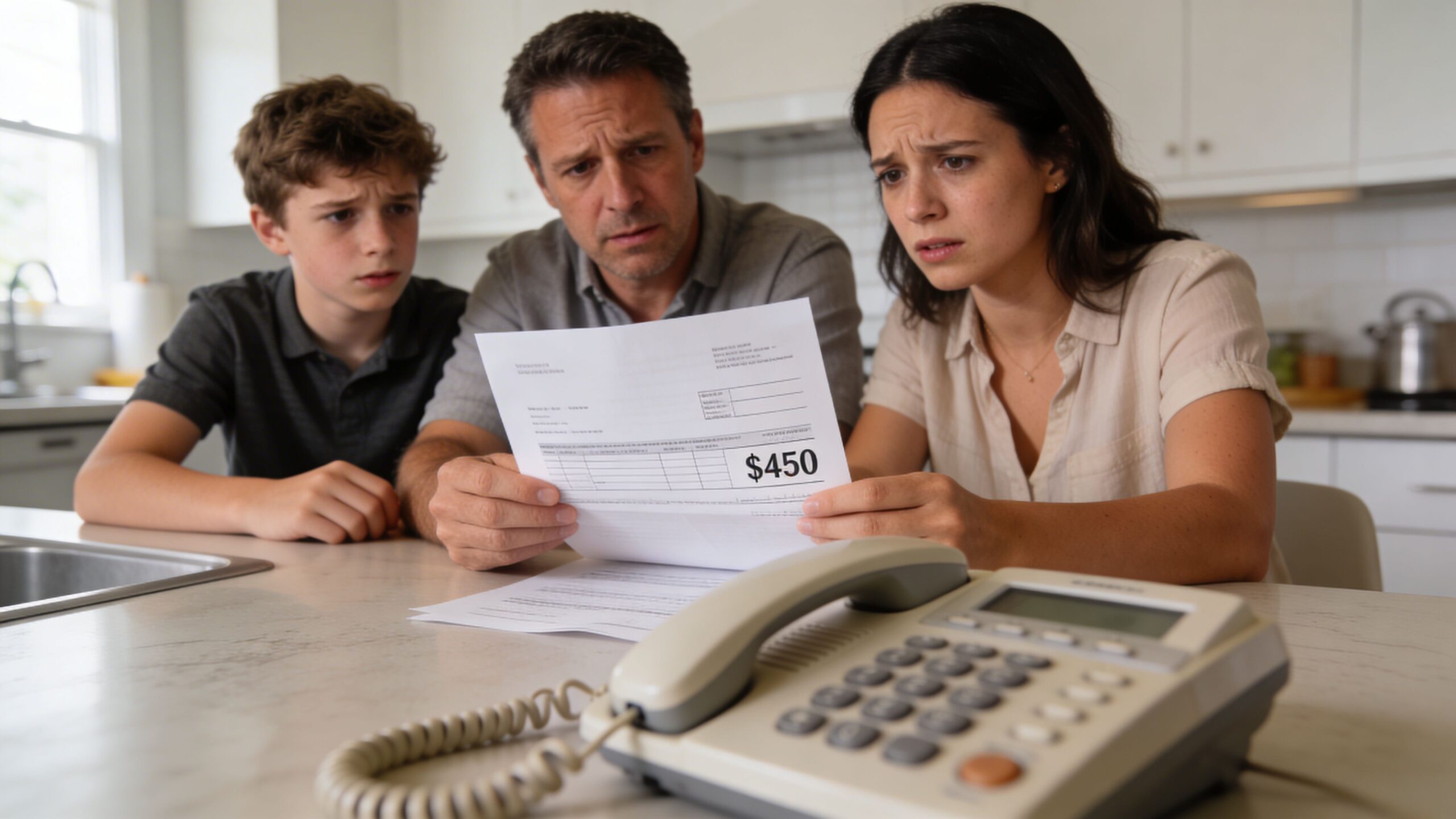
A lot of families have the same ritual. The monthly statement lands on the counter, someone glances at the total, and the conversation starts.
“Why is this still so expensive? We barely use it.”
That reaction isn’t irrational. Traditional home phone service became a household staple during the long buildout of the copper phone network. From about 80% of U.S. households having telephone service in 1960 to 97.6% in 2000, landlines moved from a convenience to a near-universal utility, according to U.S. Census historical telephone data. But the economics changed. The same source notes that by 2015, the Consumer Price Index for landline services had risen 14% since 2009, while wireless costs had dropped 13%.
Why old landlines feel expensive now
The old landline model was built for a different era.
Providers maintained dedicated copper lines to each home. That infrastructure made sense when almost everyone depended on it. As households shifted toward mobile and internet-based calling, the cost structure became harder to ignore.
You still see the legacy in the bill itself:
- Base service charges that look modest at first
- Add-on features for things many people now expect to be standard
- Taxes and surcharges that make the final total feel disconnected from the advertised rate
That’s why a home phone bill can feel oddly high even if the phone barely rings.
A landline bill often isn’t expensive because you’re using it heavily. It’s expensive because you’re paying for an older delivery system.
Why this matters to budget-minded households
If you’re reviewing recurring bills, phone service is a good place to look. People often focus on streaming, insurance, or groceries first, but telecom charges can stick around for years. A practical guide on how to reduce monthly expenses can help you spot the subscriptions and utility-style bills that deserve a second look.
The key point is simple. Traditional landlines aren’t costly because home phone service itself must be costly. They’re costly because many households are still attached to an older service model.
A modern internet-based home phone can give you the same familiar experience of having a house number, while lowering the monthly cost and adding tools that used to be reserved for business phone systems.
Traditional Landline vs Modern VoIP Explained
If landlines are the old model, what replaced them?
For most homes, the answer is VoIP, short for Voice over Internet Protocol. That sounds technical, but the idea is simple. A landline sends your voice over a dedicated phone network. VoIP sends your voice over your internet connection.
A good analogy is paper mail versus email.
A traditional landline is like sending a physical letter through a dedicated postal route. VoIP is like sending the same message digitally over the network you already use every day. The message still gets there. The path is different.
How a landline works
A traditional landline uses the public switched telephone network, often called the PSTN.
Your home connects to the phone company through physical wiring. That’s why old-school landlines have a reputation for reliability, especially during power outages when paired with a corded phone. The phone line itself carried the service in a very direct way.
That setup is familiar and simple. It’s also limited.
Most landlines focus on basic voice calling. Newer conveniences like app access, flexible call routing, message delivery to email, and cross-device calling weren’t built into the original design.
How VoIP works
A VoIP home phone converts your voice into digital data and sends it through your broadband connection.
That doesn’t mean your home phone suddenly turns into a gadget project. In many homes, the setup still feels normal. You pick up a handset, dial a number, and talk. The difference is happening in the background.
If you want a plain-language walkthrough, this explanation of how VoIP phone work shows the process in a way that’s much easier to follow than the acronym makes it sound.
Why people get confused
Many people hear “internet phone” and assume one of two things:
- It must be complicated.
- It must sound worse.
Neither is automatically true.
With the right setup, VoIP can be easy to use and can sound better than an old landline. The key variable is the quality of the underlying internet connection. That’s the piece many buyers miss.
VoIP vs Traditional Landline at a Glance
| Feature | VoIP (e.g., Premier Broadband) | Traditional Landline |
|---|---|---|
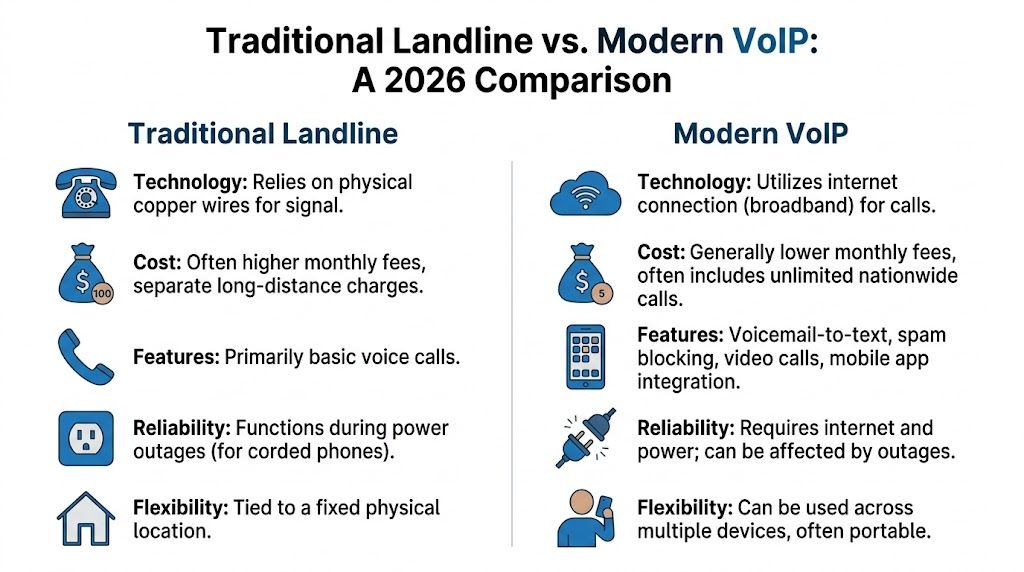
| Technology | Uses your broadband internet connection for calls | Uses dedicated copper phone lines |
| Monthly cost style | Usually simpler, often bundled with internet | Often higher, with older fee structures |
| Call quality | Can be very clear on a stable connection | Familiar, but typically more limited in audio range |
| Features | Commonly includes voicemail delivery, caller tools, app access, call forwarding | Usually centered on basic calling |
| Flexibility | Can often work across multiple devices | Tied to the phone jack and home location |
| Outage behavior | Depends on internet and power | Corded phones can keep working during outages |
Which one fits which household
A traditional landline still makes sense for some people who want the old model specifically and value its outage behavior above everything else.
VoIP fits better when you want:
- Lower ongoing cost without giving up a home number
- Better features than a basic copper line
- Clearer calls when paired with solid broadband
- Flexibility to manage calls from more than one device
Practical rule: If your household already depends on broadband for work, streaming, school, and security devices, a home phone that rides on that same strong connection usually makes more sense than paying separately for aging copper service.
The important distinction isn’t “old versus new” for its own sake. It’s whether you’re paying for a phone system built around today’s home network or yesterday’s.
Decoding the Costs of Affordable Home Phone Service
The advertised price for a phone plan rarely tells the whole story. What matters is the total monthly cost after the bill settles into real life.
That’s where many homeowners get annoyed with traditional service. The sticker price may look manageable, but the final amount often includes recurring extras that don’t feel obvious when you sign up.
Where the money goes
With older landline service, the bill can include several layers:
- Core line service
- Calling features that may be separate
- Regulatory fees and taxes
- Long-distance or usage-related charges, depending on the plan structure
None of that is mysterious once you’ve seen a few bills. It’s just fragmented pricing. A low-looking entry price becomes a larger monthly commitment.
By contrast, many VoIP plans are easier to understand because they’re designed more like a modern utility add-on. You’re often paying for one service package instead of rebuilding the phone experience line by line.
The spending shift tells the story
U.S. spending patterns show how far the market has moved. By 2017, residential landlines accounted for 17.6% of total telephone expenditures, while the average consumer spent $1,118 annually on cellular service and the implied spend on landlines was around $240, according to the Bureau of Labor Statistics analysis of landline cord-cutting.
That doesn’t mean every landline is cheap or every VoIP plan is identical. It means households have been actively moving away from the old billing model and toward communication options that feel more efficient.
A simple way to compare plans
When you shop for affordable home phone service, compare offers in this order:
Start with the full monthly total
Don’t stop at the headline rate. Ask what the full recurring bill looks like.Check what’s included by default
Caller ID, voicemail, call forwarding, spam tools, and app access can change the value of the plan a lot.Look at bundle logic
If you’re already paying for internet, combining services can simplify billing. A page for internet and phone bundles is useful for seeing how providers package those services together.Watch for old-style pricing habits
If a provider charges separately for basic conveniences, the plan may not stay affordable for long.
Cheap and affordable aren’t the same thing. Cheap is the ad. Affordable is the bill you can live with month after month.
The best value usually comes from a plan that includes the features you’ll use, rides on a dependable connection, and doesn’t surprise you later with a stack of small charges.
Must-Have Features for Your 2026 Home Phone
A home phone shouldn’t just exist. It should solve problems.
That’s the difference between an old line that rings and a modern service that fits how households communicate now. If you’re choosing affordable home phone service in 2026, the feature list matters almost as much as the price.
HD voice is not a gimmick
Many people assume “phone quality is phone quality.” It isn’t.
VoIP services can use wideband codecs that capture a 50 to 7000 Hz audio range, compared with 300 to 3400 Hz for traditional landlines, according to Ooma’s explanation of cheap home phone service and HD Voice. That wider range can lead to up to a 70% reduction in perceived background noise and clearer speech.
In plain language, voices sound less flat and less muddy.
If you’ve ever had to ask someone to repeat a name, address, or medication instruction three times, you already know why that matters.
Features that make daily life easier
Some upgrades sound minor until you use them for a week.
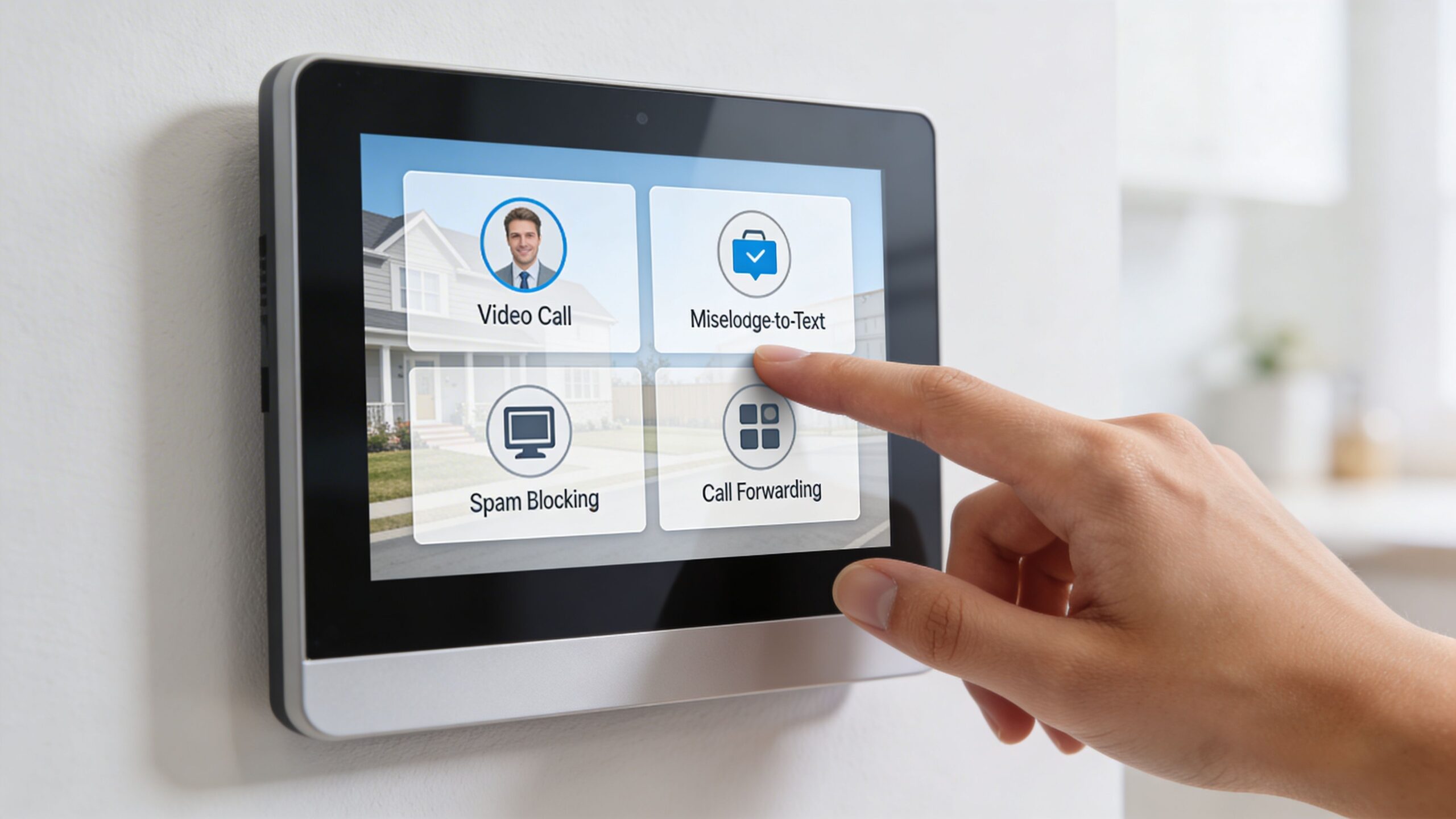
Voicemail to email
This is one of the easiest features to underestimate.
Instead of checking messages only from a handset at home, your voicemail can show up where you already manage your day. That’s helpful if you’re at work, picking up kids, or traveling.
Good use case: a parent misses a call from school, sees the message quickly, and responds without waiting until they’re back in the kitchen.
Mobile app integration
A modern home phone doesn’t have to stay trapped on one table.
Many VoIP services let you use an app so your smartphone can act like an extension of your home number. That can be useful when you want to return calls from your home identity instead of your personal cell number.
Call forwarding and simultaneous ringing
These tools help you avoid missed calls without sitting next to one handset all day.
You can route calls where you want them to go, which is useful for caregivers, households with older relatives, or anyone who works from a home office and doesn’t want to hover near the base station.
To see these features in action, this quick walkthrough is worth a look:
The features most people should prioritize
Not every add-on matters equally. Focus on the ones that change your routine for the better.
Spam and anonymous call controls
These help turn the phone back into a tool instead of a nuisance.Caller ID that’s easy to read
You shouldn’t have to guess whether to answer.Three-way calling
Still useful for family coordination, school calls, and quick group conversations.Simple message access
If messages are hard to retrieve, people stop using the feature.
Match the feature list to the household
A retiree may want simplicity, big-button phone compatibility, and clear incoming audio.
A family may care more about shared access, voicemail delivery, and blocking nuisance calls.
A remote worker often wants sharp voice quality, flexible call routing, and the ability to use the home number from a mobile app.
The point isn’t to chase the longest feature list. It’s to pick a service where the included tools remove friction from everyday communication.
How to Choose the Right Home Phone Provider
Many people compare phone providers backward.
They start with price, then glance at features, then maybe look at reviews. For a modern home phone, the smarter starting point is the connection quality underneath the service.
That matters because VoIP isn’t magic. It depends on the same internet environment your household uses for laptops, TVs, game consoles, cameras, and smart devices. If that foundation is weak, the phone experience can be weak too.
If the foundation is stable, VoIP usually feels smooth and uneventful, which is exactly what you want from a home phone.

Start with the network, not the handset
A lot of phone shopping advice focuses on the device. That’s understandable, but it misses the bigger factor.
If your internet connection struggles with consistency, your calls may sound choppy, delayed, or unstable during busy household hours. If your connection is strong and well-managed, voice traffic has a much better chance of staying clean.
Fiber-backed internet is attractive here because it’s built for steady data delivery. In a home where someone is on a video meeting, someone else is gaming, and another person is streaming, a stronger connection gives your phone service more room to behave normally.
Reliability during outages matters more than most buyers realize
Here’s the part many households overlook. VoIP depends on power and internet availability.
According to Optimum’s home phone information, 68% of VoIP outages in 2025 were directly caused by power or internet failures, and 42% of remote workers prioritize “always-on” voice service over cost alone. Those figures point to a practical buying rule: don’t judge a provider only by monthly price. Judge the resilience of the service around it.
If your home phone matters for work, caregivers, or emergency reachability, outage planning isn’t optional.
A checklist that actually helps
When comparing providers, use this list.
1. Internet quality first
Ask yourself:
- Is the connection stable throughout the day?
- Does the household already experience drops or dead spots?
- Will the phone service share bandwidth with heavy streaming or gaming?
If the answers raise concerns, fix the internet environment before expecting great phone performance.
2. Clear pricing
Look for plans that don’t hide the true monthly cost behind vague language.
A provider should make it easy to understand what’s included, what equipment is needed, and whether key calling features are standard or extra.
3. Number porting
Most households want to keep the number they’ve had for years. Confirm that porting is supported and ask what the process looks like before canceling anything.
4. Feature fit
Don’t pay for a long menu you’ll never touch. Choose the tools that match how your household communicates.
5. Real support
Phone service gets stressful when something breaks. It helps if support can assist with both the internet side and the voice side, rather than sending you between companies.
Why bundled internet and phone can make sense
There’s a practical advantage when your broadband and phone come from the same provider. Troubleshooting is often simpler because one company can see more of the full picture.
For households comparing options, a page on low-cost VoIP can help frame what to look for in a modern phone plan tied to home internet service.
I’d also look closely at whether the provider offers tools for managed Wi-Fi, call features that are easy to use, and equipment support if something in the home setup gets moved or damaged.
The decision rule I’d give a neighbor
Pick the provider whose service rests on the strongest and most stable home internet foundation. Then compare price, included features, and support.
One option in that category is Premier Broadband, which offers fiber internet and VoIP phone service together. That pairing is relevant for households that want one connection for streaming, work, and home calling, rather than trying to bolt phone service onto a shaky network.
The phone plan matters. The network matters more.
Setup and Troubleshooting Common VoIP Issues
The good news about VoIP setup is that it’s usually less intimidating than people expect.
In many homes, the process is just: connect the phone adapter to your internet equipment, plug in your phone, power everything on, and finish activation. If you want to see the kind of device that bridges a regular home phone to internet calling, this overview of a phone internet adapter helps make the hardware easier to picture.
What basic setup looks like
A common setup uses an adapter between your phone and your router or modem.
Think of that adapter like a translator. Your old phone speaks “telephone.” Your internet connection speaks “data.” The adapter helps them understand each other.
A simple installation usually goes like this:
Place the adapter near your router
Keep cables tidy and avoid stretching cords across rooms.Connect the adapter to your internet equipment
That gives the phone service access to your broadband connection.Plug your telephone into the adapter
Many standard home phones can work this way.Power on the equipment and complete activation
Follow the provider’s instructions, including emergency address registration if required.
Three common problems and what they usually mean
Choppy or robotic audio
This often points to an unstable home network, congestion, or weak in-home coverage.
If part of your house has dead zones, improving your wireless layout can help. A guide to choosing a reliable mesh Wi-Fi system is useful when the issue isn’t the phone itself, but the way your signal reaches different rooms.
Try these fixes:
Move networking equipment to a better spot
Avoid hiding it in cabinets or corners.Reduce unnecessary network strain during testing
Pause heavy downloads or streaming and place a test call.Use wired connections where possible
This can reduce variability for voice equipment.
One-way audio or calls that won’t connect properly
This usually means the phone service and the home network aren’t communicating cleanly.
Restart the equipment in order: internet equipment first, then the phone adapter. If the issue remains, contact the provider and describe exactly what happens. “I can hear them but they can’t hear me” is much more helpful than “the phone is weird.”
Service stops during a power outage
This is the major tradeoff with VoIP.
According to T-Mobile LineLink support information, VoIP service depends on power and internet, and a 1000VA UPS can sustain a router and VoIP adapter for 8+ hours. Traditional POTS landlines are self-powered in a way VoIP is not.
Home fix: If your home phone matters during storms or blackouts, put the router and VoIP device on a UPS instead of waiting for the first outage to expose the weakness.
When to call support
Call your provider if:
- The adapter never finishes activation
- Audio problems continue after a restart
- Your number port hasn’t completed when expected
- The service works only in one part of the house and not another
- You need help planning backup power or failover
Most VoIP issues aren’t mysterious. They’re usually connection issues, Wi-Fi layout issues, or power backup issues. Once you know where to look, they become much easier to solve.
Frequently Asked Questions About Home Phone Service
Can I keep my current home phone number?
Usually, yes. Most modern providers support number porting. The important part is timing. Don’t cancel your old phone service until the transfer is confirmed complete.
Do I need a special phone?
Not always. Many VoIP services work with standard home phones through an adapter. In some setups, you can also manage calls through an app.
Will a VoIP home phone sound worse than a landline?
Not necessarily. On a strong internet connection, many people find VoIP call quality clearer and easier to understand, especially with HD voice features.
What happens if the power goes out?
Unlike traditional self-powered copper lines, VoIP depends on your internet equipment and electricity. If outage calling matters in your home, use a battery backup for the networking gear and ask about forwarding or failover options.
Is a home phone still worth having?
For many households, yes. A home phone can give you a stable family number, better reachability inside the house, a separate line for work or caregivers, and a simpler contact point for schools, doctors, and relatives.
Is affordable home phone service only for seniors?
No. Seniors often value it, but so do families, remote workers, and households with inconsistent cell coverage. The appeal is broader now because modern home phone service can be cheaper, more flexible, and easier to manage than older landline setups.
What’s the biggest mistake people make when choosing a provider?
They focus only on the advertised rate. The smarter move is to check the quality of the internet connection behind the service, the included features, support options, and what happens during outages.
If you want a home phone that fits the way people live now, take a look at Premier Broadband. A provider that combines fiber internet with VoIP phone service can simplify billing, improve call quality, and make it easier to support your whole home network in one place.