

What's the point of chasing the fastest headline speed if the phone side of the deal still leaves you paying for features you don't use, equipment you didn't plan for, or a bundle that turns expensive after the promo ends? The best internet phone deals are usually the ones that fit the actual mix of home calling, remote work, streaming, and budget pressure, not the ones with the biggest advertised number.
The right bundle depends on more than speed. A practical comparison starts with total monthly cost, then checks whether you need fiber, cable, standalone VoIP, or a business cloud phone stack, and whether the provider is transparent about equipment, managed Wi-Fi, taxes, fees, and contract terms. It also helps to verify the calling features that matter most, such as voicemail-to-email, caller ID, mobile app support, number porting, and outage backup.
The best deal is the one whose phone features and network capacity match actual usage.
1. Premier Broadband
Premier Broadband stands out because it treats internet and phone as a single service strategy, not a grab-bag of add-ons. Its 100% fiber-first network is built for homes, gamers, remote workers, and small businesses, which matters when upload speed and reliability are just as important as download performance. The provider's own internet and phone bundles guide makes that bundled approach clear from the start, and the fiber-internet overview reinforces why fiber is the stronger base for modern calling and video work.
What makes Premier especially practical is the way it combines symmetrical speeds, dual-band Wi‑Fi 6, and CommandIQ management with phone service that fits household and business use. Symmetrical upload and download speeds are a real advantage for Zoom calls, large file transfers, and gaming, and the included Premier Protects stack adds family content controls, managed Wi-Fi, and network security through ProtectIQ. For households that worry about equipment mishaps or relocation, the Premier Protection Plan is a useful extra layer because it covers repairs, storm damage, pet chews, and relocations.
The parts that matter in daily use
Premier's VoIP side is strong too. Customers can get voicemail-to-email, caller ID, mobile app integration, and business branded caller ID, which makes it easier to separate personal and work calls without juggling devices. For businesses, the platform expands into hosted VoIP, AI-driven camera systems, and Managed Network Edge, so the same provider can support a home office today and a multi-site setup later.
Practical rule: if the phone line is mostly there for reliability, remote work, or a business front desk, Premier's fiber-plus-VoIP model is more useful than a cheap-looking bundle that cuts corners on upload speed or support.
The trade-off is simple. Premier doesn't publish site-wide pricing, so you have to check service at your address or contact the company directly for current offers. That makes it less convenient than a national rate card, but more honest about the fact that fiber buildouts, local availability, and bundle structure are address-specific.
2. Verizon Fios Internet and Fios Home Phone
Verizon Fios is a strong fit for households that want fiber internet with a familiar home phone setup. The advantage is straightforward, where Fios is available, you get fiber performance for internet traffic and a home phone service that rides on the same network. That makes it a practical option for families who want a cleaner upgrade path than legacy copper or patchwork voice service.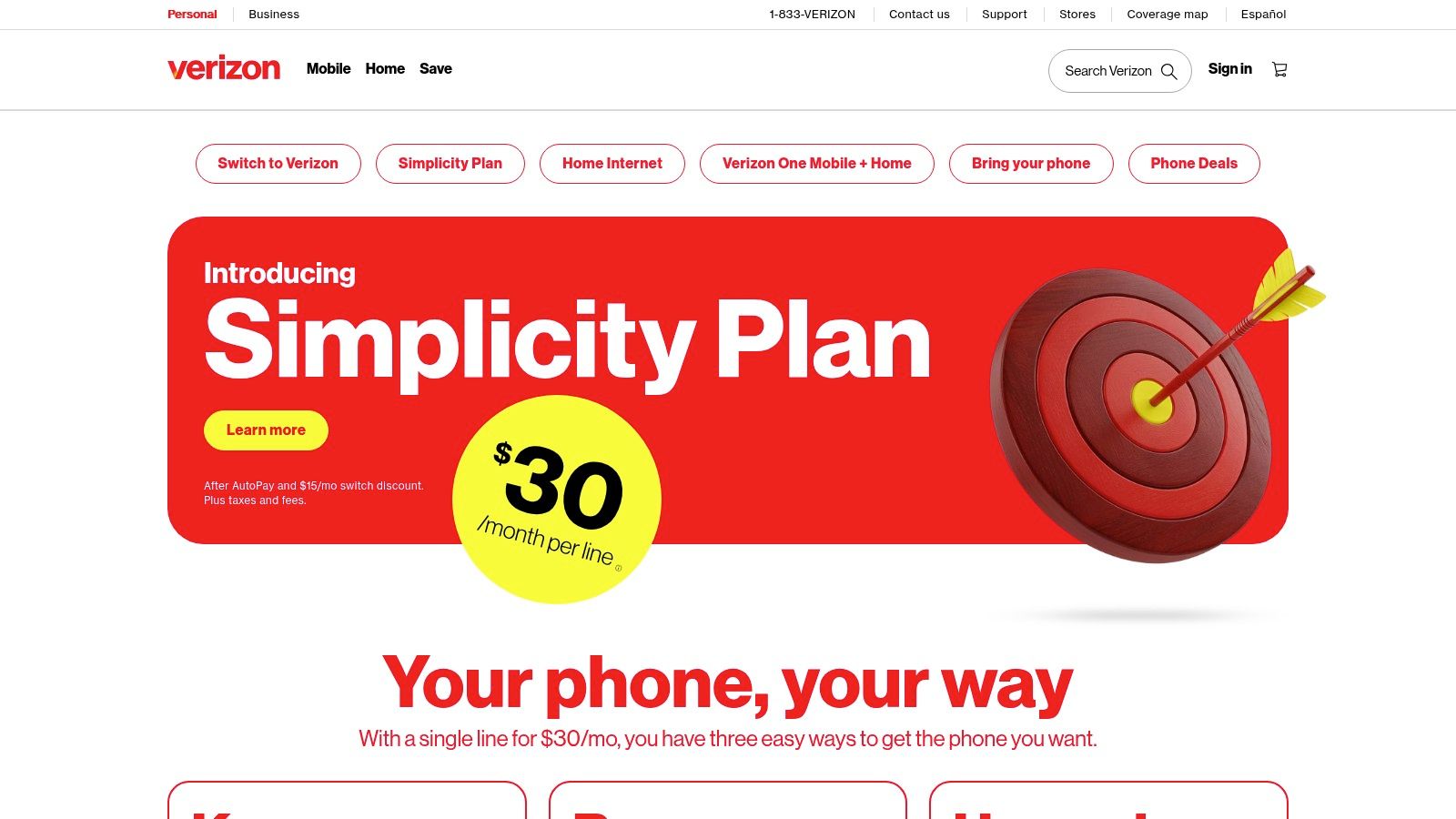
The calling side is where Fios becomes easy to evaluate. Verizon offers Fios Home Phone with more than 30 calling features, along with plan choices like Unlimited, Per-Minute, and World Plan 300/500. That tiering helps if you know whether you need domestic calling, international calling, or just a basic line for backup and convenience. The Mobile + Home Discount can also lower the monthly internet price when the household already uses Verizon wireless.
Best fit and main limitation
Fios works best for buyers who want a single provider for internet and home phone, plus online account management through My Verizon. The setup is cleaner than many cable bundles because the plan structure is easier to understand once you're in the checkout flow. It's also a good match for people who want fiber reliability without building a VoIP setup from scratch.
The downside is availability. Fios is regional, not nationwide, and the home phone price appears after address entry at checkout rather than on a single national rate card. That means you can't compare it like a fixed menu item. If the address qualifies, though, it's one of the most practical traditional fiber-and-phone combinations on the market.
3. AT&T Internet and AT&T Phone
AT&T is worth checking because it puts internet and digital home phone under one provider, but the right fit depends on the service address. In some homes, the internet side is fiber. In others, it is IPBB, so the connection type matters more than the bundle label. That is why the phone offer should be evaluated after the broadband technology is confirmed, not before. For a quick comparison of how IP-based voice differs from older line-based service, see Regina managed IT services.
AT&T Phone includes Unlimited North America and International Plus II, and it also offers AT&T Phone – Advanced for locations without wired access. The cellular-backed option is useful in harder-to-wire areas because it gives those households a phone path that does not depend on a traditional copper line. That matters for buyers who need a working voice line more than they need the lowest advertised price.
Where this bundle works and where it doesn't
The main advantage is straightforward plan structure. AT&T's phone tiers are easy to sort through, and the bundle is simple to set up when AT&T internet is already available at the address. Buyers who want a familiar home phone experience with established support will usually find the offer easy to evaluate.
The trade-off is flexibility. AT&T Phone generally expects AT&T internet, and both availability and feature set vary by service address. That makes it a narrower choice than a standalone VoIP plan if you want to pair any broadband provider with any phone service. Buyers who shop on equipment choice, contract terms, or eligibility limits will usually need to compare the bundle against a separate voice provider before deciding.
For business buyers, the comparison shifts again. Once call routing, branded identity, and administrative control matter, a managed service stack can make more sense than a basic residential voice add-on. That is especially true for organizations already weighing broader options like Regina managed IT services.
4. Spectrum Internet and Spectrum Voice
Need a home phone line that stays simple once the internet is already in place? Spectrum's main appeal is the low-fuss add-on model. If you already use Spectrum internet, adding Spectrum Voice gives you unlimited nationwide VoIP calling without changing the rest of the household setup. The service includes spam blocking, voicemail, caller ID with name, call forwarding, simultaneous ring, and optional international calling through Spectrum Voice International.
That feature set fits buyers who want a predictable residential phone line without extra configuration. It can work well for an older family member, a home office, or backup calling at home, while still keeping the account easy to manage. It is also a practical choice for households that do not need a business-grade UC platform. The phone add-on does not usually bring a separate residential contract requirement, which makes it easier to keep in place than many bundled alternatives.
Why buyers compare it anyway
Spectrum stays in the mix because the footprint is wide and the add-on structure is easy to understand. The phone service usually feels like a straightforward upgrade to an existing internet account, and the international option can help families that need broader calling coverage without signing up for a separate carrier. For buyers who care about a simple monthly bill and standard calling features, that is a genuine plus.
There are real trade-offs, though. Spectrum's service and pricing can vary by legacy market and state, so the exact offer is not the same package everywhere. Availability, equipment, and plan details can shift by address, which means the online version of the offer may look different from what a local customer can order. If you need help sorting out what Spectrum Voice includes in your market, the support resource at https://premierbroadband.com/spectrumvoip-support/ is a useful place to check the service details before you commit.
In practice, Spectrum Voice makes the most sense when Spectrum internet already performs well at your address and you want a simple phone add-on instead of a more specialized system. It is a practical fit for buyers who value familiar calling features, clear account management, and a bundle that does not require a lot of setup work.
5. Xfinity Internet and Xfinity Voice
Xfinity is one of the most widely available names in this category, and that matters because a phone bundle is only useful if the internet side is available where you live. Xfinity Voice gives customers a digital home phone with nationwide calling and a Voice Premier option for unlimited calling to more than 90 countries, depending on availability. That international reach makes it more attractive for households that call overseas often and don't want to piece together separate services.
Management is handled through Xfinity Connect, and the equipment can include battery backup for outages. That's important for home phone buyers who still care about service continuity during local power or network disruptions. Xfinity also publishes state-specific rate cards, which is better than the opaque pricing some competitors use.
What to watch before you add it
The main upside is convenience. Xfinity can bundle internet, TV, and phone in a way that feels familiar, and the checkout flow is easy for customers who want everything under one provider. If you want a residential bundle with a large footprint and a broad service menu, it's a natural comparison candidate.
The downside is variability. Phone plan availability and rates can differ by state, some legacy plans are grandfathered, and final bundle pricing depends on the address and selected internet tier. That means Xfinity can look very different from one household to the next. The best way to evaluate it is to focus on the final bill, not the promotion banner.
Xfinity is a strong option if your priority is broad availability and a familiar home phone experience, but the final value depends on the state-level pricing and the tier you choose.
6. Ooma
Ooma is the clearest example of a standalone home VoIP deal. It works over any broadband connection, so it fits households that already have reliable internet and do not want to buy a bundled phone line just to get voice service. After a one-time purchase of Ooma Telo hardware, customers can use the Basic plan with no monthly recurring fee beyond taxes and fees, or move up to Premier for more advanced features.
The practical appeal is clear. Ooma can give a household voicemail-to-email, multi-ring to mobile, and a normal home phone setup without tying that line to the same provider as the internet. The DIY setup also suits people who are comfortable handling a small amount of equipment themselves, including the router connection and the initial device setup. For buyers comparing hardware options and backup features, the Finchum Fixes IT VoIP guide is a useful check on what to look for in a device-based VoIP setup.
The hardware choice and backup option shape the value
Ooma makes the most sense when you already have solid broadband and care more about lowering recurring costs than avoiding upfront spend. The required hardware purchase means the first month is not the full story, and call quality still depends on the strength of the home network unless you choose the LTE model. That trade-off is straightforward, lower ongoing cost in exchange for a device purchase and more dependence on your connection.
The Ooma Telo LTE option adds battery-backed calling and LTE support, which helps when broadband or power fails. For homes where the phone line needs to stay usable during outages, that extra layer can justify the added hardware complexity. Ooma works well for buyers who want a flexible, low-cost VoIP layer and do not need the internet provider to be the same company.
7. Nextiva
Nextiva belongs on a business-focused shortlist because the best internet phone deals for a company are rarely the same as the best home bundle. It runs as a cloud business phone platform over any reliable broadband connection, so it can fit a small office, a growing team, or a larger operation that needs centralized control. The platform brings together voice, video meetings, team chat, SMS/MMS, analytics, and CRM integrations, so it covers day-to-day calling and the workflow around it.
The stronger value is in the administration tools. Nextiva includes call routing, auto-attendant, call recording, and an admin portal that makes it easier to manage several users or multiple locations without treating each line as a separate setup. It also supports porting and offers 24/7 support, which matters when the phone system affects reception, customer response, or revenue-bearing calls.
Why businesses compare it with residential bundles
A basic home phone add-on can still work for a solo operator, but it usually stops being enough once a team needs routing, reporting, or multiple extensions. Nextiva's per-user pricing fits that environment better, especially for companies that want unified communications instead of a simple voice line. It also connects more naturally with office workflows than a standard residential bundle, which can help when staff need a shared system rather than separate consumer lines.
Cost structure is the main trade-off. Per-user pricing can add up for very small teams, and the better rates often depend on annual or multi-year terms, so buyers should check the commitment before they sign. For a buyer comparing setup options and team size, a small business phone system guide is a useful place to compare features against the number of users, the need for call handling, and the level of support the business expects. If the job is to keep business calls organized and professional, Nextiva usually makes more sense than forcing a home bundle to do office work.
Top 7 Internet + Home Phone Deals Comparison
| Provider | Complexity 🔄 (implementation) | Resource needs ⚡ (requirements) | Expected outcomes ⭐ (quality) | Ideal use cases 💡 | Key advantages 📊 |
|---|---|---|---|---|---|
| Premier Broadband | Moderate, fiber build + managed Wi‑Fi setup | Fiber availability per address; managed equipment & optional protection plan | ⭐⭐⭐⭐⭐, symmetrical speeds, low latency | Rural/small-town homes, gamers, remote workers, small businesses | City-grade fiber, whole‑home Wi‑Fi, bundled VoIP, no overage/no long contracts |
| Verizon Fios (Internet + Home Phone) | Low, provider installs fiber where available | Regional fiber footprint; standard home wiring/equipment | ⭐⭐⭐⭐, reliable fiber + voice | Households wanting high‑quality fiber + phone bundles | Symmetrical fiber performance; clear phone tiers; mobile + home discounts |
| AT&T Internet + AT&T Phone | Low–Moderate, depends on fiber/IPBB and device | Often requires AT&T internet; cellular‑backed option for no wired access | ⭐⭐⭐⭐, stable service with 911 support | Users wanting familiar landline experience and published plans | Published phone tiers; cellular‑backed "Phone – Advanced" fallback |
| Spectrum (Internet + Voice) | Low, cable add‑on via checkout | Spectrum service area required; cable modem/voice adapter | ⭐⭐⭐, economical nationwide calling within footprint | Existing Spectrum internet customers seeking simple phone add‑on | Unlimited US calling, international add‑on, no residential contract |
| Xfinity (Internet + Voice) | Low, add‑on at purchase/checkout | Cable availability; optional battery backup for outages | ⭐⭐⭐, widely available with standard features | Customers wanting broad availability and bundle savings | Premier international calling, state pricing transparency, robust controls |
| Ooma (Home VoIP) | Low, DIY hardware setup (one‑time) | Ooma Telo device purchase; broadband; optional LTE model for backup | ⭐⭐⭐, cost‑efficient; quality depends on home network | Budget‑conscious homeowners wanting low monthly fees | Very low monthly cost; easy setup; LTE/battery backup option |
| Nextiva (Business Cloud Phone) | Moderate–High, provisioning, integrations & admin setup | Reliable broadband, per‑user subscriptions, admin/config effort | ⭐⭐⭐⭐–⭐⭐⭐⭐⭐, enterprise‑grade features & uptime | SMBs, multi‑site businesses, contact centers | Unified communications, analytics, CRM integrations, SLA/24/7 support |
Turn the Shortlist Into a Better Deal
The smartest way to compare best internet phone deals is to start with address availability, then force the provider to show the full monthly bill. Ask for the complete price including internet, phone, equipment, managed Wi-Fi, protection plans, taxes, and fees, and confirm whether the advertised speed is symmetrical. If the provider won't spell out the monthly total, the promotion isn't ready for a serious comparison.
Then drill into the calling features that affect daily use. Ask whether voicemail-to-email, caller ID, mobile app access, international calling, number porting, and outage backup are included or sold separately. Those details matter more than a glossy headline because they determine whether the service is usable for home work, family calling, or a front desk.
After that, compare the post-promotion price and contract obligations. If you're looking at a bundle, ask whether the provider can match a current offer, waive an activation charge, reduce equipment fees, or explain mobile, referral, or term discounts that could improve the total. That's where negotiation happens, not in the advertised teaser rate.
For households, Premier's fiber-first setup is especially compelling when you need a home office, family controls, and a network that can handle gaming or heavy uploads without compromise. For organizations, Premier's hosted VoIP, branded caller ID, AI-driven camera systems, and Managed Network Edge deserve a closer look when a basic home bundle won't support security or scale.
Availability and pricing still need to be confirmed directly before sign-up, because the best deal on paper isn't always the best deal at your address. Compare the service, ask the hard questions, and choose the package that fits how you live and work.
Premier Broadband is built for buyers who want fiber performance, practical VoIP features, and one provider that can support home or business calling without overcomplicating the setup. If you're comparing best internet phone deals and want a bundle that prioritizes real-world reliability, visit Premier Broadband to check availability and see what's offered at your address.