
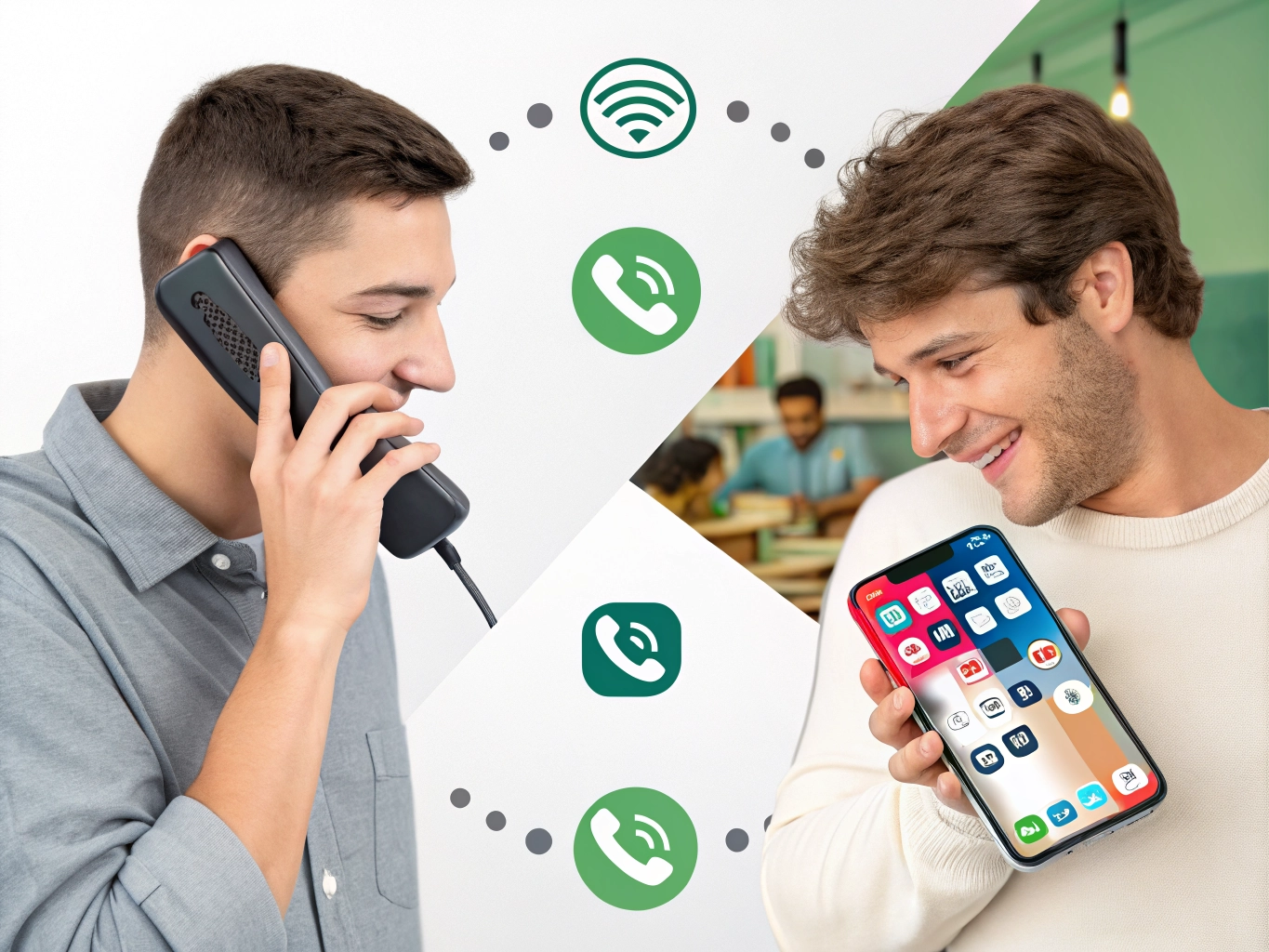
Cellular calls run over dedicated carrier networks and work without internet access, while app-based calls (VoIP) route voice as data over Wi-Fi or mobile data. Each approach has trade-offs across quality, cost, convenience, battery use, and reliability depending on connection conditions and user needs.
Most people benefit from using both methods. Cellular calling suits emergencies and low-connectivity situations, while app-based calling offers advantages for international calls, video, and group features. The better choice depends on context rather than a single universal preference.
Not long ago, making a phone call meant one thing: dialing a number over your carrier’s cellular network. Today, that’s just one option among many. Apps like SnapMobile, WhatsApp, FaceTime, Messenger, and Google Voice let you call anyone with an internet connection, often for free. So which method actually serves you better — the traditional cellular call or the app-based one? The answer depends on what you value most: reliability, cost, quality, or convenience.
How Each One Actually Works
Mobile cellular calls run over your carrier’s dedicated voice network — the same infrastructure that’s carried phone calls for decades, now typically riding on 4G VoLTE or 5G. These calls use the standard phone number system and don’t require an internet connection or a data plan to function.
App-based calls (also called VoIP, or Voice over Internet Protocol) route your voice as data packets over Wi-Fi or mobile data. Instead of dialing through the carrier’s voice network, you’re using an app’s servers to connect the call. This is why you can call someone on WhatsApp even if they’re on the other side of the world, without incurring long-distance charges.
Call Quality and Reliability
Cellular calls have a structural advantage here: they’re built specifically for voice, prioritized by the carrier’s network, and designed to work with minimal setup. They tend to hold up better in areas with weak or inconsistent internet but decent cell signal.
App-based calls are only as good as the internet connection carrying them. On strong Wi-Fi or 5G, call quality can be excellent — sometimes even clearer than a cellular call, since many apps use better audio codecs. But on spotty Wi-Fi or congested mobile data, calls can lag, drop, or turn choppy in ways a standard cellular call usually won’t.
Cost
This is where app calling tends to win, especially for international communication. A cellular call to another country can rack up steep per-minute charges unless you have an international plan. An app call over Wi-Fi costs nothing beyond your existing internet service — no matter where the other person is.
Domestically, most modern mobile plans include unlimited calling, so the cost difference shrinks. But if you’re calling from a country where your carrier doesn’t have a partnership, app-based calling can save real money.
Convenience and Features
App calling generally comes with extras that traditional calls don’t: video calling, screen sharing, group calls with many participants, message history tied to the call, and cross-device syncing (answering a call on your phone, tablet, or laptop). Many apps also let you call without knowing someone’s phone number, using just a username or email.
Cellular calls, by contrast, are simple and universal. Every phone can receive one — no app download, no account, no internet required. That universality matters more than it might seem: if you need to reach someone in an emergency, a cellular call doesn’t depend on both people having the same app installed and connected.
Battery and Data Usage
Cellular calls are efficient on battery since they use dedicated call hardware in the phone. App calls can drain battery faster, particularly video calls, and will consume mobile data if you’re not on Wi-Fi — something to watch if you have a limited data plan.
Which Should You Choose?
- Choose cellular calling when reliability matters most, you’re in an area with weak internet, you need to reach someone in an emergency, or you’re calling someone who may not have the same app.
- Choose app calling when you’re communicating internationally, want video or group features, are trying to save money, or have a strong, stable internet connection.
In practice, most people end up using both — cellular for everyday calls and quick, reliable contact, and calling apps for video chats, international conversations, and group calls with friends or coworkers. Rather than picking one over the other permanently, it’s worth matching the