

Trying to call Spain from the U.S.? It's actually pretty simple once you get the hang of the dialing codes. The key is remembering the right sequence: the U.S. exit code, Spain's country code, and then the local number.
This formula is your ticket to connecting, whether you're calling a landline in Barcelona or a mobile phone in Seville.
Your Quick Guide to Calling Spain from the USA
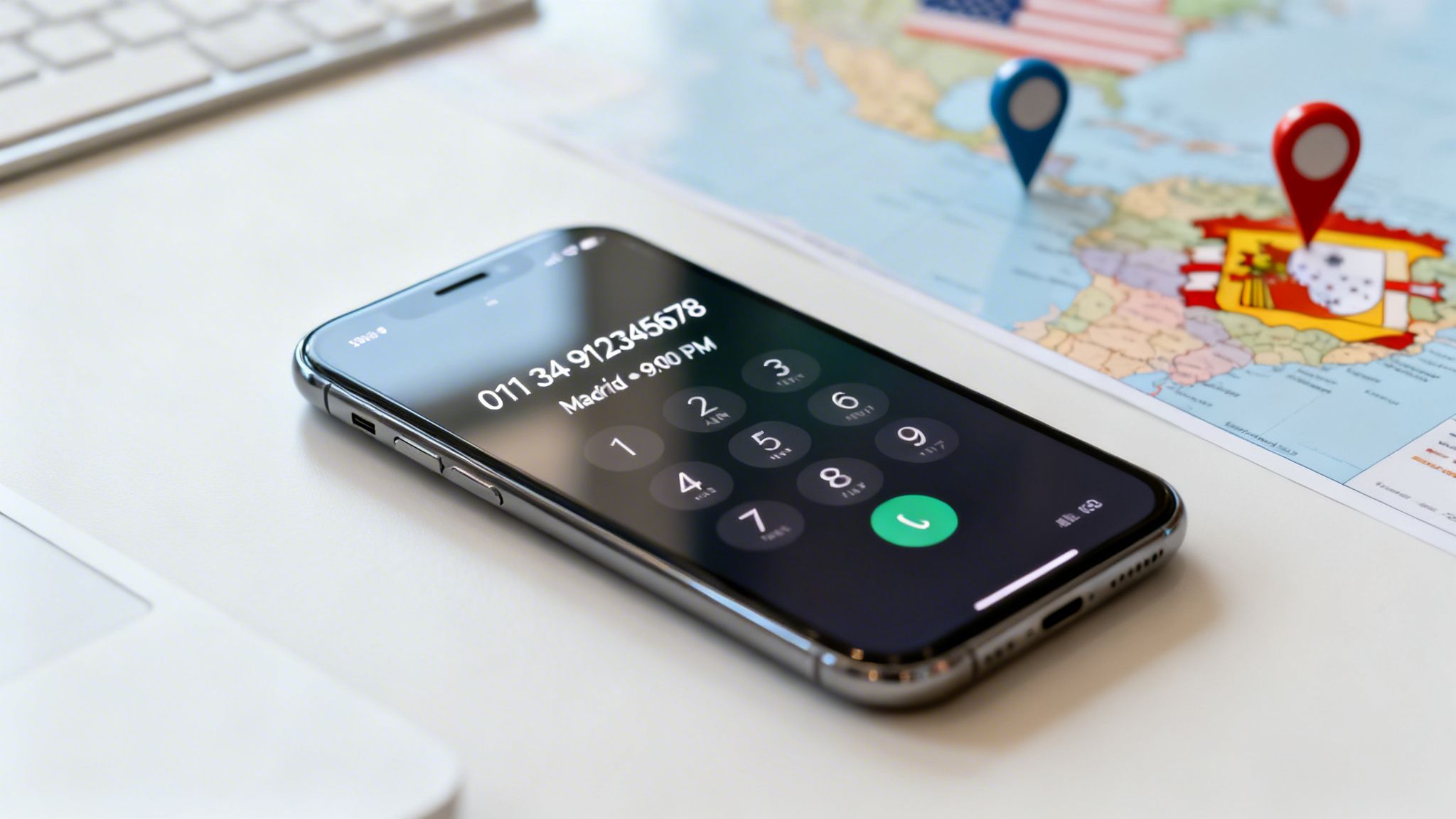
Before you hit dial, let's break down exactly what you need to do. Getting an international call to connect on the first try is all about entering a specific sequence of codes. This tells your phone provider where in the world to send your call. Nail this part, and you're golden.
The Correct Dialing Format
The structure for calling any Spanish number from the U.S. is always the same. Just follow this simple pattern.
You'll need to dial: 011 + 34 + The 9-Digit Spanish Phone Number
A common mistake I see people make is keeping the leading zero that's sometimes used for local calls within Spain. You have to drop it. For more dialing specifics and examples, you can make sure your call connects without a hitch.
Here's a quick breakdown of the dialing sequence and what it looks like for both landlines and mobile phones.
Spain Dialing Code Breakdown
| Dialing Step | Code/Number | Example Landline (Madrid) | Example Mobile |
|---|---|---|---|
| 1. US Exit Code | 011 | 011 | 011 |
| 2. Spain Country Code | 34 | 34 | 34 |
| 3. Local Number | 9-Digit Number | 91 XXX XXXX | 6XX XXX XXX |
| Complete Number to Dial | 011-34-91-XXX-XXXX | 011-34-6XX-XXX-XXX |
As you can see, the process is identical. For landlines, the number will start with a city area code like 91 for Madrid. Spanish mobile numbers almost always start with a 6 or a 7, and they don't have a separate city code.
Key Takeaway: Don't forget the time difference! Spain is on Central European Time (CET), which is 6 to 9 hours ahead of the U.S. That's a huge gap, so a quick check can save you from an awkward 3 AM wake-up call.
Always double-check the local time in Spain before you dial. It's a small courtesy that goes a long way, whether you're calling for business or just to catch up with family.
Mastering the Dialing Format for Landlines and Mobiles
Getting the dialing sequence right is the most critical part of calling Spain from the USA. Each part of the number works together to route your call correctly across continents, from leaving the US network to ringing a phone in the right Spanish city.
Every international call you make from the US has to start with the exit code, which is 011. Think of it as telling your phone provider you're calling outside the country. Right after that, you’ll dial 34, which is the country code for Spain. These two numbers—011 and 34—are the foundation for every call.
Dialing Spanish Landlines
Once you’ve dialed the exit and country codes (011 + 34), you’re ready to add the local Spanish number. For landlines, this includes a specific area code. All Spanish phone numbers are a standard nine digits long. For landlines, the first two or three of those digits tell you the city or province.
If you were calling a landline in Barcelona, for example, you would add the area code 93 after the country code. The complete number would be dialed like this: 011-34-93-XXX-XXXX. Always make sure you dial the full nine-digit number.
A common mistake people make is adding a "0" before the area code. While that's sometimes used for local calls within Spain, you must always drop this leading zero when calling from abroad.
Understanding Mobile Numbers
Calling a Spanish mobile phone is even simpler. Spanish mobile numbers also have nine digits, but they aren't tied to a specific city. You'll know it's a mobile number because it will almost always start with a 6 or a 7.
To call a mobile, just dial 011 + 34, followed by the nine-digit mobile number, like 6XX-XXX-XXX or 7XX-XXX-XXX. It’s the same simple process whether your contact is in Madrid or a small village in Andalusia.
For more detailed instructions and examples, you can find a comprehensive guide on how to call Spain that breaks down every step. While the principles are similar for most international calls, every country has its own rules. You can see how it differs by checking out our guide on how to dial to Mexico.
Comparing Costs: Traditional Calling vs. Modern VoIP
Let's be honest, the biggest headache with international calls has always been the bill at the end of the month. When you’re calling Spain from the USA, the cost difference between an old-school landline and modern internet-based calling is night and day. It’s a classic story of old tech versus new, with your wallet caught right in the middle.
Traditional phone carriers are infamous for high per-minute rates that can turn a quick chat with family or a client into a serious expense. Those rates often make you hesitate before dialing, which is the last thing you want. Nobody wants to budget for a simple conversation.
The Financial Advantage of VoIP
This is exactly where VoIP (Voice over Internet Protocol) completely changes the equation. Instead of using pricey traditional phone infrastructure, VoIP simply routes your calls over your existing internet connection. That efficiency means huge savings passed directly on to you.
The cost evolution tells the whole story. Back in 2000, calling a Spanish landline could set you back about $1.20 per minute. Today, with a quality VoIP service, you’re looking at rates under 2 cents per minute. That's a cost reduction of over 95%. It's no wonder so many homes and businesses have made the switch for their international calls. You can see more details on these dramatic cost reductions on KeepCalling.com.
Think about it: a monthly phone bill that used to be over $50 for frequent calls could easily drop to just a few dollars. VoIP isn't just cheaper—it's a smarter way to stay connected.
Cost Comparison Calling Spain (Per Minute)
To put the savings in perspective, here’s a quick breakdown of what you can expect to pay per minute when calling Spain from the US. The difference is pretty stark.
| Service Type | Average Rate to Landline | Average Rate to Mobile | Notes |
|---|---|---|---|
| Traditional Landline | $0.50 – $1.50+ | $0.60 – $2.00+ | Rates can vary wildly by carrier and plan. |
| Mobile Carrier Plan | $0.25 – $1.00 | $0.30 – $1.20 | Often requires an expensive international add-on. |
| Prepaid Calling Card | $0.05 – $0.20 | $0.10 – $0.30 | Can have connection fees and quick-expiring minutes. |
| VoIP/Internet Calling | $0.01 – $0.03 | $0.05 – $0.15 | Consistently the lowest rates with high quality. |
As you can see, VoIP provides a clear and significant cost advantage, especially for calls to Spanish landlines. You get the quality without the sticker shock.
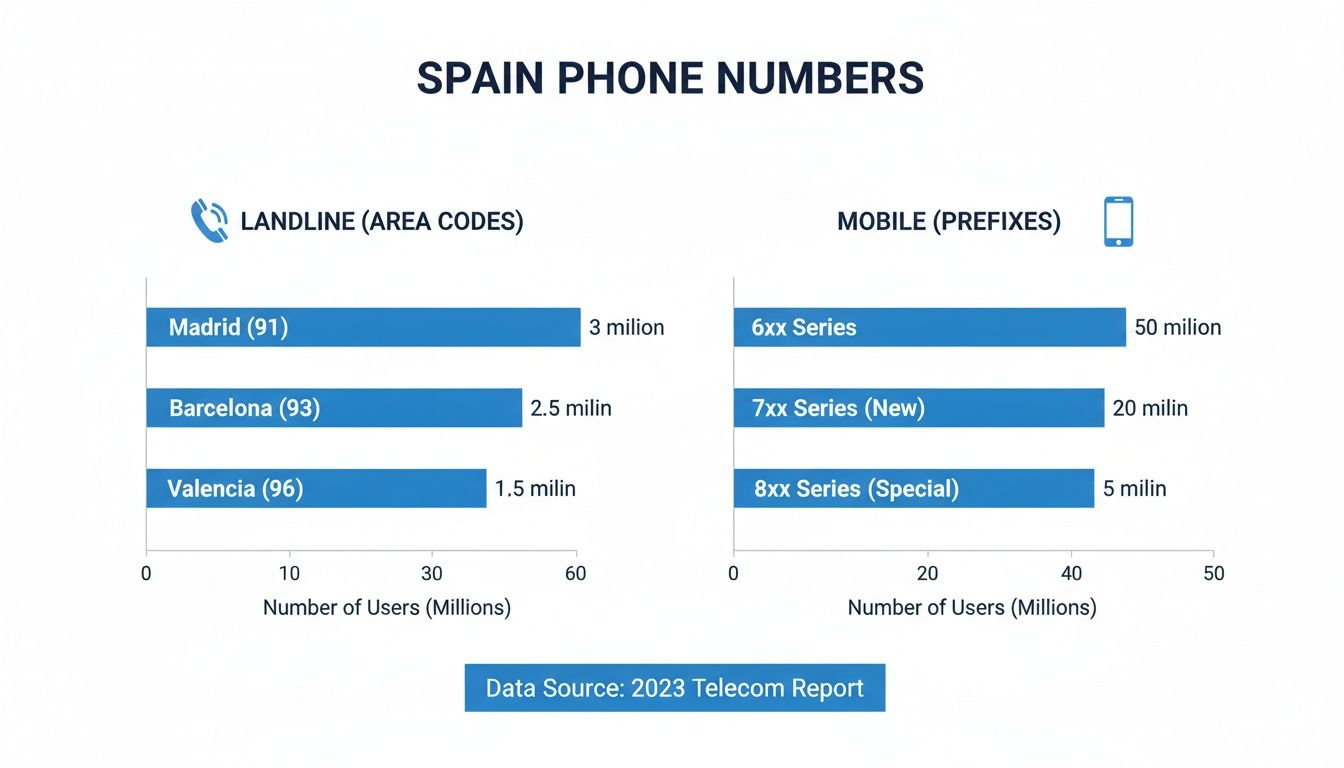
Understanding the number structure is also part of making smart calling choices. As the chart shows, Spanish landlines are tied to geographic area codes, while the more common mobile numbers use national prefixes. A good VoIP service handles these differences seamlessly.
To learn more about how these services work, take a look at our complete guide on global phone services. Ultimately, VoIP offers the clearest path to affordable, high-quality connections with Spain.
Why VoIP Is the Smart Choice for US to Spain Calls
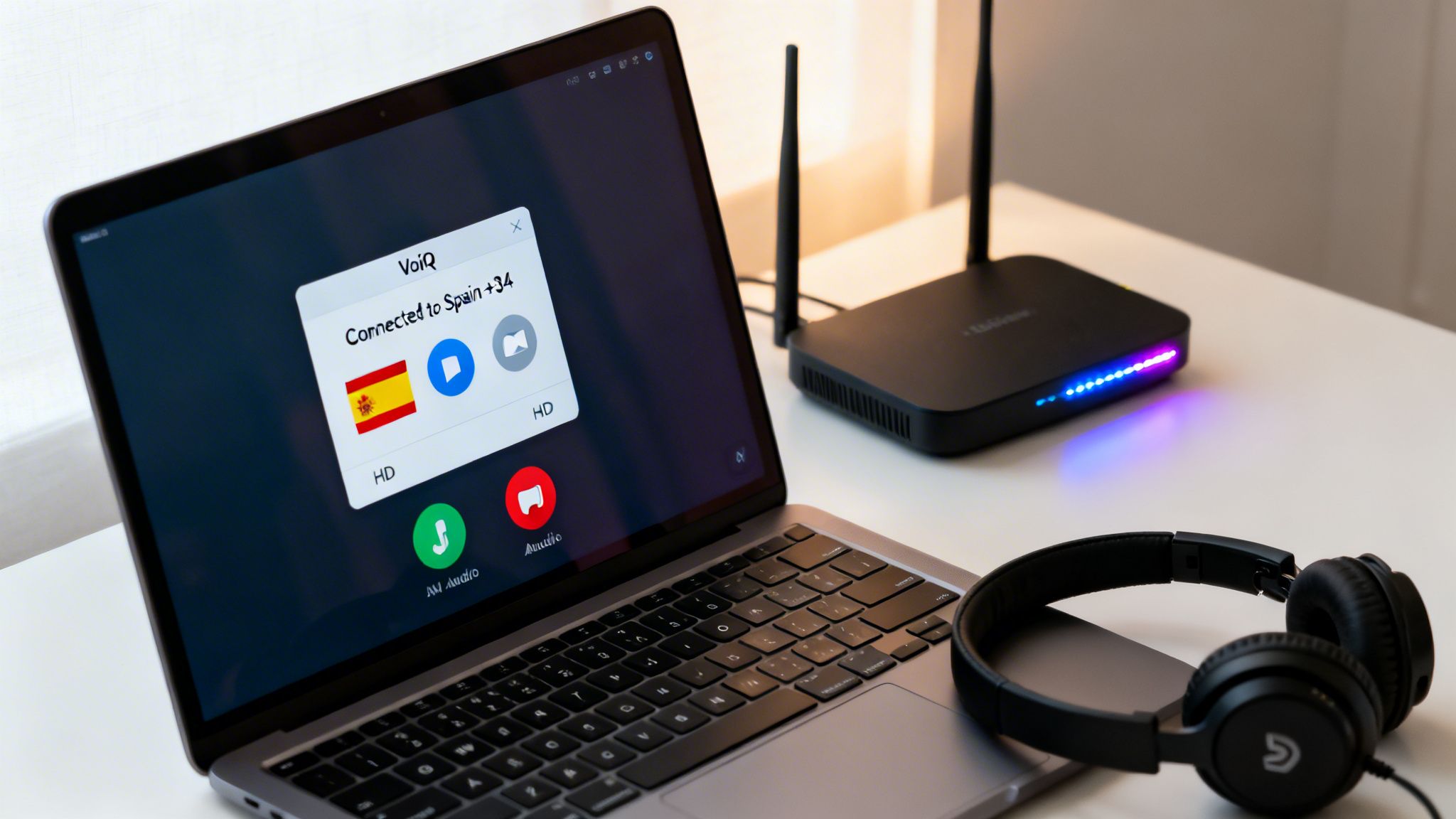
Sure, saving money on international calls is a great start. But the real reason to use Voice over Internet Protocol (VoIP) for calling Spain is the incredible quality and flexibility it offers. This isn't just about cheap calls—it’s about having a modern communication system that works for your family, your remote work, or your business.
For families, you can chat with relatives in Bilbao for an hour without constantly checking the time. For professionals, it’s about having a reliable video meeting with clients in Madrid, backed by a stable fiber internet connection.
Superior Features for Business and Personal Use
VoIP delivers more than just a dial tone; it provides a suite of advanced features. Businesses can instantly look more professional with tools like a branded caller ID. This helps a small business owner managing suppliers in Valencia appear as a trusted local partner, not some random international number.
The technology has come a long way. In fact, one 2024 survey showed 73% of US small businesses now lean on VoIP for their international savings. The best services deliver crystal-clear HD audio, which is perfect for everything from crucial conference calls to low-latency team chat for gamers.
A top-tier Hosted VoIP solution is a game-changer for businesses. It can bundle network management for secure calls to cities like Zaragoza (area code 976), cut down technical headaches by 40%, and deliver 99.99% uptime.
The Premier Broadband Advantage
A great VoIP experience starts with a great internet connection. This is where having the right provider makes all the difference. Our robust fiber network gives you the symmetrical speeds you need for flawless calls and video chats every single time.
Here are just a few benefits of a quality VoIP service:
- Mobile App Integration: Make and take calls on your smartphone with your VoIP plan, sidestepping those high mobile carrier fees.
- Advanced Call Management: Stay on top of everything with features like voicemail-to-email and call forwarding.
- HD Voice Quality: Conversations are so clear, it feels like you're in the same room.
To get a full picture of the technology, check out this ultimate guide to a Voice over IP phone system.
And to see how our fiber connection powers it all, take a look at our guide to finding the https://premierbroadband.com/best-internet-telephone-service/ for your needs.
Practical Tips for a Perfect Call Every Time
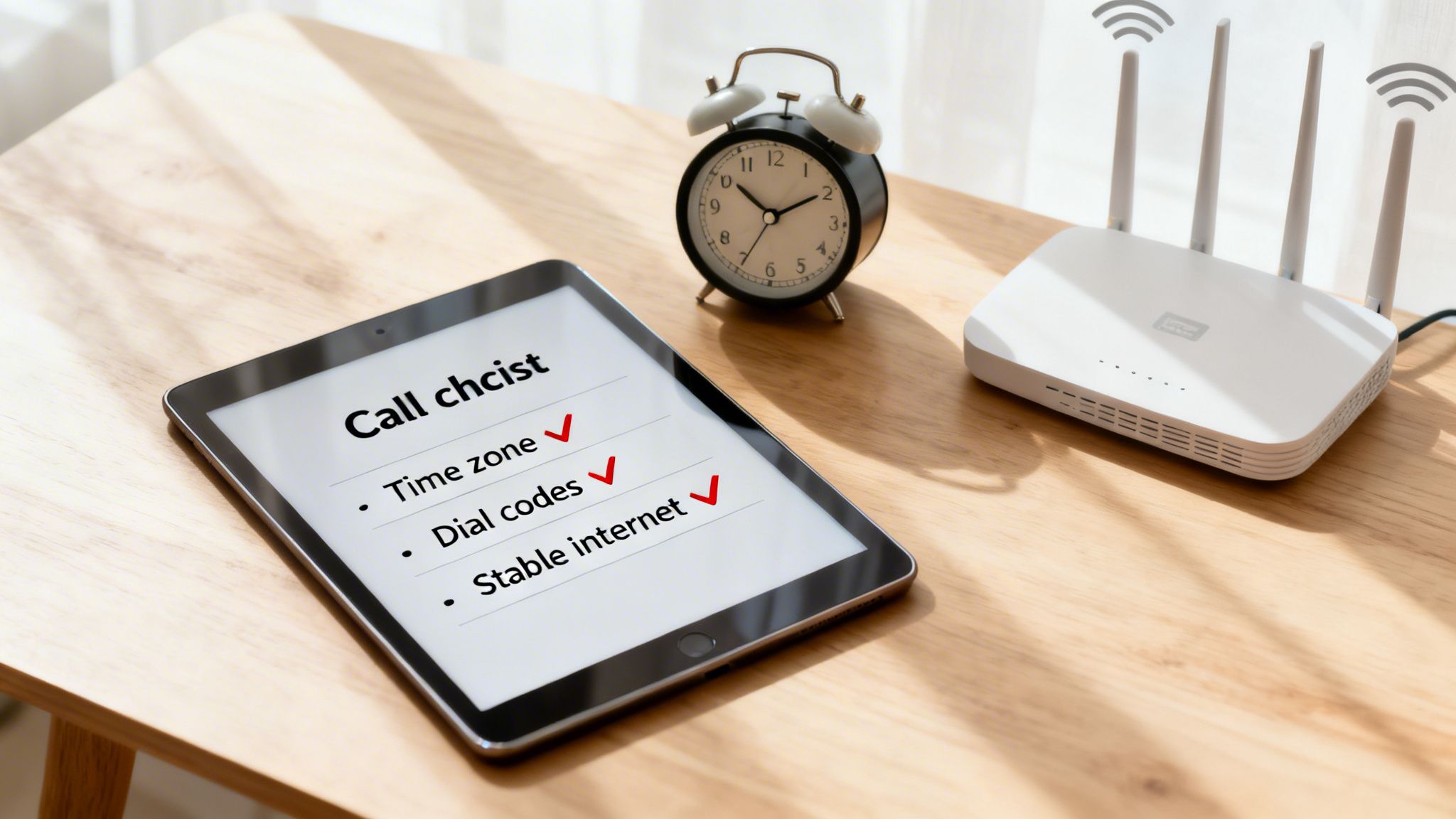
Getting the numbers right is just the start. A little bit of prep work can make the difference between a frustrating, choppy call and a crystal-clear conversation.
The most common hurdle is the time difference. Spain runs on Central European Time (CET), which is a full 6 to 9 hours ahead of the United States, depending on your time zone. That means your 2:00 PM call from New York is landing in Madrid at 8:00 PM. Always check the local time in Spain before you dial to avoid a middle-of-the-night wake-up call.
Mastering Call Etiquette and Troubleshooting
When your call is answered in Spain, you'll likely hear a quick “Dígame” or “Diga.” Both essentially mean "Speak" or "Tell me." It might feel a bit direct if you're not used to it, but it’s a perfectly standard greeting. Just launch into your introduction as you normally would.
Of course, sometimes the call just won't go through. Before you redial in frustration, run through a quick mental checklist. It's usually a simple fix.
- Check your dialing sequence: Did you remember the U.S. exit code (011) and Spain's country code (34)?
- Confirm the local number: Are you sure you have the complete, correct 9-digit number?
- Look at your plan: Is international calling enabled on your account, or are there any service blocks you forgot about?
For VoIP users, a failed call often points back to the internet connection. A weak or unstable Wi-Fi signal is a common culprit for dropped calls or poor audio quality.
A shaky connection is the number one enemy of a good VoIP call. Ensuring your network is ready for the task is crucial for clear, uninterrupted conversations. That’s why having the right bandwidth for VoIP is so important. A stable fiber connection often eliminates these headaches entirely, giving you one less thing to worry about.
Frequently Asked Questions About Calling Spain
Still have a few questions? We get it. Here are the answers to some common things people ask before dialing Spain from the U.S.
What Is the Cheapest Way to Call Spain from the USA
For the absolute best rates, Voice over IP (VoIP) is your answer. Traditional carriers can hit you with rates anywhere from $0.15 to $2.50 a minute. With a quality VoIP service, you could be paying as little as a penny.
That can easily add up to 90% savings, especially if you call Spain often. VoIP plans give you clear, upfront pricing and great call quality, unlike prepaid cards that often have hidden fees or minutes that disappear too quickly.
Do I Need to Dial a 1 Before the 011 Exit Code
No, you don't. That "1" is only for long-distance calls inside North America.
When you're calling internationally from the US, you always start with the exit code, which is 011. This tells your provider the call is going outside the country. From there, you just add Spain's country code (34) and the local 9-digit number.
Remember the Sequence: The correct format is always Exit Code (011) + Country Code (34) + Local Number (9 digits). Any other prefix like a "1" will cause the call to fail.
Can I Use My Cell Phone to Call Spain
Yes, but you have to be careful. Using your standard mobile plan for international calls can lead to a shockingly high bill because of roaming and international calling fees.
A much better approach is to use a VoIP provider’s mobile app. This lets you make calls using your affordable VoIP plan over any Wi-Fi or cellular data connection, completely bypassing your mobile carrier’s expensive international network. You get the convenience of calling from your cell without the cost.
For crystal-clear, affordable calls to Spain and anywhere else, trust Premier Broadband. Our advanced VoIP and fiber internet solutions keep you connected. Learn more about our services at PremierBroadband.com.