
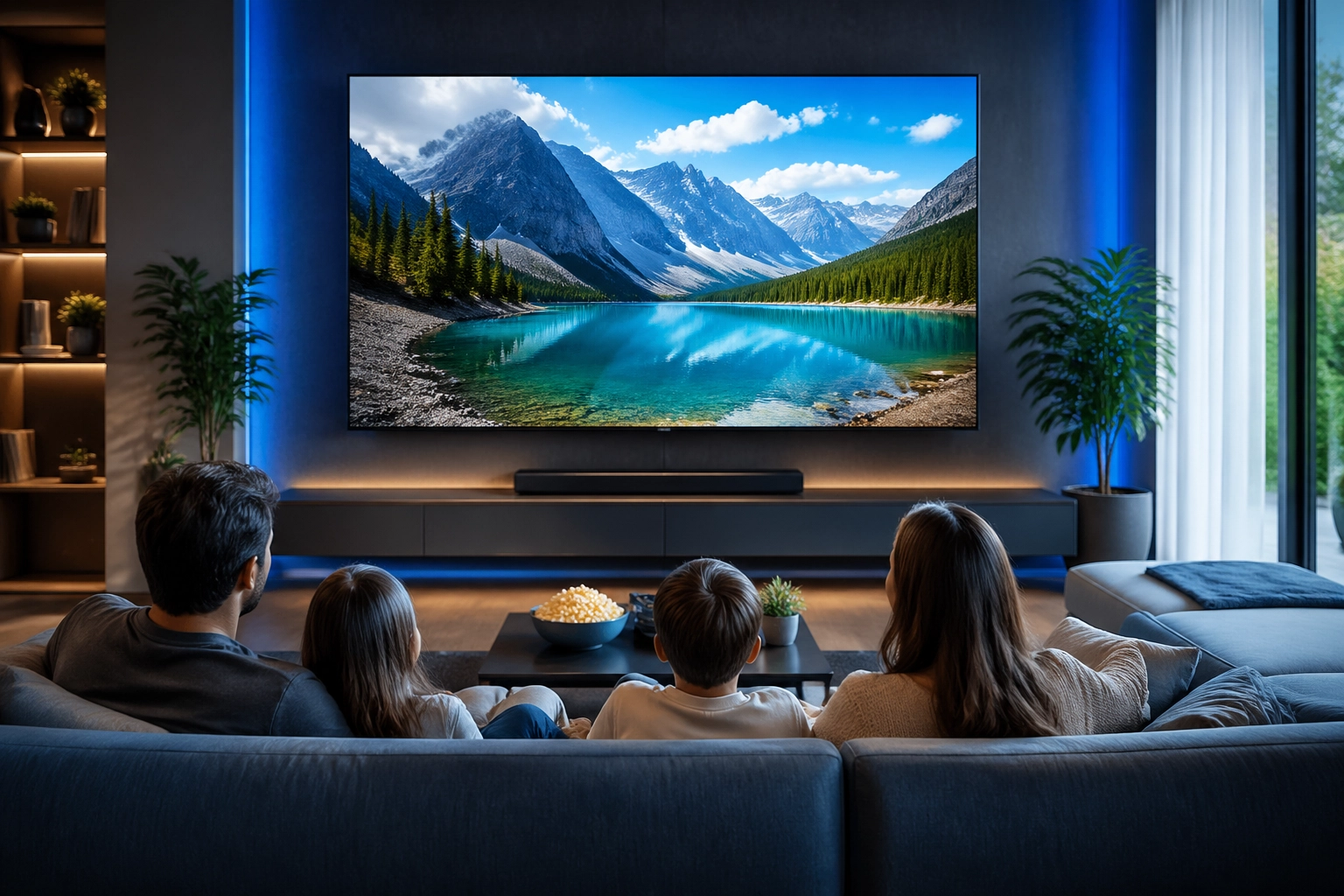
You finally did it. You walked into the electronics store (or, let’s be honest, scrolled through a sale at midnight) and bought that massive, shiny new TV. It’s got the latest tech, the thinnest bezel, and more pixels than a human eye can realistically count. You get it home, set it up, unwrap the remote like it’s a sacred artifact, and hit "Play" on that nature documentary you’ve been dying to see in ultra-high definition.
And then… the spinning wheel of doom. The dreaded "Buffering" icon.
Welcome to the hidden struggle of the modern home theater. While TV manufacturers are busy cramming 33 million pixels into a piece of glass, they often forget to mention one tiny detail: your internet connection is the fuel for that high-tech engine. If you’re trying to run a Ferrari on lawnmower gas, you’re not going to get very far.
Today, we’re going to dive into the world of 4K and 8K resolutions and talk about why your internet bandwidth is the secret sauce to making that expensive screen actually look good. Take a break and read all about it: your Friday movie night depends on it.
The 4K Revolution: More Pixels, More Problems?
Let’s start with 4K. It’s pretty much the standard now. If you bought a TV in the last five years, it’s probably 4K (also known as Ultra HD). To give you an idea of the scale, a standard 1080p HD image is about 2 million pixels. A 4K image is roughly 8 million pixels.
That is a lot of extra information for your internet to carry. To stream a 4K movie smoothly, most platforms recommend a minimum of 25 Mbps of dedicated bandwidth.
Now, you might be thinking, "My plan says I have 50 Mbps, I’m golden!" But wait. That 25 Mbps is just for one stream. If you have a spouse watching a different show in the bedroom, a teenager playing Call of Duty in the basement, and a smart fridge checking for software updates, that 50 Mbps starts to look very, very small.
When your bandwidth gets stretched thin, the first thing your streaming service does is drop the quality. Suddenly, your expensive 4K TV is showing you something that looks like a grainy home video from 1994.

Enter the 8K Monster: The Bandwidth-Hungry Beast
If 4K is a demanding guest, 8K is a bandwidth-hungry monster that just moved into your spare bedroom and is eating everything in the fridge.
8K resolution is 7680 x 4320 pixels. That’s about 33 million pixels per frame. It’s four times the resolution of 4K and sixteen times the resolution of standard 1080p. The level of detail is staggering: you can see individual blades of grass on a football field or the pores on an actor's face (whether they want you to or not).
But here’s the kicker: to stream 8K content without losing your mind, you’re going to need 100 Mbps to 150 Mbps of consistent, uninterrupted bandwidth just for that one TV.
Currently, native 8K content is a bit like a rare bird sighting. YouTube has some, and a few specialized streaming services are dipping their toes in the water. But as more 8K cameras become standard for filmmakers, that content library is going to explode. If you want to be ready for the future of entertainment, you need to think about your pipes.
Why Your Current "High Speed" Might Be Lying to You
Most traditional cable internet providers love to use the term "High Speed." But cable internet is often a shared resource. During peak hours: usually right when you want to watch your 8K epic: the neighborhood "node" gets crowded. Your speeds can dip significantly, leading to that annoying stuttering during the climax of the movie.
Furthermore, cable internet is often asymmetrical. You might get decent download speeds, but your upload speeds are tiny. While you mostly "download" a movie, a stable connection requires constant "handshaking" between your TV and the server. If the network is congested, those handshakes get dropped, and your 8K monster starts to starve.
This is where fiber internet changes the game. Unlike cable, fiber uses light to transmit data through glass strands. It’s not just fast; it’s consistent. It doesn’t care if it’s 7:00 PM on a rainy Tuesday when everyone in the neighborhood is on Netflix.
If you're curious about the technical differences, you can check out why fiber internet is superior to cable internet for a deeper look at the tech.

The Math of a Modern Household
Let’s do a quick "Bandwidth Budget" for a typical family of four on a Friday night:
- Living Room TV: Streaming an 8K documentary (120 Mbps)
- Bedroom TV: Streaming a 4K sitcom (25 Mbps)
- Gaming PC: Downloading a 50GB game update while playing online (50-100 Mbps)
- Smartphone/Tablets: Two kids scrolling TikTok or YouTube (20 Mbps)
- Smart Home Devices: Cameras, thermostats, and smart speakers (10 Mbps)
In this scenario, you’re looking at a demand of nearly 300 Mbps just to keep everyone happy. If your internet plan is capped at 100 or 200 Mbps, someone is going to experience lag, and someone else is going to see their 4K picture turn into a blurry mess.
At Premier Broadband, we build our networks to handle exactly this kind of load. Whether you’re looking for new high-speed internet in Hope, Arkansas or surrounding areas, we focus on providing the headroom you need so you never have to think about bandwidth.
Don't Forget the Hardware: Wi-Fi Matters Too
You can have a 1 Gig fiber connection coming into your house, but if you’re using a router from 2012 tucked inside a metal cabinet behind your aquarium, your 8K TV is still going to struggle.
Streaming 4K and 8K requires a robust Wi-Fi signal. Standard 2.4GHz Wi-Fi doesn't really have the "umph" for 8K. You need 5GHz or the newer Wi-Fi 6 (6GHz) bands to move that much data through the air.
If your TV is close enough, we always recommend a hardwired Ethernet connection for 8K. It’s the most stable way to feed the beast. If that’s not an option, a modern mesh Wi-Fi system is your best friend. It ensures that the high-speed fiber coming into your home actually reaches the living room.

What About the Future?
We are moving toward a world where everything is high-res. It’s not just movies. Virtual reality (VR), augmented reality (AR), and cloud gaming are all moving toward higher resolutions that demand massive amounts of data in real-time.
8K gaming is already a "thing" for high-end PC enthusiasts. Imagine trying to play a game where the environment is rendered in 33 million pixels, and every millisecond of lag means you lose the match. You don't just need speed; you need low latency.
Fiber is the only technology currently available to consumers that is truly "future-proof." It can scale to speeds we haven't even fully utilized yet. When 16K TVs eventually show up (and they will, because tech never sleeps), fiber will be ready.
Is 8K Worth It Right Now?
To be honest, for most people, 4K is the sweet spot. But if you’re a tech enthusiast or someone who wants the absolute best home theater experience possible, 8K is the mountaintop. Just remember that the TV is only half the equation.
If you’re planning to upgrade your hardware, you should also upgrade your "software": a.k.a. your internet plan. Check out our internet plans from Premier Broadband to see how we can help you feed your new TV the data it deserves.

Take Control of Your Home Network
Setting up a high-performance home network doesn't have to be a headache. Once you have the right bandwidth, you want to make sure it stays secure and optimized. We recommend looking into home network security best practices to keep your devices safe while they’re gobbling up all that data.
Also, for the parents out there, managing all this tech can be a challenge. Tools like our CommandIQ app allow you to see which devices are hogging the bandwidth (looking at you, gaming console) and set limits so your 8K movie night takes priority.

Let’s Get You Connected
At Premier Broadband, we believe you should get exactly what you pay for: reliable, high-speed fiber that lets you enjoy your tech without the frustration. No buffering, no pixelation, just pure entertainment.
Do You Want To Boost Your Home Entertainment?
Whether you're a family trying to keep everyone connected or a tech lover building the ultimate 8K sanctuary, we've got your back. We’re local, we’re reliable, and we’re ready to help.
If you have questions about which plan is right for your 4K or 8K setup, just drop us a line. We'd love to chat and help you get the most out of your home theater.
Take a break and read all about it on our blog whenever you need more tips on mastering your home tech. In the meantime, happy streaming!