Is switching to fiber optic internet for home really worth the upgrade? Let's cut to the chase: absolutely. If your current internet feels like a jammed two-lane road during rush hour, fiber is the wide-open, multi-lane superhighway you've been waiting for. No more traffic jams.
Why Fiber Is the Gold Standard for Home Internet
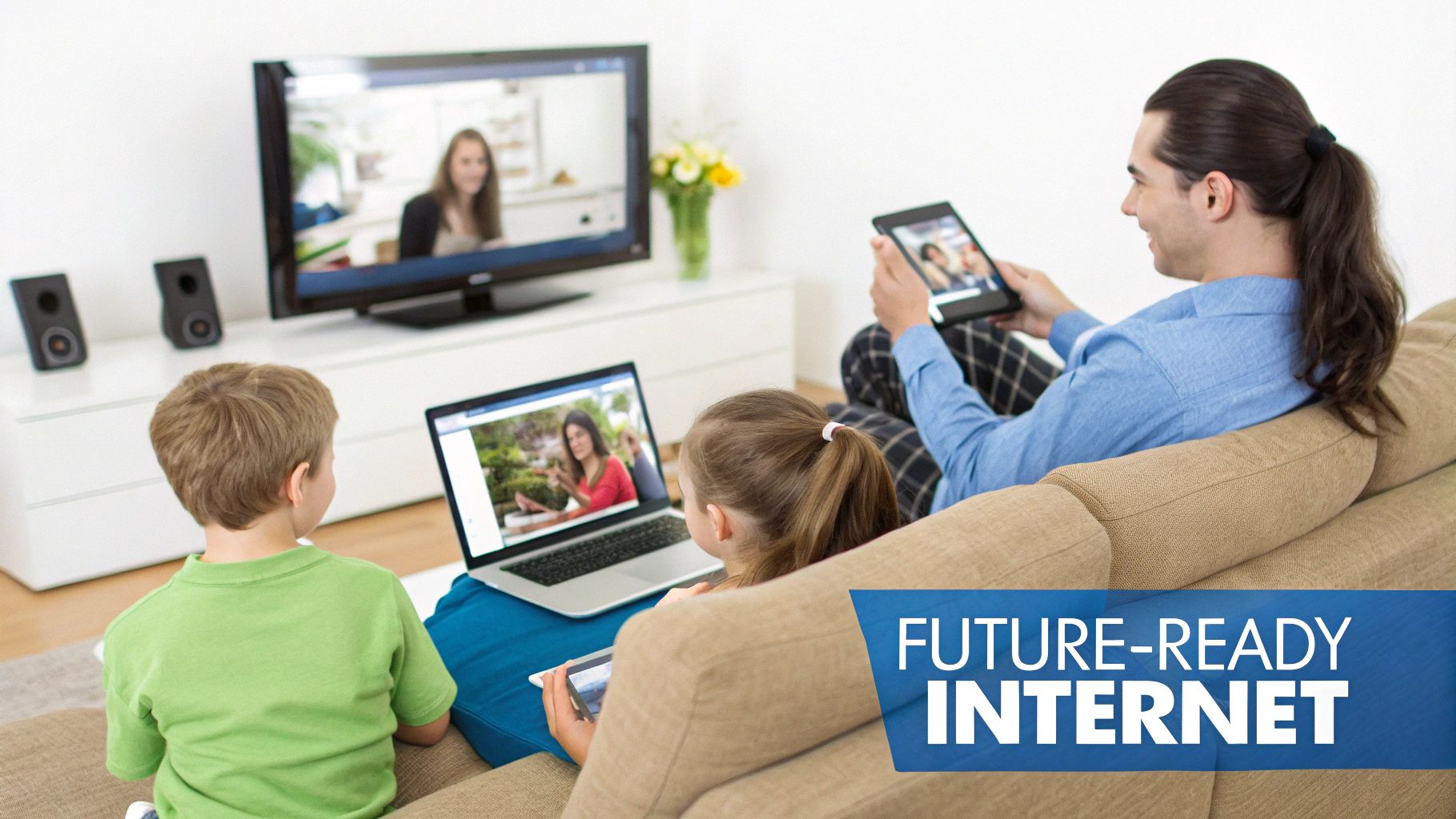
We've all been there—the movie starts buffering right at the good part, your game lags at a critical moment, or a video call freezes mid-sentence. Those are the tell-tale signs of older internet technology hitting its limits. Both cable and DSL internet run on copper wires, a system that just wasn't built for the demands of today's connected homes. These connections are notorious for slowing down when all your neighbors get online at the same time.
Fiber optic internet is completely different. It doesn't use copper wires and electrical signals. Instead, it sends data as tiny pulses of light through impossibly thin strands of glass. This is the secret sauce that makes it so much better.
Fiber Optic vs Cable vs DSL at a Glance
Wondering how these technologies really stack up for your home? Here’s a quick comparison to cut through the noise and see the core differences side-by-side.
| Feature | Fiber Optic Internet | Cable Internet | DSL Internet |
|---|---|---|---|
| Technology | Light pulses via glass fibers | Electrical signals via copper coaxial cables | Electrical signals via copper phone lines |
| Max Speed | Symmetrical speeds up to 5 Gbps and beyond | Up to 1 Gbps download, much slower upload | Up to 100 Mbps download, very slow upload |
| Reliability | Extremely high and consistent | Prone to slowdowns during peak hours | Inconsistent, affected by distance |
| Best For | Gaming, 4K streaming, remote work, smart homes | General browsing, HD streaming | Basic browsing, email |
As you can see, fiber sets a new standard across the board, leaving older technologies in the rearview mirror.
Unmatched Speed and Rock-Solid Reliability
The biggest win for fiber is its incredible, consistent speed. While cable internet speeds can drop when the network gets crowded, a fiber connection is a dedicated line straight to your house. This means you actually get the speeds you pay for, whether it's 2 PM or 2 AM.
This kind of reliability completely changes how you use the internet at home.
- Seamless Streaming: Go ahead, stream 4K movies on three different TVs at once. You won't see a single pixelated screen or buffering wheel.
- Competitive Gaming: With ultra-low latency (what gamers call "ping"), you can finally get rid of the lag that costs you the match.
- Flawless Remote Work: Jump on video calls with crystal-clear audio and video, and send massive files in just a few seconds.
The real value of fiber isn't just about getting faster downloads. It’s about building a stable, future-proof foundation for every connected device in your house. Your smart TV, your kids' tablets, and your work laptop will all just work better.
Ultimately, choosing fiber optic internet is an investment in a smoother, less frustrating online life for your entire family. When you dig into why fiber internet is superior to cable internet, it always comes back to this fundamental difference in reliability and performance.
How Fiber Internet Actually Works
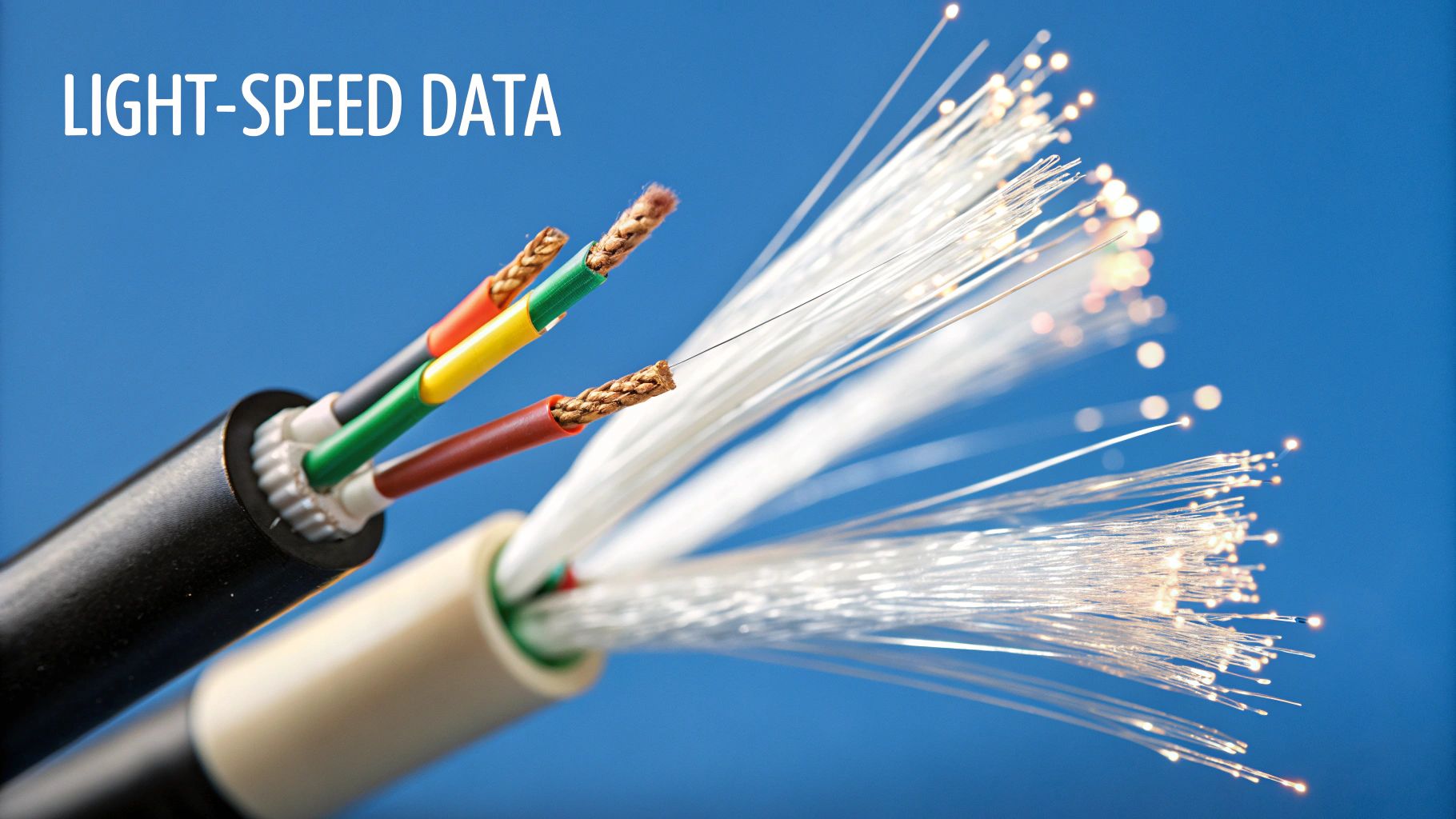
The incredible speed of fiber optic internet for home isn't magic; it's just brilliant physics. Unlike older internet technologies that push electrical signals down copper wires, fiber optics use hair-thin strands of pure glass to transmit data as pulses of light. This method is fundamentally faster and more reliable.
Think of it like this: cable internet is like sending messages by shouting down a long, crowded hallway. The message can get distorted, slow down, and get drowned out by other noise. Fiber is like sending a message with a laser pointer—it's direct, incredibly fast, and isn't bothered by outside interference. This is why fiber delivers a much better online experience.
From Pulses of Light to 4K Movies
The whole process starts when your data—whether that’s a movie you’re streaming or a file you’re uploading—is converted into light pulses. A specialized transmitter then flashes these light signals through the fiber optic cable at nearly the speed of light.
Each glass strand is surrounded by a layer called cladding, which acts like a perfect mirror. This cladding continuously reflects the light pulses inward, keeping the signal contained and preventing it from losing strength, even over great distances. That's why fiber connections stay strong and stable, unlike DSL, which gets weaker the farther you are from the provider's hub.
When the light reaches your home, a device called an Optical Network Terminal (ONT) receives it and translates the pulses back into the electrical signals your router and devices can understand. This entire process happens almost instantaneously, resulting in ultra-low latency and breathtaking speeds.
Because the signal is just light traveling through a protected glass tube, it’s immune to electrical interference from thunderstorms or signal degradation from temperature changes that can plague copper-based systems. This makes fiber optic connections remarkably resilient and reliable, no matter the weather.
The Power of Symmetrical Speeds
One of the biggest real-world benefits of this technology is symmetrical speed. This means your upload speeds are just as fast as your download speeds—something older internet types simply can't match. Cable and DSL were designed for a time when we mostly consumed content, so they put all their power into downloads.
Today’s internet use is a two-way street. Symmetrical speeds are crucial for:
- Crystal-Clear Video Calls: Your video feed goes out smoothly, preventing the frustrating freezes and pixelation that happen with slow uploads.
- Effortless File Sharing: Uploading large work files, high-resolution photos, or videos to the cloud takes seconds, not minutes or hours.
- Competitive Online Gaming: Your commands are sent to the game server instantly, giving you a critical competitive edge with lower "ping" times.
- Reliable Smart Home Devices: Security cameras can upload clear video feeds to the cloud without slowing down your network for everyone else.
This balanced performance is a game-changer for any connected household. When you understand what makes fiber-to-the-home technology unique, you can see it's not just another internet option—it's an entirely different class of connection built for how we live and work today.
Real-World Benefits for Your Connected Household
Terms like "symmetrical speeds" and "low latency" sound great, but what do they really mean when you're just trying to get through your day? The true power of fiber optic internet for home is how it gets rid of those familiar digital headaches and makes life easier for everyone under your roof.
It's time to go beyond the tech specs and see what a fiber upgrade actually does for the people who use it most: the remote worker trying to hit a deadline, the gamer looking for a competitive edge, and the family who just wants to stream a movie in 4K without the dreaded buffering wheel.
A Frustration-Free Experience for Remote Workers
If you work from home, you know that a shaky internet connection is more than just an annoyance—it's a roadblock. Choppy video calls, painfully slow file uploads, and the constant fear of a dropped connection can ruin your productivity. Fiber changes all of that by delivering the two things every remote professional needs: rock-solid reliability and powerful upload speeds.
Because your fiber connection isn't shared with the whole neighborhood like cable, your speeds stay fast and consistent, even when everyone else is online.
- Flawless Video Conferencing: Symmetrical speeds mean your upload is just as fast as your download. Your video feed stays crisp and clear on Zoom or Teams calls, so you always look and sound professional.
- Instant File Syncing: Sending that huge presentation or folder of design files to the cloud takes seconds, not minutes. Your workflow never misses a beat.
- Reliable Cloud Access: Connect to your company’s network and cloud apps with total confidence. The connection just works, so you can focus on your work.
The Ultimate Advantage for Gamers
In online gaming, the difference between winning and losing is measured in milliseconds. Latency—or "ping"—is the enemy. It's that frustrating delay between when you press a button and when your character reacts on screen. Fiber optic internet is the ultimate weapon against lag.
Fiber sends data as pulses of light, which travels faster and more directly than the electrical signals used by old-school copper cables. This slashes your ping time, giving you a real competitive advantage and making gameplay feel instant and responsive.
Say goodbye to the lag spikes that get you eliminated. With a stable, low-latency fiber connection, your skill is what decides the match, not a bad internet connection.
Uninterrupted Entertainment for the Whole Family
After work and school, your internet connection has to keep up with the demands of the whole family. This is where fiber really pulls away from the pack, easily handling dozens of connected devices at once without a single hiccup.
Picture this scene on a typical evening:
- You’re streaming a new 4K movie in the living room.
- The kids are watching YouTube on their tablets.
- Someone is battling it out in an online game in the den.
- All your smart home gadgets—security cameras, lights, and speakers—are running in the background.
With older internet, this would bring everything to a grinding halt. But with fiber, every single device gets all the bandwidth it needs to run perfectly. This need for powerful home connectivity is why the global fiber-to-the-home market is booming. It was valued at US$14.1 billion in 2020 and is projected to hit US$29.7 billion by 2026.
A strong fiber connection also lets families get more organized by building a digital family command center to sync calendars and schedules without a hitch. You can read more about these projections and the growth of fiber adoption to see why it's becoming essential for modern households.
Navigating the Fiber Installation Process
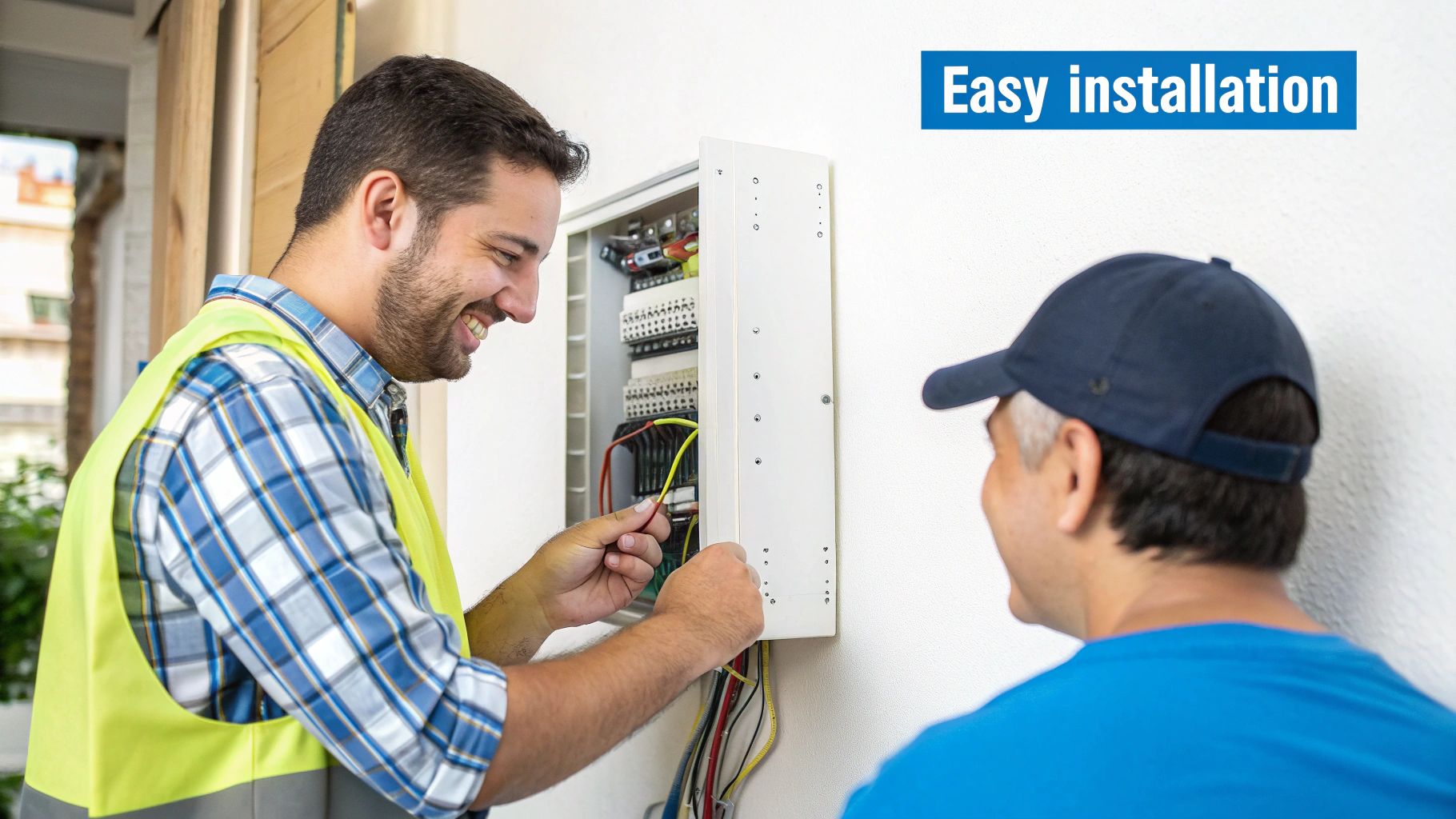
Hearing the words "new installation" can make some folks nervous, but getting fiber optic internet for home is a surprisingly simple and clean process. Our goal is to get you up and running on your new super-fast connection with as little disruption to your day as possible.
The whole thing happens in two main stages: first, getting the fiber line to your house, and second, lighting it up inside. A professional technician takes care of everything, making sure the job is done right so you get the best possible performance from day one.
What to Expect on Installation Day
When your appointment day arrives, our technician will handle all the physical setup. The first step is running the tough, durable fiber optic cable from the main service line—usually on a nearby pole or in an underground box—to an outside wall of your home.
This part is quick and doesn't involve much fuss. The technician will mount a small, weatherproof box on the side of your house. This little box acts as the secure connection point between the outside world and your home's new connection.
Key Takeaway: The entire installation is managed by our trained pros. All you need to do is be home for the appointment and help decide the best spot for the new equipment inside.
Once the outside portion is done, the technician will come inside to complete the setup. This is where they'll install the special gear that turns those light signals into the blazing-fast internet you're waiting for. If you want to see a full breakdown of the process, check out this simple guide for homeowners on fiber optic home installation.
Understanding the Key Equipment
Fiber internet uses a couple of unique pieces of hardware that are different from old-school cable or DSL. Our tech will install and configure it all, but it's good to know what's what.
- Optical Network Terminal (ONT): This is the most important piece of the puzzle. You can think of it like a translator. It takes the light signals from the fiber cable and converts them into an electrical signal your Wi-Fi router can understand and use.
- Router: The ONT connects directly to your Wi-Fi router. This is the device that creates your wireless network, broadcasting that high-speed signal so your laptops, phones, smart TVs, and game consoles can all get online.
Our technician will make sure both devices are communicating perfectly, run a speed test to confirm you're getting the performance you signed up for, and even help you connect your main device to the new Wi-Fi. After that, you're all set to enjoy a completely different class of internet.
How Much Does Fiber Internet Cost and Can I Get It?
Let's get right to it. The two biggest questions on everyone's mind are: How much is this going to cost me, and is it even available at my house? The great news is that what used to be a super-premium, hard-to-find service is quickly becoming both affordable and widespread.
Fiber optic internet for home is now priced very competitively with the faster cable internet plans out there. But here’s the thing: you get so much more for your money with fiber. Don't just think of it as another monthly bill. See it as an investment in your home's future—one that pays off with incredible reliability, symmetrical speeds, and a rock-solid foundation for whatever new technology comes next.
Breaking Down the Costs
When you're looking at a fiber plan, you'll generally see two parts to the cost: the monthly fee and any one-time setup charges.
-
Your Monthly Plan: This is what you pay each month for your chosen speed. Providers usually offer a few different speed tiers. A couple who mostly streams shows and browses the web might be perfectly happy with 500 Mbps. But a family with a serious gamer, a few remote workers, and kids on tablets might want to go all-in on a 1 Gig plan.
-
Installation & Equipment: To get you hooked up, a professional installation is the way to go, and many providers like Premier Broadband offer this to make sure everything runs perfectly from day one. Sometimes this fee is waived during a promotion. It covers the work of running the actual fiber line to your home and installing the gear, like the Optical Network Terminal (ONT).
The real secret to finding the best deal is to look past the monthly price tag. A fiber plan that's a few bucks more but gives you consistent, lightning-fast speeds is a much smarter choice than a "cheaper" cable plan that bogs down every night when the neighbors get online.
This isn't just a local thing; fiber is exploding globally. The market is expected to jump from USD 10.76 billion in 2025 to a massive USD 17.95 billion by 2033. That growth is happening because families just like yours are demanding better, faster internet.
How to Check if Fiber is Available at Your Address
The one thing that determines if you can get fiber is simple: has a provider built the network in your neighborhood yet? It used to be that only people in dense city centers could get it, but companies are now expanding into suburbs and smaller towns at a record pace.
Finding out if your home is ready for fiber is easy. Just head to a provider's website and look for their availability checker. All you have to do is type in your street address, and it will tell you instantly if you can get service and what plans are available.
As you do your homework, it’s a good idea to compare the fiber optic services available in your area to get a feel for pricing and coverage. And if fiber hasn't reached you yet, don't worry. Many providers will let you sign up for alerts, so you'll be the first to know when they're headed your way.
Choosing the Right Fiber Plan for Your Family
Picking the right fiber optic internet for home isn't about grabbing the plan with the biggest numbers. It’s about finding that perfect fit for your family's real-world use so you get a smooth, buffer-free experience without overpaying for speed you don't need. Think of it like buying a car—you wouldn’t get a massive SUV just for a quick commute across town.
The secret is to do a quick "internet audit" of your home first. This helps you understand what your family actually asks of your internet connection, so you can match your daily habits to the right speed and save yourself from future headaches.
Conduct Your Home Internet Audit
Before you even start looking at plans, just take a minute to size up your home’s digital life. It’s a simple step that pays off big time. Just ask yourself two key questions.
First, how many different devices are connected to your Wi-Fi at once? Go beyond just the obvious ones like laptops and smart TVs. Your list should include:
- Personal Devices: Every smartphone and tablet in the house.
- Entertainment Hubs: Smart TVs, streaming boxes like Roku or Apple TV, and game consoles.
- Work & School Gear: Any laptops and computers used for homework or remote jobs.
- Smart Home Gadgets: Think security cameras, smart speakers, thermostats, and video doorbells.
Second, what are the most demanding things your family does online? Certain activities eat up way more bandwidth than others. Try to figure out which of these heavy hitters are happening regularly—especially if they happen at the same time.
Matching Your Lifestyle to the Right Speed
Once you know what your household needs, you can start matching it to a speed tier. Internet speeds are measured in megabits per second (Mbps), and a higher number means a faster connection that can juggle more tasks at once.
The Everyday Streamer (Up to 500 Mbps):
This is the sweet spot for most families. A 500 Mbps plan has more than enough power to handle multiple 4K movie streams, casual online gaming, and a whole collection of smart devices. You can work from home while the kids do online research, and someone else can stream a show without a single hiccup.
The Power User Household (1 Gbps or 1,000 Mbps):
This is for homes with serious digital demands. If you have a competitive gamer obsessed with low latency, multiple people on video calls for work, or you're constantly uploading huge files, a Gig plan is for you. It gives you so much capacity that you'll pretty much never hit a slowdown.
Here's the inside scoop: consistency is often more important than raw peak speed. Fiber's amazing reliability means a 500 Mbps plan actually delivers that performance around the clock, unlike a cable plan that can get bogged down when the whole neighborhood is online.
The infographic below gives you a simple decision tree to walk you through the process, from checking availability to picking a plan that truly benefits your home.
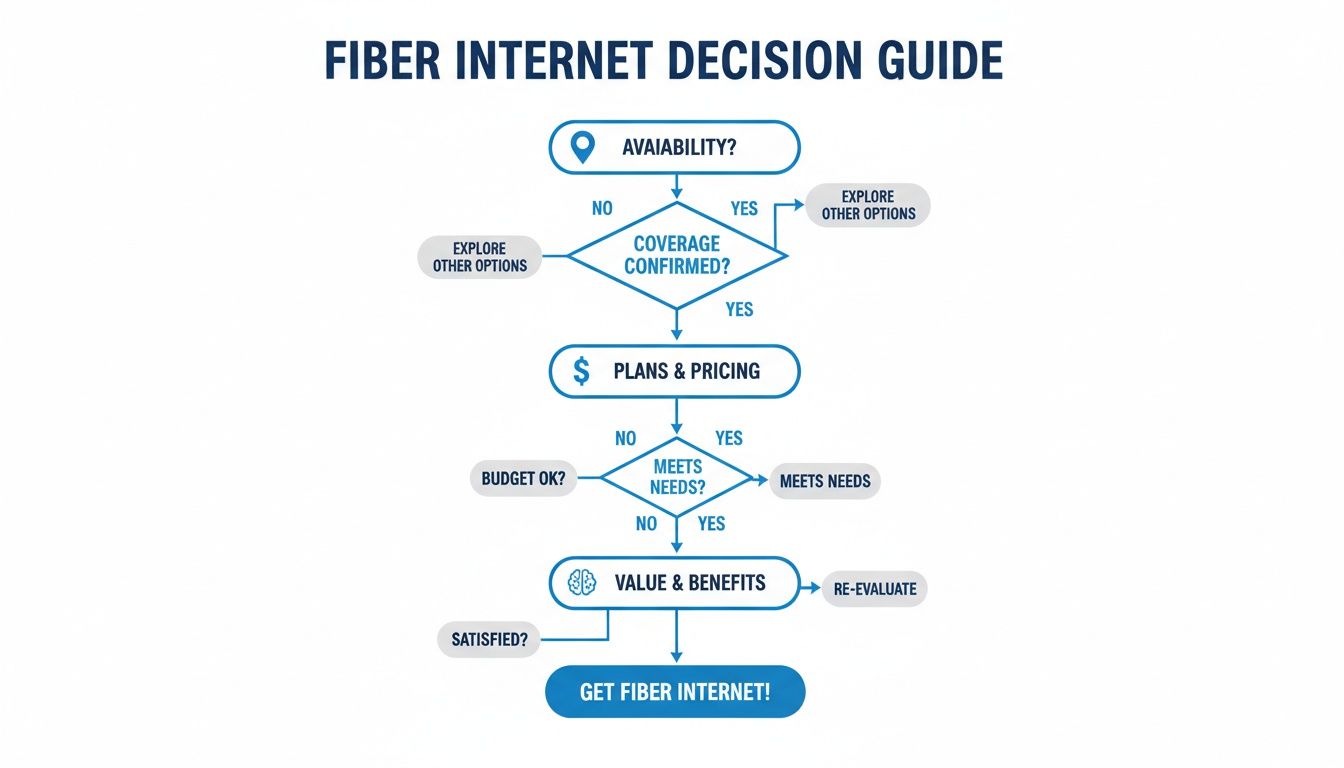
This guide shows that finding the right value is just as important as the technical specs. And more people are realizing this every day. With the massive shift to remote work making reliable internet a must-have, the fiber optic market is booming—it's expected to grow at a rate of 9.9% from 2021 to 2026.
It's always a good idea to compare what's out there. Take a look at our guide on the best fiber internet providers to see how different companies and plans stack up against each other.
Frequently Asked Questions
Jumping into a new technology like fiber optic internet for home always brings up a few questions. We get it. You've seen how it works and the huge difference it can make, but you might still have a couple of things you're wondering about. Let's clear those up with some straight answers to the questions we hear most from homeowners before they make the switch.
Our goal here is to make sure you feel totally confident in your decision. Once we tackle these common points, you'll see that moving to fiber is a simple, secure, and smart choice for your family's connected life.
Will I Need to Buy New Devices to Use Fiber Optic Internet?
This is a big one, and the answer is refreshingly simple: no, you won't. Every Wi-Fi device you already own—your laptop, phones, smart TV, tablets, and gaming consoles—will work perfectly with a fiber connection. They'll connect to your new, faster network just like they did before, only now they'll perform a whole lot better.
The only new piece of hardware you'll need is something called an Optical Network Terminal (ONT). Think of it as a special translator that converts the light signals from the fiber cable into a standard internet signal your devices can understand. Your provider, like us here at Premier Broadband, will bring this with them and get it professionally installed, along with a top-notch router, so you're getting amazing speeds right from day one.
How Does Fiber Internet Perform During Bad Weather?
If you've ever had your internet cut out during a thunderstorm, you're not alone. Satellite and even older cable connections can be pretty sensitive to bad weather. Fiber optic internet, on the other hand, is built to be incredibly tough.
The signal is just light traveling through protected glass cables, which are usually buried safely underground. This means it isn't affected by the electrical interference from lightning that can scramble copper-based systems. It’s also completely immune to the signal-blocking effects of heavy rain or snow that can knock out satellite internet.
This built-in resilience makes fiber a much more reliable and stable connection, keeping you online when you need it most, no matter what the weather is doing outside.
Is Fiber Optic Internet More Secure Than Cable?
Yes, on a physical level, fiber is fundamentally more secure. It's possible for someone to tap into a traditional copper cable line without it being easily noticed. Trying to do the same thing with a fiber optic line is a whole different ballgame.
Any attempt to physically intercept a fiber cable would mess with the beam of light inside, causing a service interruption that's easy to detect. This makes it a much, much harder target for anyone trying to snoop on your connection. This built-in security gives you a strong foundation for your home network's safety, which you can easily build on with a secure Wi-Fi password and any extra security services your provider offers.
Can I Keep My Current Home Phone Number If I Switch to Fiber?
Absolutely. If you have a landline you rely on, you don't have to give up that number you've had for years. Most fiber providers, including Premier, also offer a crystal-clear digital phone service (often called Voice over IP, or VoIP) that runs over your new internet connection.
When you make the switch, you can simply "port" your existing number over to the new service. It’s a standard, seamless process. You get to enjoy superior call quality and modern phone features without the headache of telling everyone you know that your number has changed.
Ready to experience an internet connection that’s faster, more reliable, and built for the future? At Premier Broadband, we deliver 100% fiber internet directly to your home, giving you the power to stream, game, and work without limits. Explore our fiber plans and check availability at your address today!