
Tired of that expensive, old-school phone bill? A low-cost VoIP phone service is your answer. It simply uses your internet connection to make and receive calls, which slashes your costs compared to a traditional landline.
Think of it like streaming a movie instead of popping in a DVD. You get the same result—a crystal-clear conversation—but it's delivered in a much smarter, more efficient way. Best of all, this modern approach often throws in advanced features for free that landlines make you pay extra for.
What Is Low Cost VoIP and How Does It Work?
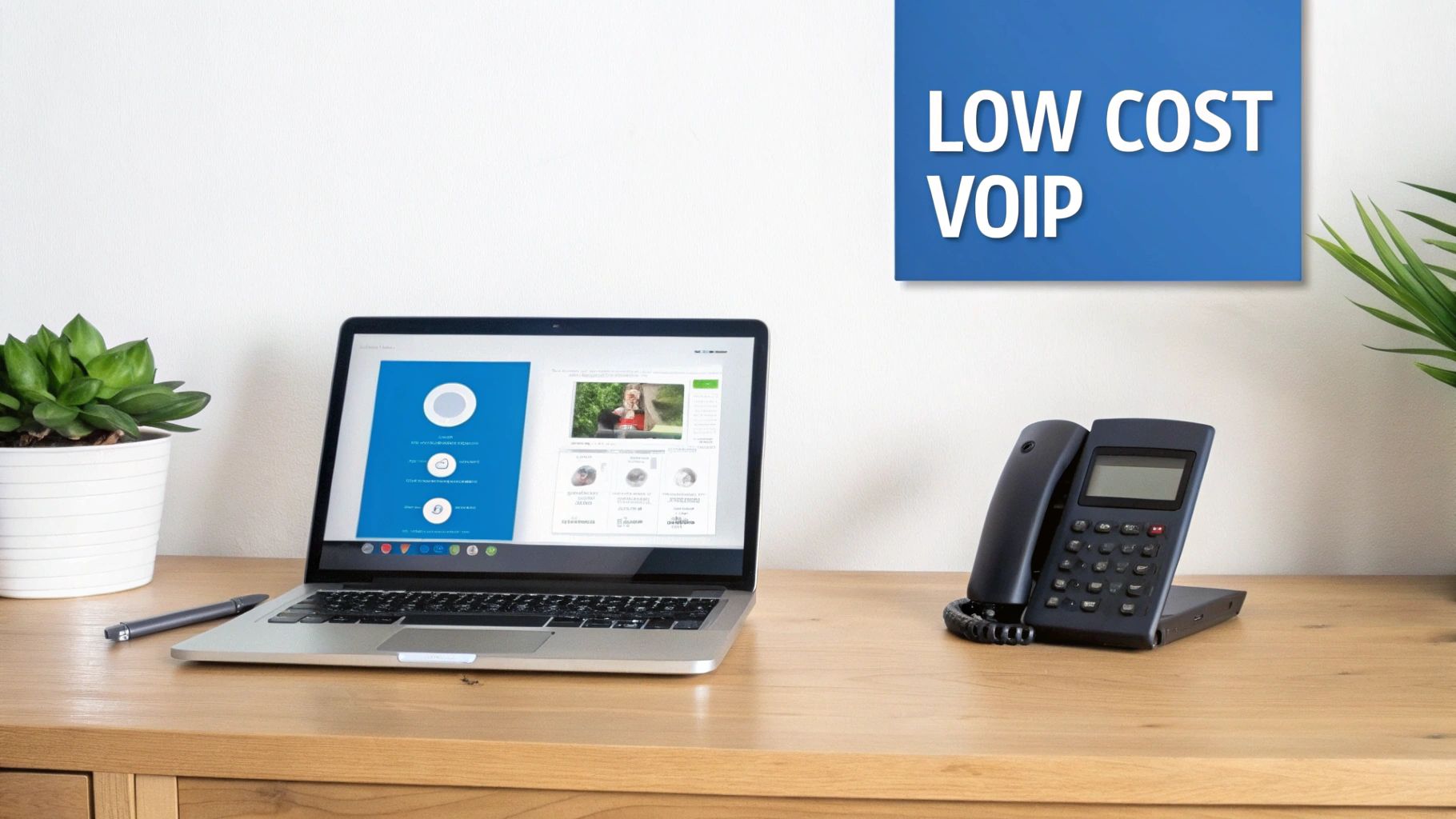
At its heart, VoIP (Voice over Internet Protocol) is a technology that takes your voice, turns it into a digital signal, and sends it zipping across the internet. If you've ever used FaceTime Audio, Skype, or made a WhatsApp call, you've already used VoIP without even thinking about it.
A low-cost VoIP phone service just packages this powerful tech into a super reliable and affordable replacement for your ancient copper-wire landline.
Instead of being chained to a physical phone jack in the wall, VoIP sets you free. You can make and receive calls from a familiar-looking desk phone, a software application on your computer, or even an app on your smartphone. The only thing you need is a solid internet connection.
The Technology Behind the Savings
So, where do all the savings come from? It's all about the delivery method. Landlines depend on a massive, dedicated network of physical copper wires that are incredibly expensive for phone companies to maintain. VoIP neatly sidesteps all that legacy infrastructure by using the internet—a network you're already paying for.
That efficiency is the secret sauce. With no separate, aging network to upkeep, providers can pack their plans with features and offer them at a fraction of the cost.
Why a Strong Internet Connection Is Key
Since your calls are literally traveling over the internet, your call quality is directly tied to your internet quality. A slow or choppy connection can lead to annoying echoes, jitter, or even dropped calls.
This is where a 100% fiber network makes a world of difference. Fiber-optic internet, like ours at Premier Broadband, delivers the symmetrical upload and download speeds and the low latency you need for flawless, uninterrupted conversations.
The worldwide move to VoIP is happening fast. The market is projected to hit an incredible USD 308.41 billion by 2030, as more homes and businesses look for smarter ways to communicate. Switching can slash phone costs by up to 56.7% compared to old-school systems, making it a no-brainer for most people.
Want to dive a bit deeper into the tech? Check out our detailed guide on how VoIP phone service works.
VoIP vs Traditional Landline at a Glance
Still weighing your options? This quick table breaks down the core differences between modern VoIP and old-fashioned landlines.
| Feature | Low-Cost VoIP | Traditional Landline |
|---|---|---|
| Technology | Uses your existing internet connection | Requires dedicated copper phone lines |
| Monthly Cost | Significantly lower, often with flat-rate plans | Higher, with many add-on fees |
| Features | Includes caller ID, voicemail, call forwarding, etc. for free | Basic features cost extra |
| Flexibility | Use your number on a desk phone, computer, or mobile app | Tied to a physical location and phone jack |
| Hardware | Can use existing phones with an adapter or new VoIP phones | Requires a standard landline telephone |
| Scalability | Easy to add or remove lines as needed | Difficult and expensive to scale |
As you can see, VoIP pulls ahead in nearly every category, offering more for less. It's the clear choice for anyone looking to modernize their communications while keeping more money in their pocket.
Understanding VoIP Pricing and Your Monthly Bill
So, you're interested in a low-cost VoIP phone service. But what does that actually look like when the bill arrives? This is where the real value of VoIP clicks into place. Unlike old-school landline bills that are notoriously confusing with hidden taxes and weird fees, VoIP pricing is almost always refreshingly straightforward.
Most providers build their plans around simple, predictable models. This transparency is a game-changer for budgeting, whether it's for your home or a growing business. You'll know exactly what you're paying for and can pick a plan that fits your life without dreading surprise charges at the end of the month.
Common VoIP Pricing Models
The most common setup you'll see is a per-user, per-month subscription. It works just like your Netflix or Spotify subscription—you pay a flat monthly fee for each phone line, which usually gets you unlimited calling in the U.S. and Canada plus a whole suite of features. This model is perfect for businesses that need costs to be predictable, period.
For home use or anyone who doesn't make a ton of calls, some providers have metered or pay-as-you-go plans. With these, you pay a super-low base fee and then just get billed for the minutes you actually talk. It's a fantastic way to save cash if you want a reliable phone number but aren't on the phone 24/7.
The key takeaway is that you only pay for what you need. A family can grab a basic plan for occasional calls and get great international rates, while a startup can outfit the whole team with a full-featured system for one, simple monthly cost.
Breaking Down a Typical Bill
Your monthly VoIP bill is usually pretty clean and simple. Knowing the main parts helps you compare different offers like a pro.
- Monthly Subscription Fee: This is your base charge, whether it's a flat rate for unlimited calls or the small fee for a metered plan. It covers your phone number and access to all the features.
- Taxes and Regulatory Fees: Like any phone service, VoIP has to include some government-mandated fees, like the E911 service fee. These are usually small and are always clearly broken out on your bill.
- Usage Charges (If Applicable): If you're on a pay-as-you-go plan, this is where your minutes will show up. It's also where any international calls not covered by your plan will be listed, usually at just a few cents per minute.
- One-Time Costs: Keep an eye out for any initial fees. This might include buying a VoIP phone or adapter, or a one-time charge for setup or moving your old number over. That said, many providers will waive these fees to get you on board.
Once you know these few elements, you can look at any low cost voip phone service offer and see exactly what you're getting. For a deeper dive into predictable billing, check out our guide on the benefits of flat-rate VoIP service. This kind of clarity means your final bill will never be a surprise.
Must-Have Features in a Low Cost VoIP Service
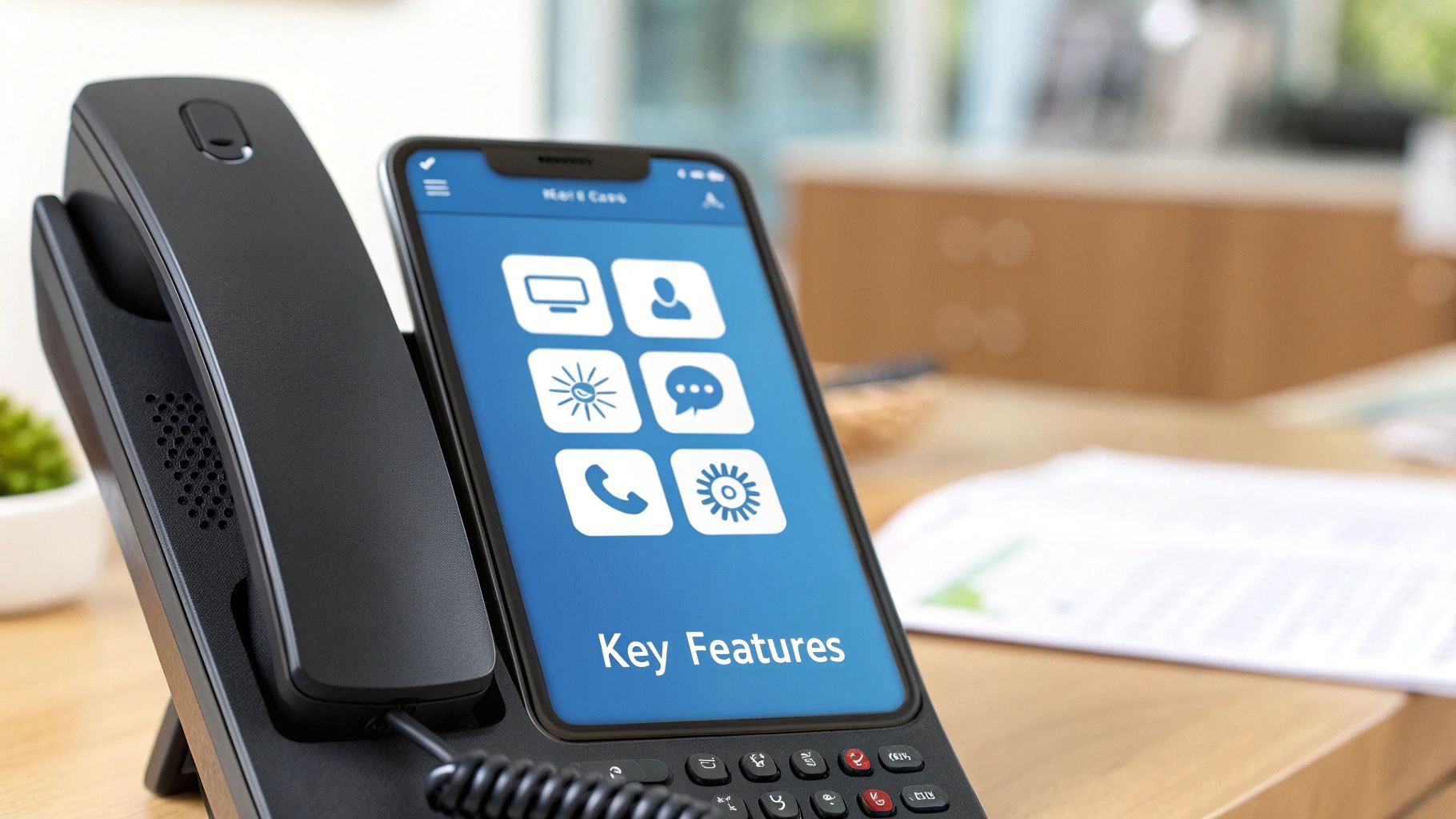
When you make the switch to a low-cost VoIP phone service, you're not just getting a dial tone. You're unlocking a whole communications toolkit that makes old-school landlines look like relics from another era.
The best part? Many of the incredible features that used to cost a fortune are now just part of the package. Knowing what's available is the key to picking a service that actually makes your daily life easier or helps your business run smoother. It's about getting more bang for your buck, not just saving a few dollars.
Core Features for Everyday Use
These are the foundational tools you should expect from any quality VoIP provider. Think of them as the essentials that make modern communication effortless, whether you're at home or running a business.
- Voicemail-to-Email: This one is a total game-changer. Instead of dialing in to check your messages, your voicemails get converted into audio files and sent straight to your email inbox. You can listen, save, and forward them just like any other attachment.
- Call Forwarding: Never miss an important call again. This feature lets you automatically bounce incoming calls to your cell phone, another line, or even a coworker's desk when you can't pick up.
- Mobile App Integration: A good VoIP service should go wherever you go. With a dedicated mobile app, your smartphone becomes an extension of your home or office line, letting you make and take calls with your main number from anywhere you have internet.
Of course, a solid phone system is just one piece of the puzzle. It's smart to think about how it works with your other tools, especially if you're a remote worker juggling a mix of essential communication apps for remote teams to stay productive.
Advanced Tools for Business Growth
For small businesses, a low-cost VoIP phone service can deliver a level of professionalism that was once only possible for huge corporations. These advanced features are all about improving your customer's experience and making your operations more efficient.
The right VoIP features transform your phone from a simple utility into a strategic business asset. An auto-attendant, for example, ensures every caller gets a professional, consistent greeting and is routed to the right person without human intervention.
An auto-attendant is like having a virtual receptionist. It greets callers with a custom message and menu ("Press 1 for sales, Press 2 for support"), making your business instantly sound bigger and more organized.
Another powerful tool is call analytics. This feature hands you valuable data on call volumes, wait times, and peak hours. These insights help you optimize staffing and make sure you’re always delivering top-notch customer service. For businesses ready to scale, our guide on VoIP solutions for small business dives deeper into these kinds of growth-focused tools.
Must-Have VoIP Feature Checklist
Sorting through different providers can feel overwhelming. This table breaks down which features are most important depending on your needs, whether you're setting up a home office or outfitting a growing team.
| Feature | Good for Home Use | Essential for Remote Work | Critical for Small Business |
|---|---|---|---|
| Voicemail-to-Email | ✅ | ✅ | ✅ |
| Mobile App | ✅ | ✅ | ✅ |
| Call Forwarding | ✅ | ✅ | ✅ |
| Auto-Attendant (Virtual Receptionist) | ✅ | ✅ | |
| Call Analytics & Reporting | ✅ | ||
| Call Recording | ✅ | ||
| Business Texting (SMS) | ✅ | ✅ | |
| Video Conferencing | ✅ | ✅ | |
| Toll-Free Numbers | ✅ |
Ultimately, choosing the right provider comes down to matching their feature list to what you actually need. This ensures you're not paying for things you won't use while getting all the tools that will make a real difference.
How to Avoid Hidden Fees and Cost Traps
The phrase "low cost" always looks good, but it can sometimes hide unexpected charges that make your bill much bigger than you expected. When you're looking for a low cost voip phone service, you have to know where providers might sneak in extra fees.
It’s a bit like booking a budget flight. The ticket price seems like a steal, but then you get hit with extra costs for baggage and seat selection. If you're not careful, that great deal can end up costing you a lot more. The best way to protect yourself is to go over the fine print before you sign up for anything.
Common Charges to Watch For
To keep your wallet happy, keep a close eye out for these common cost traps. They're often buried in the terms of service but can make a real difference to your monthly expenses.
- Equipment Rental Fees: Some providers might offer a "free" phone but then charge you a monthly rental fee for it. Always ask if the hardware is included in the plan's price or if it's a separate, ongoing charge.
- Number Porting Charges: Want to keep your old phone number? Most services will let you, but some charge a one-time fee to "port" your number over. You'll want to find a provider that does this for free.
- Regulatory and E911 Fees: These are legitimate, government-required fees, but sometimes they aren't explained very well. A good provider will list them clearly on your bill. They usually only add a few dollars a month.
- Early Termination Fees (ETFs): This is a big one. Some companies lock you into a long-term contract and hit you with a massive penalty if you cancel before it’s over. Make sure you know if you're signing a contract and what the cancellation policy is.
A truly low-cost provider is completely transparent about every single item on your bill. If a company gets cagey about explaining a fee or just points you to confusing legal documents, that’s a red flag. Your bill should be simple and predictable.
One of the easiest ways to simplify your billing and cut down on these extra costs is to bundle your phone and internet together. You can see how combining services works by checking out our guide to internet and phone bundles. This approach usually gives you more transparency and a much better value overall.
Choosing the Right VoIP Plan for Your Needs
Picking the right low-cost VoIP phone service isn’t just about grabbing the lowest price you see. It’s really about finding the features that click with your specific needs. The perfect plan for a busy small business will be worlds away from what a modern family or a dedicated remote worker needs.
To find your best fit, start by thinking about what your daily calls and communication actually look like. Are you a one-person show trying to project a Fortune 500 image on a startup budget? Or maybe you're a remote professional whose video calls simply can't drop? Each scenario points to a different set of tools and a different type of plan.
VoIP for the Remote Professional
For anyone working from home, a VoIP plan is more than a phone line—it's a lifeline to your team and clients. The key is finding a service that delivers crystal-clear, uninterrupted video and voice. This means your internet connection is just as crucial as the VoIP plan itself. A 100% fiber network with symmetrical upload and download speeds makes sure your voice is sharp and your video feed is smooth, even while you’re sharing massive files.
You’ll want to look for plans that come with a solid mobile app, which lets you take business calls on your personal cell while still showing your professional number. Little things like voicemail-to-email are also game-changers, helping you stay on top of messages from anywhere.
This flowchart gives you a simple strategy for picking a provider without getting snagged by hidden charges.
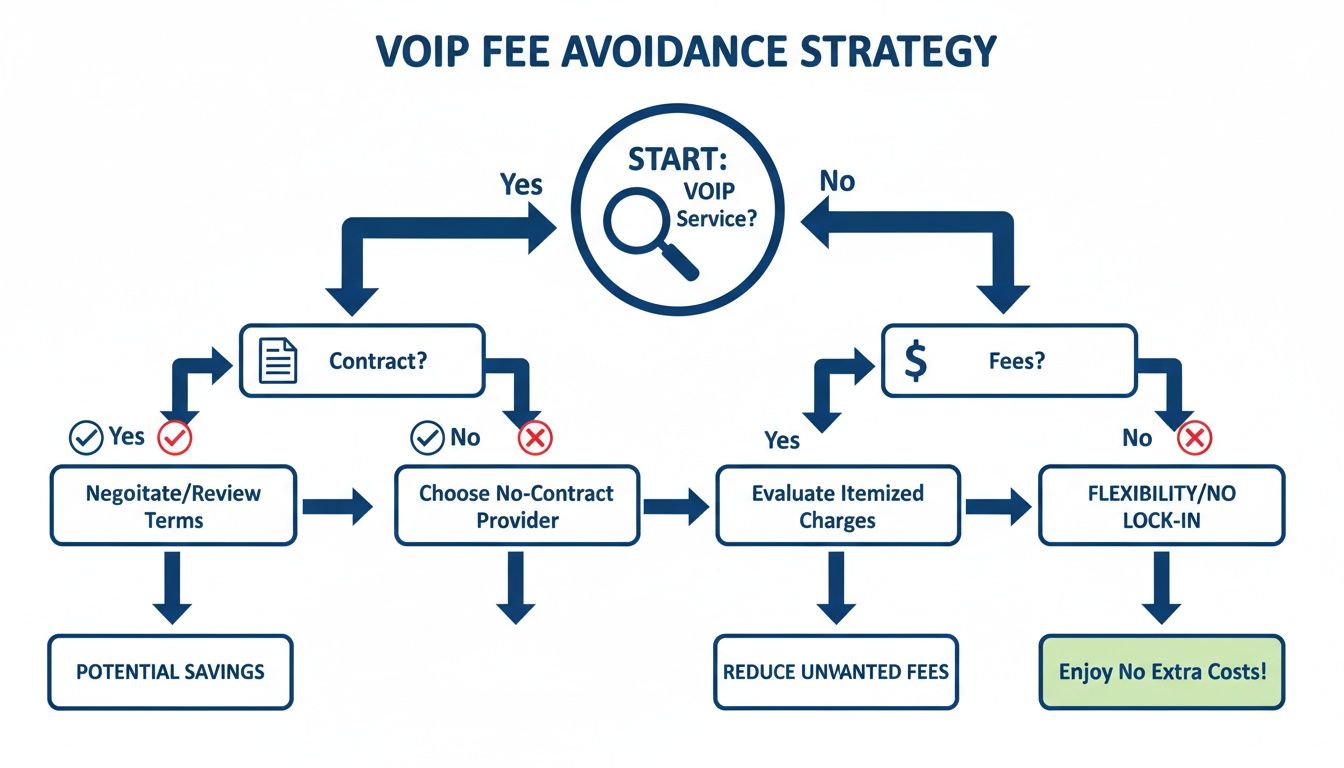
The big takeaway here? Asking direct questions about contracts and extra fees before you sign is the smartest way to lock in a truly low-cost service.
Plans for Families and Gamers
VoIP is completely changing how we communicate at home. The residential market was valued at USD 27.68 billion and is only expected to climb as more people ditch old landlines for feature-packed internet calling. This is part of a much bigger trend, with over 90% of businesses around the globe now using VoIP for its cost-saving benefits. You can dig into more of these VoIP market statistics on sheerbit.com.
For families, a low-cost VoIP phone service is an affordable way to keep a home phone line that comes with modern perks like content controls and call blocking. For gamers, the number one priority is a connection with low latency. Pairing VoIP with a fiber internet connection means their game won't freeze up just because someone in the house picked up the phone.
Solutions for Growing Businesses
A small business needs a phone system that can grow right alongside it. This is where hosted VoIP really shines, offering big-business features without the eye-watering price tag.
An auto-attendant feature can instantly make a small operation sound more established and professional, directing callers to the right place without needing a full-time receptionist. As your team grows, adding new lines is as simple as a few clicks in an online dashboard.
This kind of scalability is what it's all about. Whether you're bringing on your first employee or your fiftieth, a cloud-based phone system adapts to your needs on the fly, making sure your communication tools help you grow instead of holding you back.
Getting the Most Value from Fiber and VoIP
Pairing a low-cost VoIP phone service with the right internet connection is like putting a high-performance engine in a race car—it unlocks its true potential. While VoIP works over any stable connection, a 100% fiber network is the ultimate foundation for incredible reliability and call clarity.
This is because fiber optic internet provides symmetrical speeds, meaning your upload speed is just as fast as your download speed. Think of it like a two-way superhighway instead of a main road with a tiny side street coming back.
That equal bandwidth is absolutely crucial for flawless video calls or sending large files while someone else in the house is streaming a movie. With a powerful fiber connection from Premier Broadband, you can say goodbye to the jitter and lag that plague calls on older networks. Every conversation comes through crystal clear.
Why Bundling Creates Unbeatable Value
Combining your VoIP and fiber internet with a single provider like Premier Broadband just makes sense. You get one predictable bill, one number to call for support, and often a much better price than paying for each service separately.
The value goes beyond just the basics. Bundling can also include extras that really sweeten the deal:
- Network Security: Keep your family and devices safe with tools like Premier Protects.
- Entertainment Options: Get access to streaming packages that help you finally cut the cord.
- Enhanced Reliability: A unified system where everything is designed to work together perfectly.
This synergy between fiber and VoIP is where the real magic happens. Cost savings are a huge plus, with some users cutting their phone expenses by up to 56.7% compared to traditional landlines, mostly by eliminating high long-distance and international fees. You can find more on these VoIP market insights on coherentmarketinsights.com.
Ultimately, choosing a bundled fiber and VoIP solution isn't just about saving a few bucks. It's about investing in a smarter, more dependable communication system built for how we live and work today.
Got Questions About Low-Cost VoIP?
Thinking about making the jump to a low-cost VoIP phone service usually brings up a few questions. That's completely normal. Let's walk through the most common ones so you know exactly what to expect.
Can I Keep My Current Phone Number?
Yes, you almost certainly can. There's a straightforward, regulated process called number porting that lets you take your existing phone number with you when you switch providers.
This is a huge relief for most people. It means you don't have to go through the hassle of updating your contact info with family, friends, or customers. The same number everyone already has will simply work on your new service.
What Kind of Equipment Do I Need?
You’ve got a few flexible options here, and you might not need to buy anything new. For a low-cost VoIP service, you can typically choose from:
- Your Existing Phone: A small, simple gadget called an Analog Telephone Adapter (ATA) is all it takes. You just plug your current home phone into the ATA, and the adapter plugs into your internet router.
- Dedicated IP Phones: These look and feel just like a standard desk phone but are built to connect directly to your internet. They often offer the best call quality and access to more advanced features.
- Softphone Apps: This is the easiest route of all. You can use an application on your computer or a mobile app on your smartphone to make and receive calls, effectively turning the devices you already own into your home or office phone.
Is VoIP Reliable if the Power Goes Out?
That’s a fair question, since VoIP runs on your internet and home electricity. But modern VoIP systems have this problem solved with smart, built-in backups.
The best providers offer automatic call forwarding. If your internet or power ever drops, the system instantly and seamlessly reroutes all incoming calls to another number you've chosen—like your cell phone. You won't miss a thing.
This simple failsafe keeps you connected, ensuring your calls always get through, even when the unexpected happens.
Ready to get crystal-clear calls and see just how much you can save? Premier Broadband's 100% fiber network is the perfect foundation for our feature-packed, low-cost VoIP phone service.