
At its core, a predictive dialer is a smart, automated calling system. It dials several phone numbers at the same time, connecting your agents only when a live person picks up the phone. It uses sophisticated algorithms to guess when an agent will be free and when a call will be answered, all to maximize real conversation time.
This tech is all about getting rid of manual grunt work. It lets your team stop dialing and start talking.

Unlocking a New Level of Efficiency
Think about your sales or support team for a minute. In a typical hour, they might only spend 15-20 minutes actually talking to customers. Where does the rest of the time go? It's lost to dialing numbers by hand, waiting for the phone to ring, getting stuck in phone menus, and hitting voicemails. That lost productivity is called idle time, and it’s a huge drain on your business.
This is exactly what a predictive dialer is built to fix. Imagine it as an incredibly sharp assistant who takes over all the boring parts of making calls. It works through your contact list, weeds out all the dead ends, and then—like magic—routes a live person to the next free agent.
Let's break down the core functions of a predictive dialer into a quick summary.
Predictive Dialer At a Glance
This table gives you a snapshot of what a predictive dialer does and why it matters for your team's productivity.
| Feature | What It Does | Primary Benefit |
|---|---|---|
| Algorithmic Pacing | Analyzes agent availability and call metrics to decide how many numbers to dial. | Keeps a steady flow of live calls queued up without overwhelming your agents. |
| Call Filtering | Automatically detects and skips busy signals, voicemails, and disconnected numbers. | Drastically reduces time wasted on unproductive calls. |
| Live Call Routing | Instantly connects a call to the next available agent the moment a person answers. | Eliminates the "hello-delay" and minimizes agent downtime between conversations. |
These features work together to create a powerful engine for outbound communication, ensuring your team is always engaged in valuable interactions.
The Magic Behind the Curtain
The real power of a predictive dialer lies in its algorithm, which is constantly number-crunching behind the scenes. It studies real-time data from your call center to make smart guesses about when to dial and how many lines to open. This is what keeps a perfect stream of live connections flowing to your agents.
Here’s a look at how it pulls this off:
- It Tracks Agent Status: The system knows instantly who’s on a call, who’s finishing up notes (wrap-up time), and who’s ready for the next conversation.
- It Predicts Your Next Live Call: Using historical info like your team's average call length and answer rate, it forecasts how many numbers it needs to dial to land one live person.
- It Filters Out the Noise: The dialer is smart enough to recognize and hang up on busy signals, answering machines, and invalid numbers before they ever reach your agent's ears.
This level of automation is a complete game-changer for any team making outbound calls. It's no surprise the global predictive dialer market hit USD 3.20 billion in 2024 and is projected to grow at a staggering 42.3% each year from 2025 to 2030. The industry is betting big on this technology.
The entire point of a predictive dialer is to slash agent idle time and boost talk time. By feeding agents live calls the second they become free, it completely transforms team productivity.
A Perfect Match for Modern Phone Systems
While a predictive dialer is powerful on its own, you unlock its full potential when you combine it with a modern VoIP phone system. For companies already using a cloud phone system for business, the integration is seamless and incredibly cost-effective.
High-quality VoIP ensures that the massive volume of calls your dialer is pushing through remain crystal-clear. This prevents the dropped connections and poor audio that can frustrate both your customers and your agents.
The Smart Algorithms Behind Predictive Dialing
There’s no magic behind a predictive dialer's power—it's all about smart math. Think of it like a master chef running a high-end kitchen. They know exactly when to start cooking the next dish so it's ready the moment a table is cleared, ensuring no one waits and the food is always hot.
A predictive dialer’s algorithm is the brain of your call center, doing the exact same thing. It’s constantly calculating the perfect moment to dial the next number, juggling dozens of variables in real time. The goal is simple: have a live person on the line the very second your agent is free, cutting out the dead air and wasted time that tanks productivity.
It all starts with data. The system looks at both historical trends and what's happening right now, feeding that information into its predictive engine to learn and get smarter over time.
Key Data Points the Algorithm Analyzes
So, how does it get so good? The algorithm is always watching several key metrics to keep things running smoothly:
- Average Talk Time: How long do conversations typically last for your team?
- Live Answer Rate: What's the real-world percentage of calls picked up by a human?
- Agent Availability: How many agents are talking, wrapping up a previous call, or waiting for their next one?
- Time of Day and Time Zone: When are people in a specific area code most likely to pick up the phone?
After crunching all these numbers, the system sets its pacing level. This is simply how many lines it should dial at once for each available agent. If answer rates are low, it might dial more lines. If agents are tied up on long calls, it automatically slows down.
This constant adjustment is the secret sauce that makes predictive dialers so powerful. To get a feel for just how intelligent these systems are, it helps to understand concepts like agentive AI, which describes autonomous systems that can act independently to achieve their goals.
The Rise of AI in Predictive Dialing
Things get even smarter when you bring Artificial Intelligence into the mix. Today’s AI-powered dialers analyze massive amounts of data—from call histories and time zones to demographic details—to predict the chance of a connection with stunning accuracy.
This level of processing helps dialers keep abandoned call rates well below the 3% compliance standard. More importantly, it can skyrocket agent talk time to as high as 80-90%.
At its core, the algorithm's goal is to create a perfect equilibrium. It balances dialing aggression with agent availability to maximize productive talk time while minimizing the number of abandoned calls.
This intelligent pacing keeps your team’s workflow moving without a hitch. Better yet, all the data the algorithm collects becomes a goldmine for improving your outreach strategy. Our guide on using call analytics for business growth shows you exactly how to turn this data into real results, making every campaign you run smarter than the last.
Choosing the Right Automated Dialer
Picking the right automated dialer isn't just a tech upgrade—it's a strategic move that can make or break your team's performance. While a predictive dialer is the powerhouse for massive outreach, it’s not always the right tool for the job. You’ve got to know the other players, like power and progressive dialers, to match the tech to your actual business goals.
Let's think about it like choosing a work vehicle. A predictive dialer is a freight train, built to haul huge volumes at top speed. A power dialer is more like a reliable delivery van; it dials one number at a time for an agent, automating the manual dialing but ensuring a person is always ready for the connection. Then there's the progressive dialer—think of it as a smart car that only moves when the light is green. It dials the next number only after confirming an agent is completely free.
So, where do you start? This decision tree nails the first big question: do you have a big enough team for a predictive dialer to even work its magic?
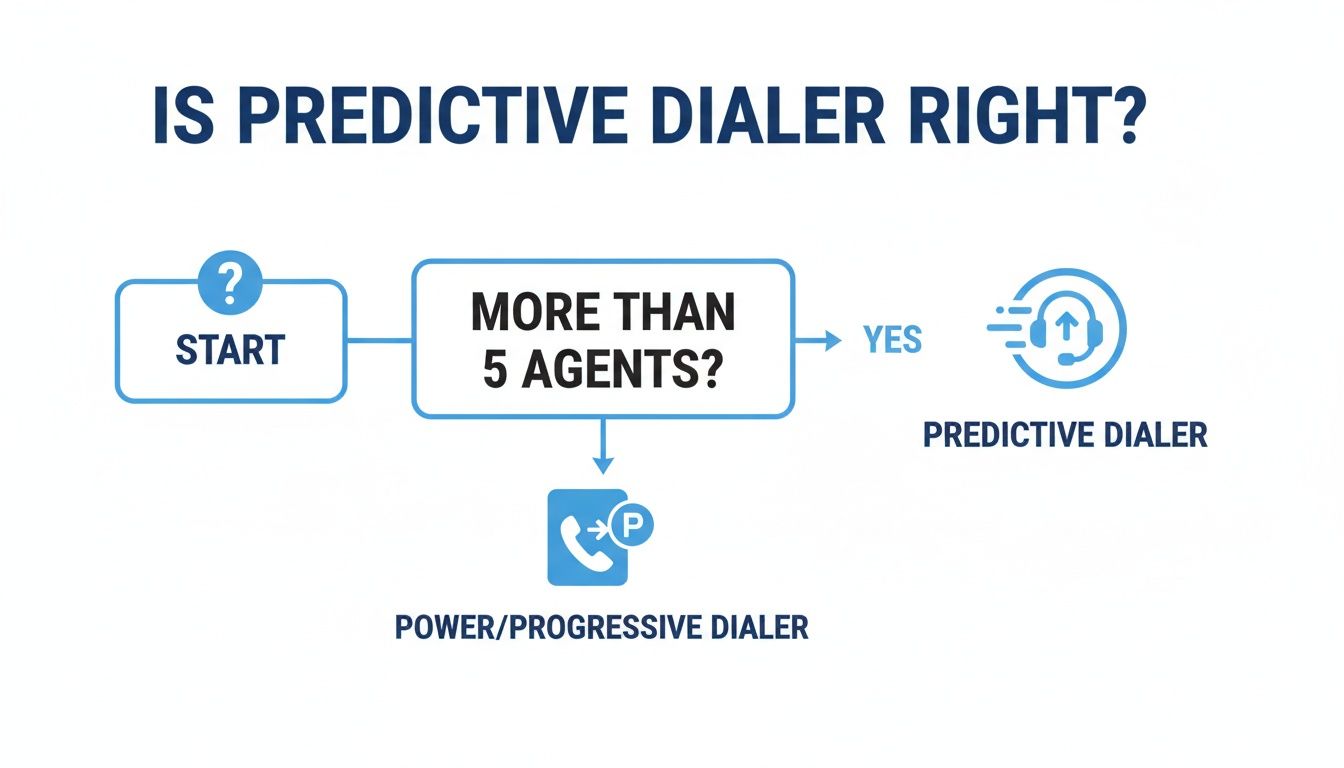
As you can see, predictive dialers really shine with larger teams, typically five or more agents. This gives the algorithm enough activity to learn from and make smart predictions. For smaller crews, a power or progressive dialer usually strikes a much better balance between getting work done and keeping things under control.
Dialer Types Comparison
Every dialer has its sweet spot. The right one for you hinges on your campaign goals, how good your contact list is, and how carefully you need to tread with compliance. A high-volume telemarketing blitz has totally different needs than a B2B sales team chasing high-value accounts.
Let's put them head-to-head to see how they really stack up for different jobs.
| Dialer Type | How It Works | Best For | Risk of Abandoned Calls |
|---|---|---|---|
| Predictive | Dials multiple numbers per agent, connecting only live answers. | High-volume, short calls like surveys, reminders, or transactional sales. | High, requires careful management to stay under the 3% legal limit. |
| Power | Dials one number at a time for a specific agent as soon as they are free. | B2B sales or any campaign where agents need context before the call. | None, as a call is only made when an agent is confirmed available. |
| Progressive | Dials one number per agent, but only after the agent finishes their previous call tasks. | Balanced campaigns needing efficiency without any risk of abandoned calls. | None, it offers a safer, slightly slower alternative to power dialing. |
At the end of the day, the best dialer is the one that fits your workflow like a glove. If you're all about massive outreach where speed is everything, a predictive dialer is king. But for those more personal, high-stakes conversations, a power or progressive dialer gives your agents the focus and control they need to close the deal.
What a Predictive Dialer Really Does for Your Business
So, what does all this tech actually do for your bottom line? The real value isn't just in the features; it's about turning automation into real business growth. It's about letting your team get more done without just throwing more people at the problem.
The first thing you'll notice is a massive jump in agent productivity. By completely cutting out manual dialing, listening to ringing, and dealing with voicemails, a predictive dialer eliminates dead time. Your team spends their day having live conversations that actually generate revenue.
Multiply Your Sales Opportunities
For any sales team, more conversations mean more opportunities. It's that simple. A predictive dialer is like an engine for your sales pipeline, constantly feeding your agents interested leads.
Instead of burning hours just trying to find someone to talk to, your team can put all their energy into what they do best: pitching, negotiating, and closing deals.
Think about a remote sales team. A predictive dialer brings their entire workflow together, making sure every single agent is working at their peak. It keeps a steady stream of calls flowing, turning what used to be downtime into valuable customer conversations.
Local service businesses—like an HVAC company or home security provider—can use it to book more appointments and follow up on quotes with incredible speed. That kind of quick, proactive outreach keeps them way ahead of the competition.
The real power of a predictive dialer is its ability to multiply your team's output. A small team of five can suddenly have the impact of a team of fifteen, all by replacing wasted time with productive conversations.
Fueling Growth with Data and Smarter Calling
This isn't just about making more calls; it's about making smarter calls. Modern systems, often powered by AI, can increase call volumes by an incredible 300-500%.
At the same time, they help personalize every single interaction. With tools like sentiment analysis and dynamic scripting, these dialers can increase qualified conversations by 200-400%, slash the cost per lead by up to 80%, and even shorten sales cycles by as much as 40%. You can dig deeper into how this tech is changing the game in this predictive dialer software market report.
But to see those kinds of results, you need a solid technical foundation. High-volume calling requires a rock-solid connection. A reliable fiber internet and VoIP system are non-negotiable to make sure every call is crystal-clear. Bad audio and dropped calls will wipe out all your efficiency gains in a heartbeat.
Understanding Compliance and Call Regulations
While a predictive dialer can seriously boost efficiency, its power comes with major legal responsibilities. The very thing that makes it effective—dialing more numbers than you have available agents—creates the risk of abandoned calls. This is what happens when someone answers the phone, but no agent is free to talk to them within two seconds.
This isn't just a minor hiccup. It creates a frustrating, negative experience that can hurt your brand's reputation. More importantly, it puts your business at risk of violating federal regulations designed to protect people from aggressive calling practices.
Navigating the Telephone Consumer Protection Act
The main rulebook for automated dialing is the Telephone Consumer Protection Act (TCPA). If you're using a predictive dialer, understanding and following these guidelines is non-negotiable. Failing to comply can lead to steep fines, anywhere from $500 to $1,500 per violation.
Here are the critical rules you absolutely have to follow:
- Maintain an Abandoned Call Rate Below 3%: Your abandoned calls can't be more than 3% of all calls that get answered during any 30-day campaign. This is the single most important number to watch.
- Play a Prerecorded Message: If a call does get abandoned, you are required to play a message that identifies your business and provides a contact number.
- Honor the Do-Not-Call (DNC) Registry: Before making any calls, your dialer must scrub your contact lists against the National DNC Registry.
Staying compliant isn't just about dodging fines; it’s about responsible communication. A well-managed dialer respects customer time and builds trust, while a poorly managed one can destroy it in a heartbeat.
Modern dialer software often comes with built-in tools to help manage these rules, but the ultimate responsibility falls on your business. Beyond the basics, advanced tools like the fastest AI audio transcription can be a huge help for keeping records and ensuring everyone sticks to policy, especially in high-volume call centers. Our guide on business call recording also offers key insights for maintaining compliant and high-quality call logs.
Integrating Your Dialer with VoIP and CRM
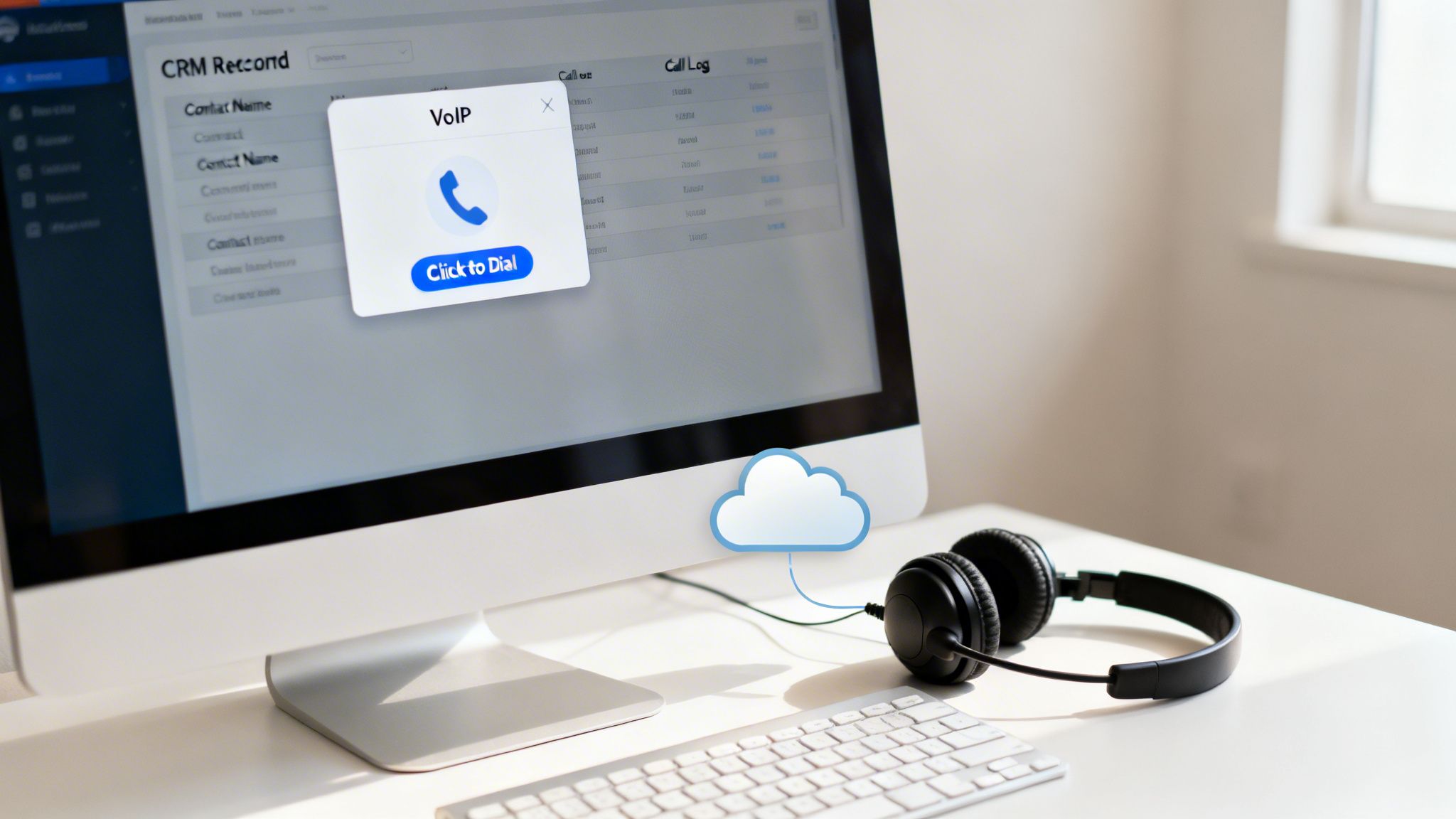
A predictive dialer is a powerhouse on its own, but when you connect it with your other business software, that’s when the real magic happens. By integrating your dialer with your VoIP phone system and your Customer Relationship Management (CRM) platform, you create one unified command center for your entire sales or support team.
This setup breaks down the walls between making a call and actually knowing who you’re talking to. Instead of jumping between different apps, your systems work together to give your agents all the background info they need for a great conversation.
Turning Calls Into Smart Interactions
Integration is what elevates a simple phone call into a smart, data-driven conversation. It gives your team a handful of powerful features that boost both their productivity and your customer's experience.
Here’s what you get when your systems are connected:
- Screen Pops: The second an agent connects to a customer, their entire history "pops" up on the screen. This gives your agent instant access to their purchase history, past support tickets, and any notes from previous calls.
- Click-to-Dial: Your agents can make calls with a single click, right from inside the CRM. This simple but powerful feature gets rid of dialing errors and shaves precious seconds off every single call.
- Automated Call Logging: Every call’s details—like its length, the outcome, and any agent notes—are automatically saved to the customer’s profile in the CRM. This creates a perfect, hands-free record of every interaction.
When your dialer, VoIP, and CRM all talk to each other, data flows seamlessly. Your agents are always prepared, every conversation is more relevant, and no critical detail ever falls through the cracks.
This kind of connected workflow is the key to getting the absolute most out of your predictive dialer.
The Foundation for a Seamless Workflow
To make this all work, you need the right technology. A cloud-based VoIP system is the perfect partner for a predictive dialer because it’s flexible, easy to scale, and delivers high-quality audio over the internet. This ensures every call sounds crystal-clear, even when you're making hundreds of them.
You’ll also want a modern CRM that can easily share data with other platforms. Putting these tools together creates a powerful, automated system that lets your team focus on what they do best: building relationships and closing deals. To see how this powerful combo works, check out our guide on how CRM with VoIP integration works.
Frequently Asked Questions About Predictive Dialing
When you start looking into automated calling, a lot of questions come up. To clear the air, we’ve put together straightforward answers to the most common concerns we hear from business owners about predictive dialing and where it fits.
Is Predictive Dialing Legal for My Business?
Yes, predictive dialing is legal, but it’s an area where you have to follow the rules closely. The main regulations to know are from the Telephone Consumer Protection Act (TCPA), which protects people from unwanted calls.
To stay on the right side of the law, your main job is to keep your abandoned call rate below 3% for any single campaign. An abandoned call is what happens when someone picks up the phone, but no agent is available to talk to them. You also have to respect the National Do-Not-Call Registry and play a recorded message if a call does get abandoned.
Will a Predictive Dialer Work with My VoIP System?
Absolutely. Modern predictive dialers are designed to work perfectly with VoIP phone systems, especially cloud-based ones. This partnership is key to managing a high number of calls without sacrificing that crystal-clear audio quality your customers expect.
When they're integrated, you get powerful features like CRM screen pops and automatic call logging. Just make sure to double-check that the dialer you're considering is compatible with your specific VoIP provider for a reliable, no-fuss connection.
A predictive dialer is only as good as the phone system it runs on. Pairing it with a high-quality, cloud-based VoIP service is the best way to ensure every call is clear, professional, and effective.
How Many Agents Do I Need for a Predictive Dialer?
A predictive dialer really shines when your team has five or more agents. The system’s algorithm relies on a steady stream of activity and data to make its smart predictions about when agents will be free and how often calls will be answered. With a bigger team, it gets a lot more accurate.
If you have a smaller team—say, one to four agents—a progressive or power dialer is usually a much better fit. These dialers still automate the work but only connect one call at a time for each agent. This completely gets rid of the risk of abandoned calls while still giving your team a solid efficiency boost.
Ready to power up your business communications? Premier Broadband delivers crystal-clear Business VoIP and high-speed fiber internet designed to support even the most demanding call center operations. Learn more about our business solutions and build a foundation for growth.