

You're probably dealing with this right now. You're moving to Arkansas, opening a new location, replacing an old phone system, or trying to keep a home office stable enough for daily calls and video meetings. In each case, the Arkansas area code attached to your number does more than label your region. It affects how customers recognize your business, how your staff dials, and whether older equipment keeps working after numbering changes.
Arkansas also isn't a one-code state anymore. Its numbering map has expanded in stages, starting with 501 in 1947, then adding 870 in April 1997, 479 in January 2002, and 327 in 2024 as an overlay to 870, according to Arkansas area code history and statewide coverage details. That means residents and businesses need to think beyond “What area code is this?” and ask better questions. Does this number help me look local? Will my alarm panel still dial out? Should I keep my existing number and move to VoIP instead of replacing everything?
That's the practical side of the Arkansas area code situation. A local number can strengthen trust. A modern fiber connection can keep calls, cloud apps, cameras, and remote work running without friction. A VoIP setup can let a company in one part of the state keep a familiar local presence in another.
Here's the guide that gets straight to those decisions.
1. 501 Area Code – Central Arkansas Hub
A 501 number tells people you operate in Arkansas's center of gravity. It is tied to Little Rock, the capital region, and the part of the state where law firms, healthcare groups, agencies, contractors, and remote professionals need a phone presence that feels established from the first call.
That matters more than people admit. If you serve central Arkansas, use a 501 number. It strengthens local recognition, reduces friction for customers who prefer dealing with a familiar regional business, and fits the expectations of clients who still judge credibility by the number on their caller ID.

Where 501 matters most
In central Arkansas, your phone number and internet service should support the same goal. Look local, stay reachable, and keep calls clear.
Use 501 strategically in situations like these:
- Professional offices: Attorneys, consultants, clinics, and financial service providers benefit from a central Arkansas number that matches the market they serve.
- Home offices: Remote workers need a connection that holds up during video meetings, large uploads, and multiple devices online at once.
- Public sector and institutional settings: Offices with stricter oversight usually need cleaner network management and more control over how voice and internet services are configured.
- Homes that need fewer service interruptions: Reliable equipment, solid support, and protection options help reduce the fallout from storms, power issues, and accidental damage.
Practical rule: If your customers are in central Arkansas, keep or get a 501 number. Local familiarity supports trust, and trust helps calls turn into appointments, estimates, and signed business.
Best service approach for 501 residents and businesses
Start with fiber. Then add VoIP.
That order gives you a stronger setup for both business and residential use. A stable fiber connection supports voice calls, cloud software, security systems, file transfers, and home office traffic without forcing everything through an outdated phone system. After that, add VoIP features that improve daily work, such as caller ID, voicemail-to-email, call routing, and mobile access for staff who are away from the desk.
For businesses, the smart move is simple. Keep the local identity of a 501 number and pair it with internet and phone service that can scale without replacing the whole system every time you add staff or open another location. For households, the standard should be just as high. If your income depends on reliable meetings and fast uploads, stop treating internet service like a basic utility and choose one built for work.
If you want a closer look at the region and how local numbering fits into a modern phone strategy, read Premier Broadband's guide to the 501 area code in Arkansas.
2. 479 Area Code – Northwest Arkansas Growth Region
Northwest Arkansas runs on its own numbering identity. The 479 numbering plan area serves the northwest part of the state, including Fort Smith and Fayetteville, and it was split from 501 in January 2002 to relieve numbering exhaustion in that region, according to Arkansas area code listings and 479 history. That's not just telecom trivia. It tells you that northwest Arkansas operates as a distinct communications market.
If you're serving customers in Fayetteville, Rogers, Springdale, or Fort Smith, use that fact. A 479 number signals that you're local to the region, not calling in from somewhere else. For a startup, contractor, clinic, or retail business, that local recognition can shape first impressions before anyone answers the phone.
Why 479 should influence your setup
Northwest Arkansas has a strong mix of corporate offices, growing small businesses, new residential development, and remote professionals. Those groups need different tools, but they all benefit from the same foundation: fast internet and flexible voice service.
A practical 479 strategy looks like this:
- Growing businesses: Bundle business fiber with hosted VoIP so new hires, call routing, and expansion don't require replacing the whole phone system.
- Relocated remote workers: Keep work calls stable with a home connection designed for meetings, large uploads, and multi-device use.
- Retail and hospitality teams: Use mobile app integration so managers can stay reachable without handing out personal cell numbers.
- Content creators and tech-savvy households: Prioritize symmetrical performance and low-friction WiFi coverage throughout the home.
A local 479 number tells people you understand northwest Arkansas. Your internet and phone system should back that up by working like a local business expects.
The right fit for homes and companies in northwest Arkansas
In this region, old assumptions break fast. A traditional desk phone system doesn't match the way teams work now. Staff move between offices, homes, vehicles, and mobile devices. Customers still expect a local number, but they don't care whether the call reached you through a physical PBX or a cloud-based VoIP platform.
That's why fiber and hosted voice belong together here. A startup can launch with a local number and avoid buying bulky on-site phone equipment. A household can support work, gaming, streaming, and school on one stable connection. A larger company can add AI-driven cameras, managed networking, and business voice without building separate systems for each office.
3. 870 Area Code – Eastern and Southeast Arkansas
A business in Jonesboro, a clinic in Pine Bluff, and a family in southeast Arkansas all face the same test. If calls drop or the connection slows down, the area code on the screen does not matter much. In 870, reliability decides whether a phone number helps your reputation or frustrates the people trying to reach you.
This region covers a wide stretch of eastern and southeast Arkansas, including many rural communities and smaller markets. That changes the buying decision. A local number still matters, but stable internet and dependable voice service matter first for households, field teams, schools, clinics, and service businesses that cannot afford missed calls or shaky connections.
What 870 users should prioritize
Start with infrastructure that holds up under daily use and is simple to manage. That means fiber where available, business voice that routes calls cleanly, and a setup that does not depend on a patchwork of consumer apps and personal cell phones.
Use this framework in 870:
- Rural households: Choose internet that can handle school platforms, telehealth visits, video calls, and streaming at the same time.
- Agricultural operations: Keep office communications, billing systems, and cloud tools on one stable connection instead of mixing unreliable services.
- Healthcare and education sites: Use managed voice and networking built for uptime, call quality, and easier support.
- Small businesses watching costs: Combine internet and VoIP so billing stays simpler and you avoid juggling multiple vendors.
Affordability matters here too. For residents in southeast Arkansas, Premier Broadband's Emergency Broadband Benefit information for residents in southeast Arkansas shows why service planning should account for both budget and coverage, especially in areas where older equipment is still common.
Why a local 870 number still earns trust
Local identity still carries weight in eastern and southeast Arkansas. A farm supplier should show up with a local number. A clinic should appear local on caller ID. A contractor serving several small towns should not force every customer to call an out-of-state mobile number and hope it gets answered.
Hosted VoIP solves that problem cleanly. You keep the local 870 identity customers recognize, while gaining better call routing, voicemail handling, extensions, and support for staff working from multiple locations. For this part of Arkansas, that is the right mix. Keep the local number. Upgrade the system behind it.
4. Area Code Overlay Systems and VoIP Routing
The most important recent Arkansas numbering change wasn't a split. It was an overlay. In the 870 region, the Arkansas Public Service Commission notice explained that permissive 10-digit dialing started July 21, 2023, mandatory 10-digit dialing began January 19, 2024, and new 327 numbers could be assigned starting February 20, 2024. The same notice also said local calling status and rates didn't change, and it warned that devices programmed for 7-digit dialing had to be updated, including alarm systems, security panels, elevator phones, and other legacy equipment, as summarized in the Arkansas 870 and 327 overlay notice.
That's the operational side many people miss. Overlay systems affect how people dial, how systems route calls, and whether old hardware keeps functioning. If you manage a business or even a busy household, treat overlays as a systems issue, not just a number change.
What to check after an overlay
The immediate job is straightforward. Make sure every device, app, and programmed number uses full 10-digit dialing where required. That includes anything that calls automatically, not just the phones people touch every day.
Review these areas first:
- Security equipment: Alarm panels and monitored systems often store old dialing patterns.
- Property systems: Elevator phones, gate controls, and door entry units can break if no one updates them.
- Office hardware: Fax machines, conference phones, and analog adapters may still be set to older dialing behavior.
- Contact programming: Speed dials, forwarding rules, and auto attendants should all be verified.
Operational warning: Don't wait for a failed alarm call or dead elevator phone to find out a device was still using 7-digit dialing.
Why VoIP makes this easier
Hosted voice systems simplify area code transitions because administrators can manage settings centrally instead of reconfiguring a stack of disconnected hardware. They also make number portability easier when a company moves, opens another site, or wants to keep a familiar local identity while changing infrastructure.
If you're evaluating cloud phone service, Premier Broadband's overview of VoIP phone numbers and how they work gives useful context. For distributed teams, that flexibility matters. A staff member can work from another part of Arkansas and still present the right local number to customers.
5. Business Communication Solutions and Local Number Strategy
Area codes shape perception. If your business serves central Arkansas, a 501 number feels local there. If your core customer base is in northwest Arkansas, 479 may fit better. If your company works across eastern or southeast Arkansas, a local number in that region can make your outreach feel more familiar and more credible.
That doesn't mean every company needs separate infrastructure for each market. It means every company needs a number strategy. Hosted VoIP lets you choose local presence first, then build the call flow around how your team works.
Match the number to the market
A good local number strategy starts with geography and follows with operations. Use the area code your customers expect to see, then decide where calls should ring, how voicemail should route, and which staff need mobile access.
Common Arkansas examples include:
- Professional firms: A Little Rock office can keep a 501 identity while routing calls to staff in multiple locations.
- Retail groups: A Fayetteville or Rogers-facing operation can use a 479 number and branded caller ID across several stores.
- Regional cooperatives and service businesses: A company serving east Arkansas can preserve a familiar local number while modernizing its phone platform.
- Remote teams: Staff can answer through desktop apps or mobile apps without exposing personal numbers.
Keep the local number. Modernize everything behind it.
Build one communications stack, not five separate fixes
Most communication problems come from layering temporary tools on top of outdated ones. One office has desk phones. Another forwards to cells. Someone checks voicemail on old hardware. Nobody has a clean dashboard for caller ID, routing, or missed calls.
Fix that by consolidating. Put internet, voice, voicemail-to-email, caller ID, mobile integration, and multi-location routing into one managed system. It's easier to train on, easier to support, and easier to scale when your business adds staff or another office.
For Arkansas businesses, the local number should be part of your brand. The network supporting it should be part of your operations plan.
6. Rural Connectivity and Area Code Coverage Expansion
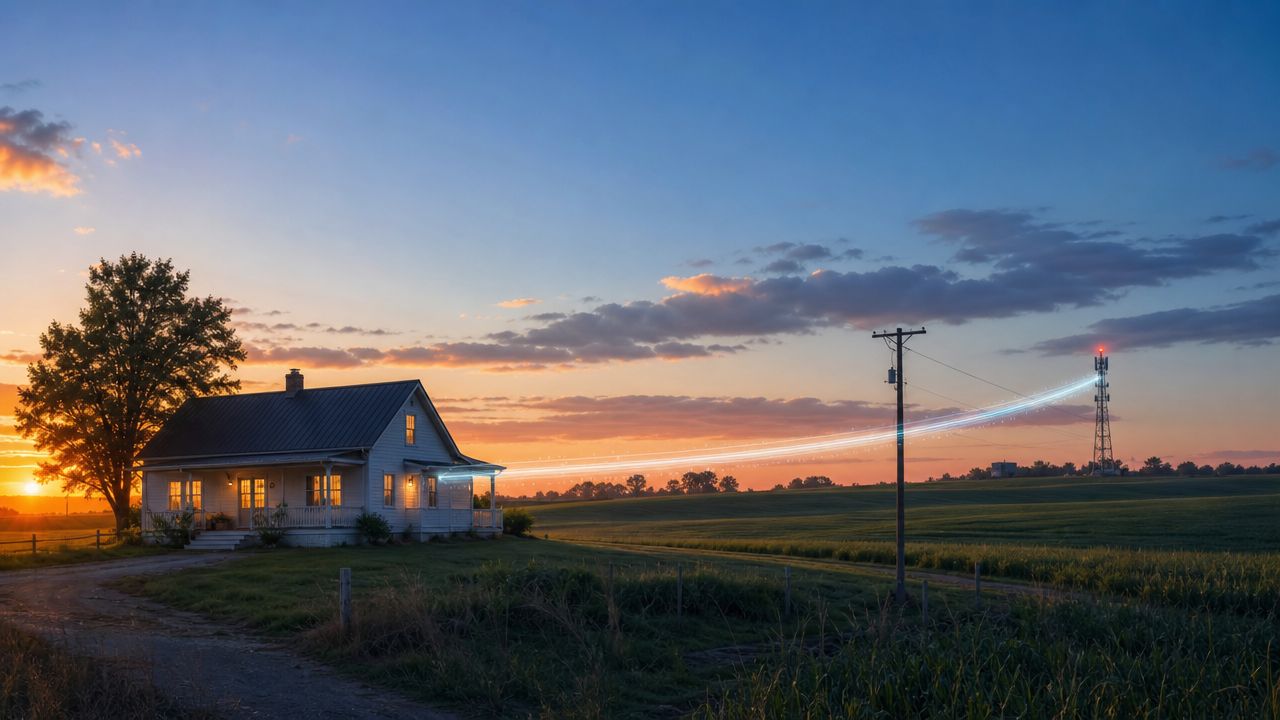
Rural Arkansas doesn't need a stripped-down version of connectivity. It needs the same core capabilities as urban areas, delivered in a way that fits dispersed properties, weather exposure, and longer service distances. That's especially true across much of 870 and in outlying parts of the other area code regions.
For households, this affects work, school, entertainment, and everyday communication. For businesses, it affects scheduling, billing, inventory, cameras, customer calls, and employee coordination. If a rural property still relies on weak patchwork service, area code identity alone won't help much. The connection underneath has to be strong.
What rural users should buy first
Start with the service that removes the biggest daily friction. For most rural homes, that's dependable internet with whole-home WiFi coverage. For most rural businesses, it's stable internet plus phone service that doesn't depend on unreliable legacy wiring.
Prioritize these decisions:
- Home offices: Choose a plan that supports video conferencing and uploads without forcing everyone else offline.
- Larger properties: Use managed WiFi to extend usable coverage across the spaces where people work and live.
- Storm-prone locations: Add equipment protection and managed support so service issues don't become long downtime events.
- Small rural businesses: Combine business internet, hosted voice, and security tools on one provider relationship where possible.
A useful starting point is Premier Broadband's guide to internet options for remote areas. That matters for farms, edge-of-town homes, and small communities where connectivity isn't a luxury. It's basic operating infrastructure.
The smart rural strategy
Rural customers should avoid overcomplicating their setup. Pick a connection built for real usage, add whole-home or whole-site coverage, and choose phone service that can follow the user instead of the building. That means mobile app support, voicemail-to-email, and simple routing matter just as much in rural Arkansas as they do in a downtown office.
The best approach is practical. Keep the local identity your community recognizes. Upgrade the network and phone system so you're not trapped by older limitations.
6-Point Arkansas Area Code Comparison
| Region / Item | 🔄 Implementation complexity | ⚡ Resource requirements | 📊 Expected outcomes | 💡 Ideal use cases | ⭐ Key advantages |
|---|---|---|---|---|---|
| 501 Area Code – Central Arkansas Hub | Moderate, urban deployments, coordination with established providers | High, fiber/backhaul, enterprise VoIP gear, low-latency SLAs | Strong B2B adoption, high ARPU, improved remote-work support | Enterprise VoIP, government/education networks, home-office fiber plans | Largest metro concentration, established business demand |
| 479 Area Code – Northwest Arkansas Growth Region | Moderate–High, rapid expansion requires accelerated rollouts | High, scalable fiber, cloud PBX, mobile app integration | Rapid subscriber growth, premium-tier uptake, high churn risk if service lags | Tech campuses, startups, content creators, relocated remote workers | Fastest growth, tech-savvy customers, higher household incomes |
| 870 Area Code – Eastern and Southeast Arkansas | High, large geography, rural deployment complexity | Very high, long fiber runs, LTE backup, subsidy/grant management | Increased coverage and social impact, lower ARPU, longer ROI timelines | Rural businesses, agriculture connectivity, remote education and healthcare | Underserved market, less competition, strong grant support |
| Area Code Overlay Systems and VoIP Routing | Moderate–High, technical routing, E911 and interoperability needs | Medium, routing platforms, number management, trained staff | Seamless multi-location calling, better continuity, portable numbers | Multi-location enterprises, distributed workforces, disaster recovery plans | Flexibility across regions, number portability, improved call routing |
| Business Communication Solutions & Local Number Strategy | Low–Moderate, admin and provisioning of numbers and features | Medium, VoIP platform, caller ID tools, management dashboard | Higher answer rates, stronger local trust, operational efficiency | Small businesses, multi-location retail, professional services | Local presence, branded caller ID, voicemail-to-email and mobility |
| Rural Connectivity & Area Code Coverage Expansion | Very high, construction, logistics, and long timelines | Very high, capital for fiber, local crews, equipment and maintenance | Digital equity gains, first-time subscribers, long-term community revenue | Rural municipalities, farms, remote work hubs, K–12 and telehealth | Funding opportunities (RDOF), first-mover advantage, community goodwill |
Connect Your Arkansas Home or Business with Confidence
Understanding the Arkansas area code map helps, but it's only the starting point. The key decision is how to use that number inside a modern communications setup. A local area code can help a business look established in its market. It can help a household keep continuity during a move or service upgrade. It can also prevent unnecessary disruption when you shift from legacy phone service to a hosted VoIP system.
Arkansas's numbering history makes that clear. The state began with one code and expanded over time as demand changed. That pattern won't stop mattering. Businesses will keep opening in new regions, remote workers will keep relocating, and older phone equipment will keep aging out. Residents and owners who treat area codes as part of a larger connectivity plan will make better decisions than those who treat them as a small detail.
For central Arkansas users, that may mean pairing a 501 identity with fiber internet and business voice. In northwest Arkansas, it may mean using a 479 number to reinforce local presence while running cloud-based communications behind the scenes. In the broad 870 region, it often means taking reliability seriously, especially where homes, farms, clinics, schools, and small businesses still depend on a mix of older systems and newer digital tools. And where overlays apply, the lesson is simple. Check every programmed device, move to 10-digit dialing where required, and don't assume old equipment will update itself.
If you're choosing service now, keep the priorities in order. First, make sure the connection is dependable enough for the way you live or work. Second, choose a phone system that supports mobility, caller ID, voicemail, and simple administration. Third, use the local number strategy that fits your customers and your region.
Premier Broadband is one relevant option for Arkansas residents and businesses that want fiber internet and VoIP service from the same provider. That combination can simplify upgrades, especially when you want to keep a local number while improving call handling, home office performance, or multi-location business communications.
A good Arkansas area code strategy isn't complicated. Keep the right local identity. Upgrade the network behind it. Make sure every device and number works the way your daily life or business requires.
If you're ready to set up fiber internet, modern VoIP, or a local number strategy that fits your Arkansas home or business, explore Premier Broadband and compare the residential and business options that match how you work, call, and stay connected.